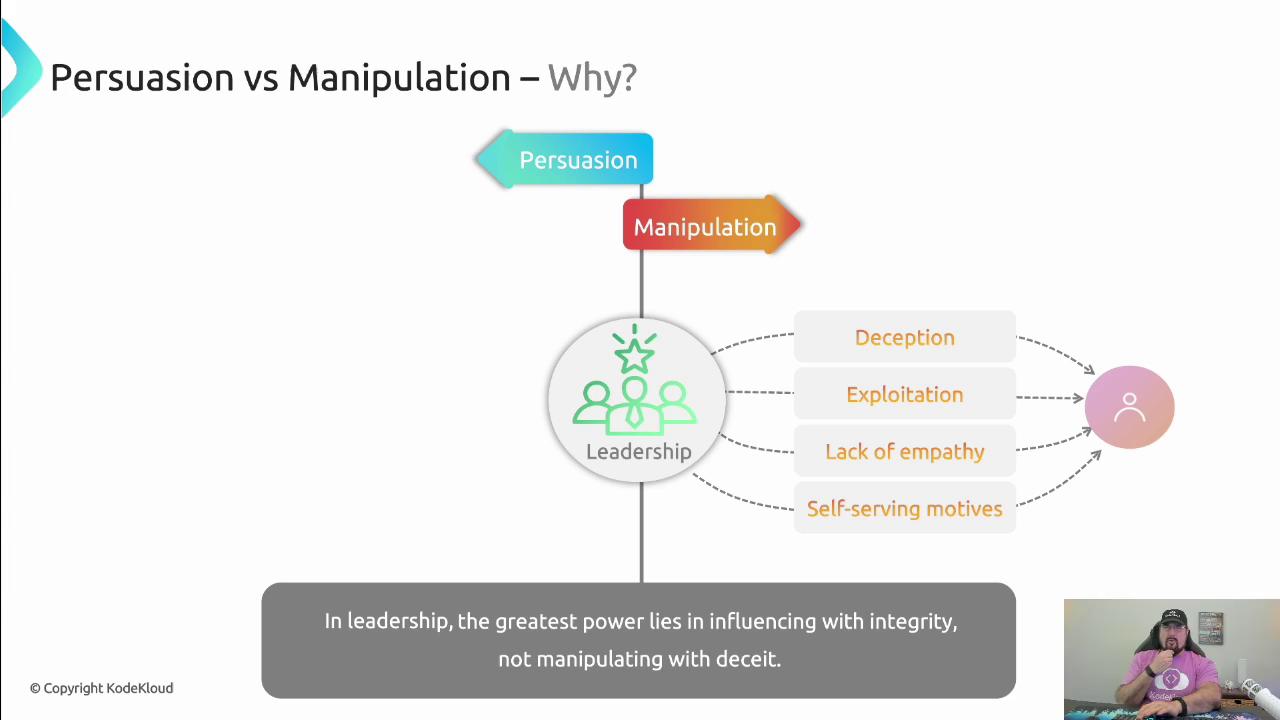
Why This Distinction Matters
Leadership impact hinges on integrity. Persuasion builds trust and collaboration by being honest, transparent, and empathetic. Manipulation, in contrast, relies on deception and self-interest, which erodes morale and team cohesion.Influencing with integrity means serving both the individual and the organization—creating a win-win environment.
Defining Persuasion and Manipulation
Persuasion
Persuasion is an ethical approach to influence. Key characteristics include:- Data-driven arguments with transparent metrics
- Open communication and clear rationale
- Empathy and respect for autonomy
- Mutual benefit and shared ownership
Example
Encourage a teammate to earn a certification by presenting statistics on career growth, discussing company sponsorship, and aligning on timelines.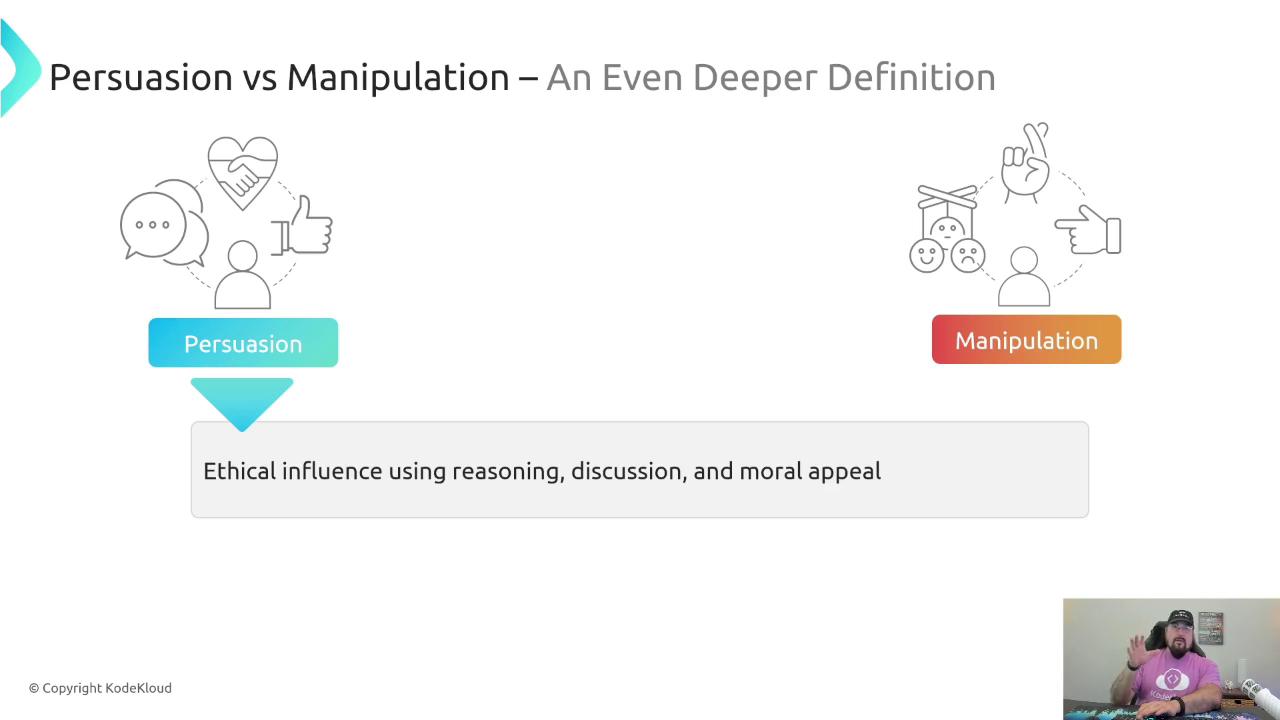
Manipulation
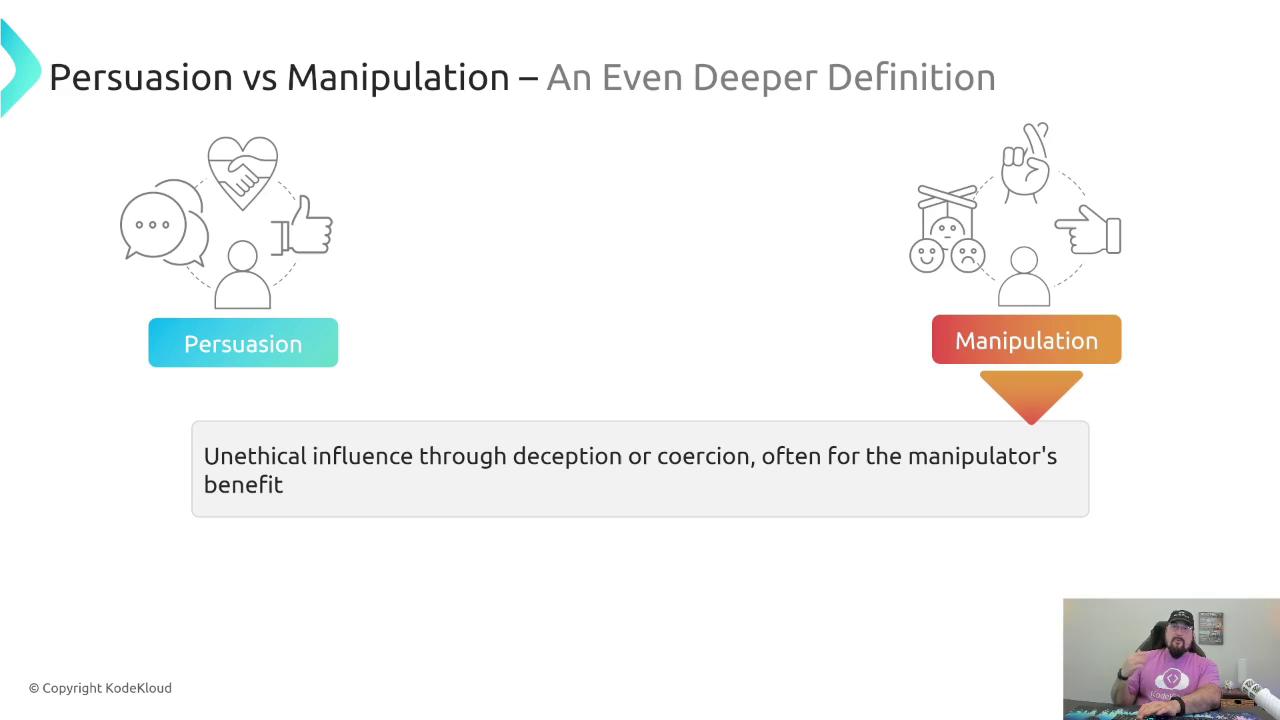
Manipulation leverages coercion and deception for personal gain. Typical tactics are:- Exploiting fear, guilt, or obligation
- Cherry-picking or omitting crucial information
- Pressuring without transparency
- Prioritizing self-interest over team success
Manipulative tactics damage trust and create toxic work environments.
The Bridge Metaphor
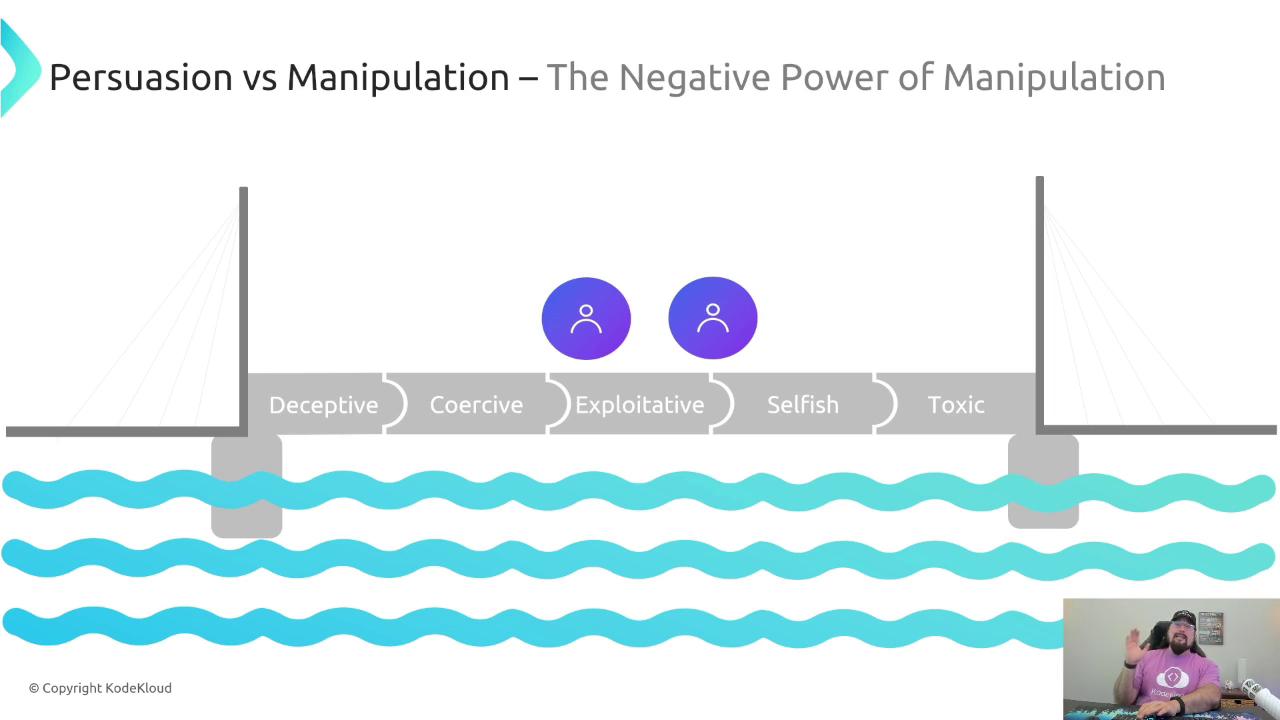
Picture persuasion as a sturdy bridge built on honesty, transparency, respect, mutual benefit, and empathy. Manipulation is a collapsing path of deception, coercion, exploitation, and selfishness.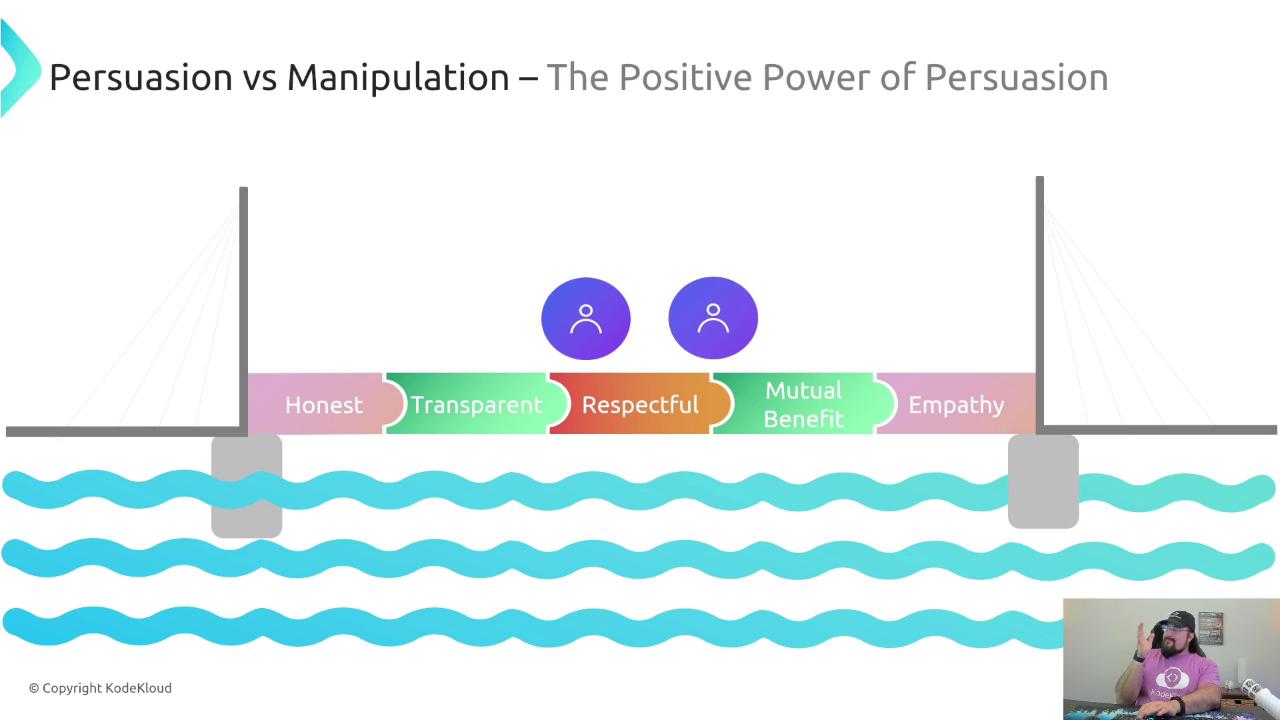
Key Differences
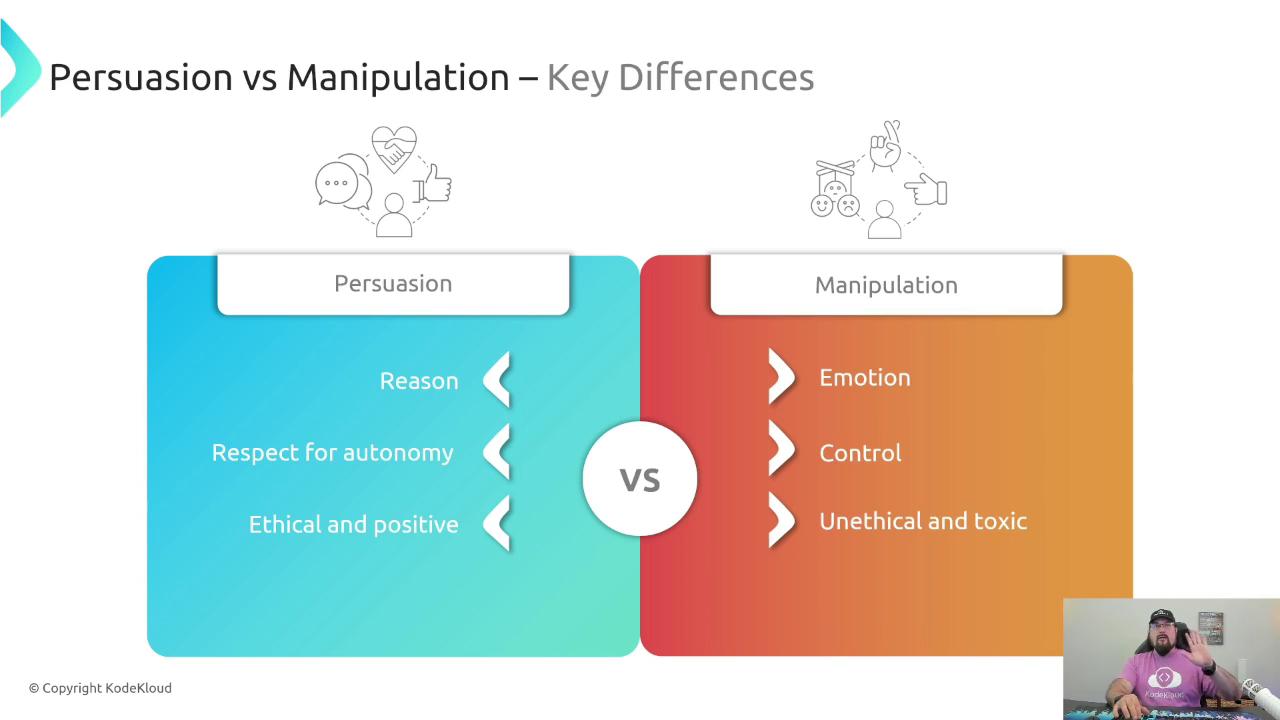
| Aspect | Persuasion | Manipulation |
|---|---|---|
| Decision Drivers | Data, logic, and empathy | Fear, guilt, and misinformation |
| Respect for Autonomy | Empowerment and choice | Control and coercion |
| Transparency | Open, honest communication | Hidden agendas and selective disclosure |
| Outcome Focus | Shared success | Self-interest |
Examples of Persuasion
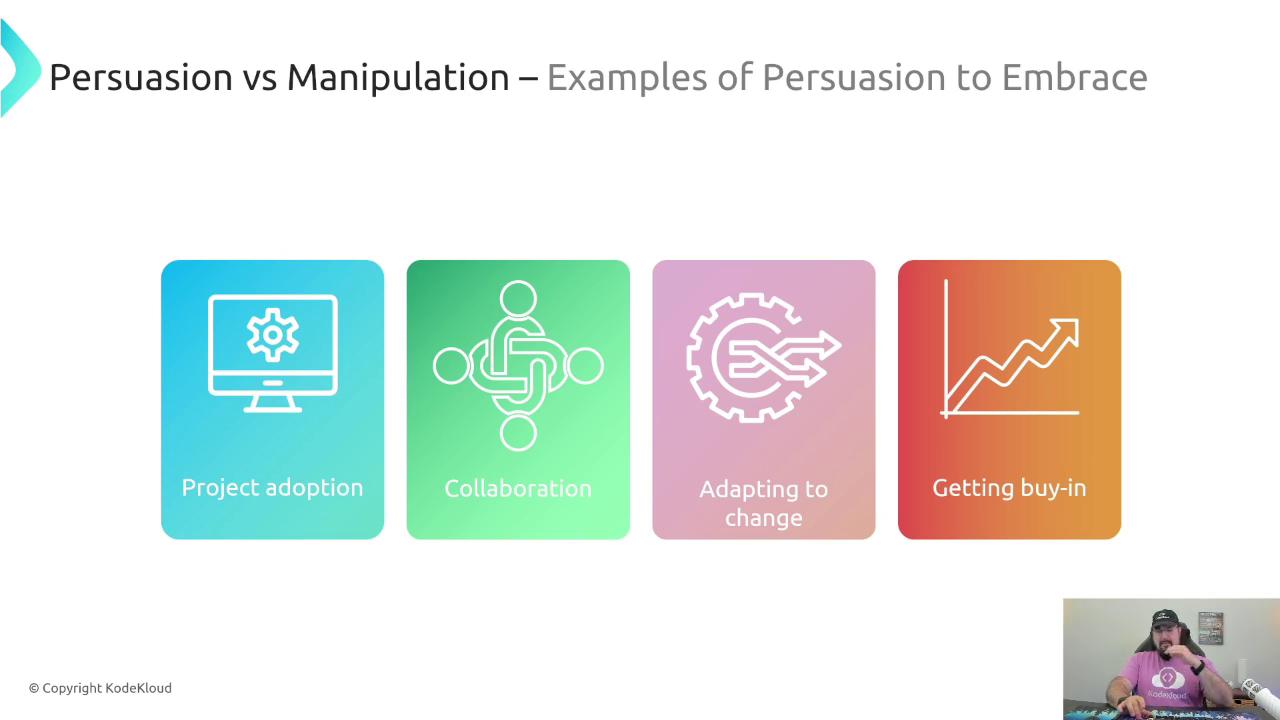
- Prioritizing projects by demonstrating ROI and clear objectives
- Facilitating cross-team collaboration between Dev, Ops, and Cloud groups
- Rolling out new tools (AI, Kubernetes, containers, virtualization) with pilot data and training plans
- Gaining stakeholder buy-in for experiments by sharing metrics and methodologies
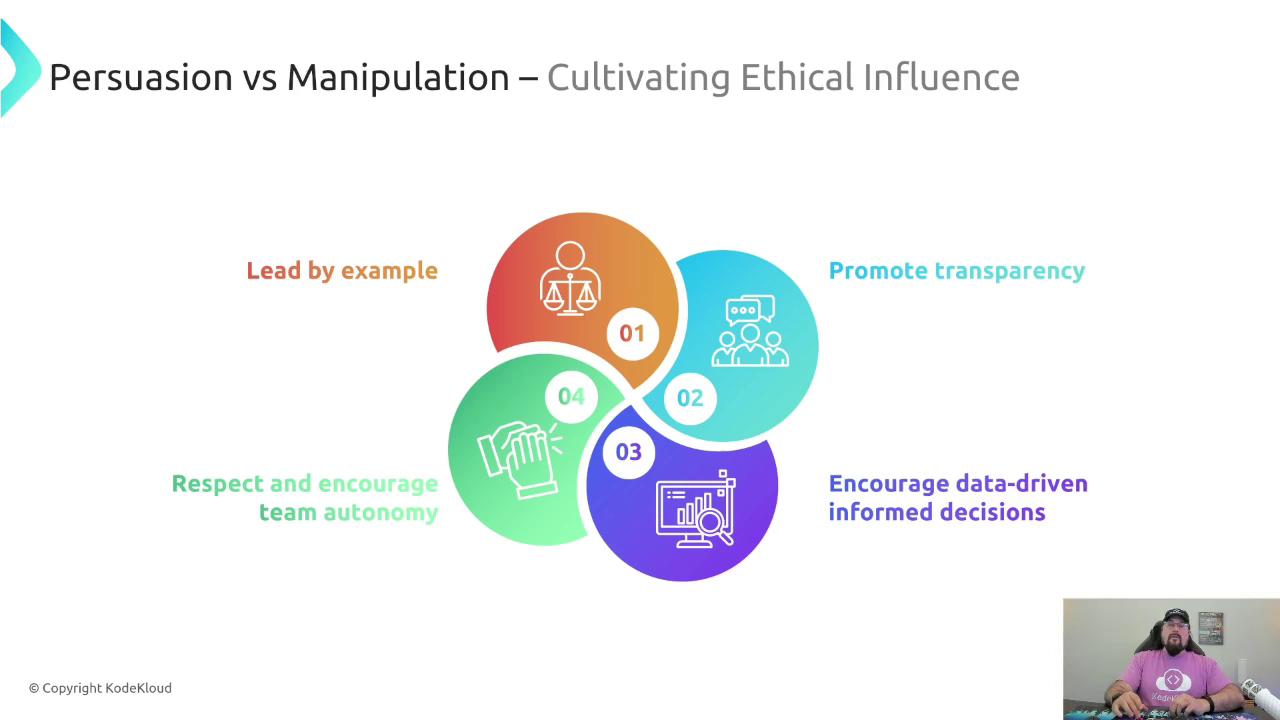
Cultivating Ethical Influence
To build a culture of persuasion:- Lead by example and model integrity.
- Promote transparency in goals and data.
- Encourage data-driven, informed decisions.
- Respect and empower individual autonomy.
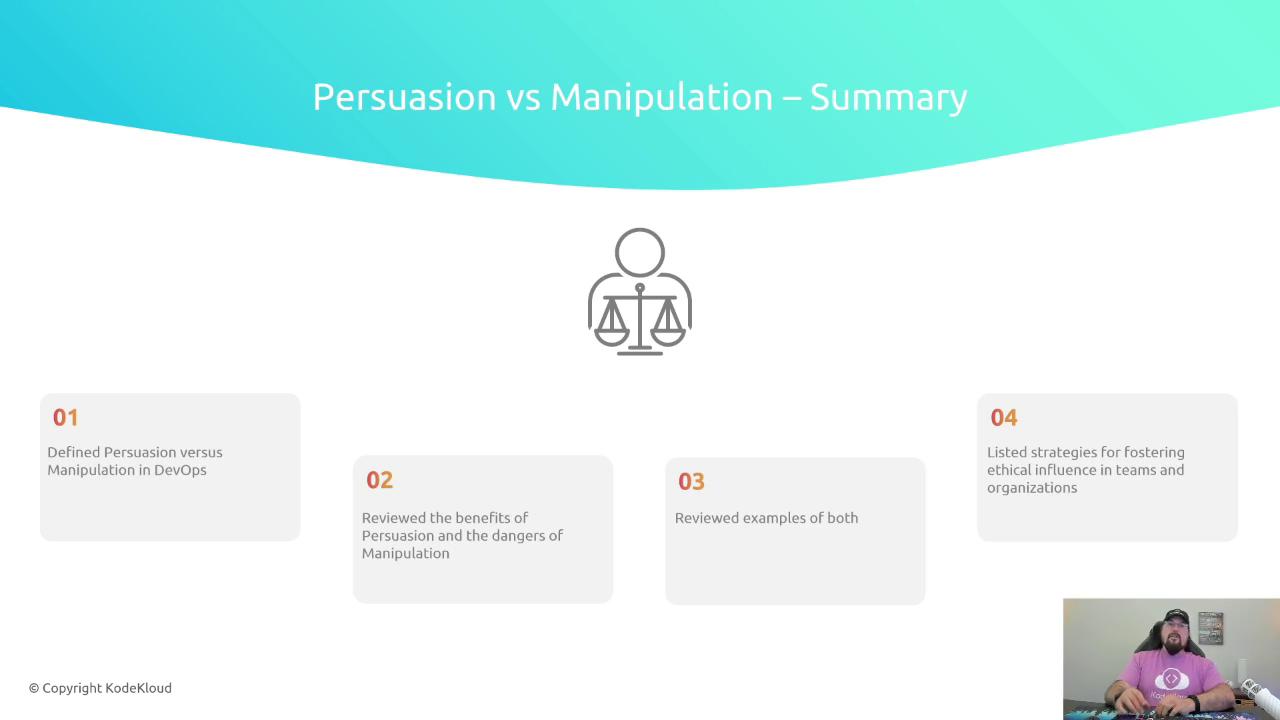
Summary
In DevOps leadership, persuasion fosters collaboration and trust, whereas manipulation breeds dysfunction. We’ve covered the hallmarks of each approach, real-world examples, and actionable strategies for ethical influence.