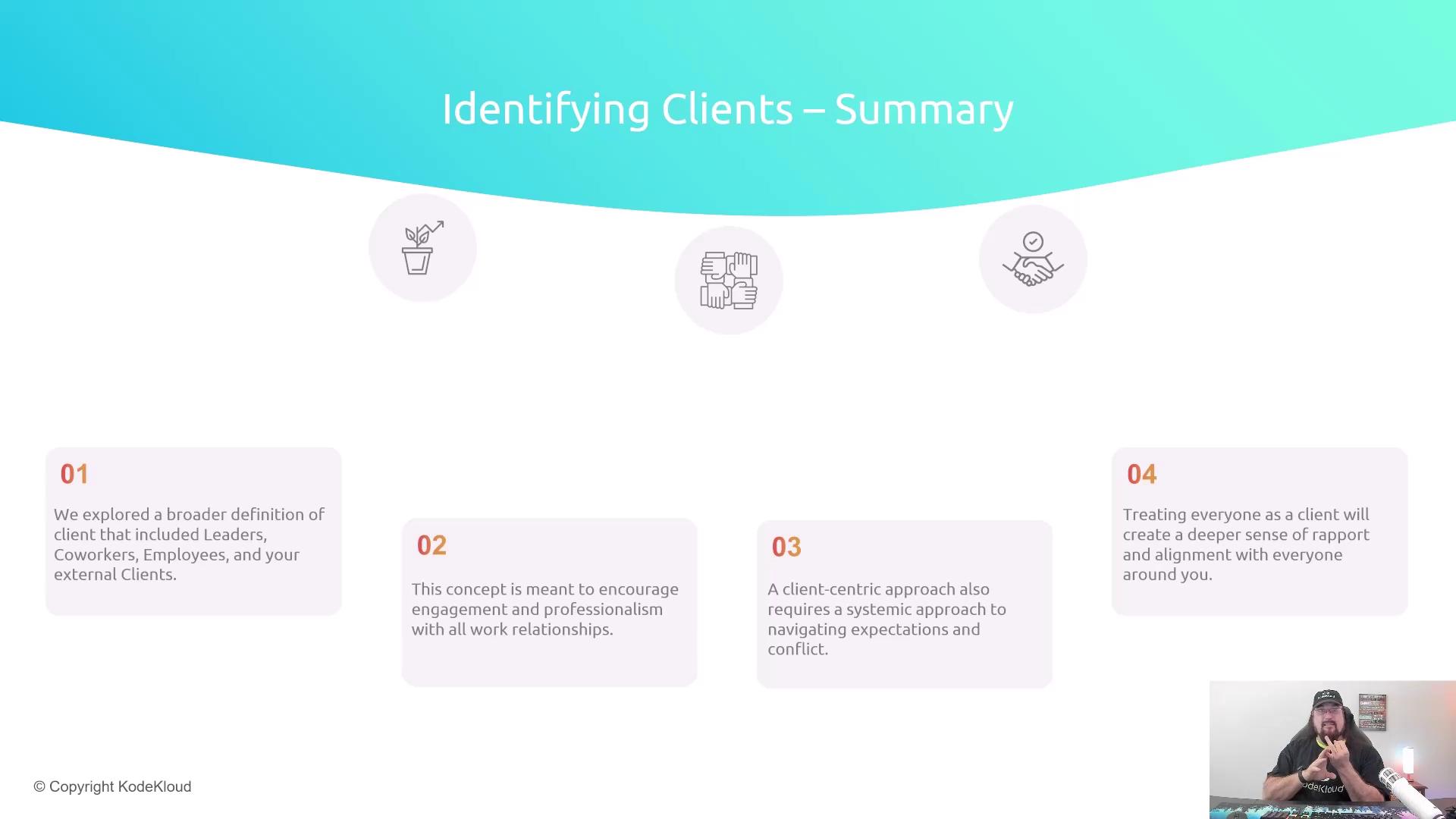
When you treat everyone as a client, you naturally ask:
- How do they prefer to receive updates?
- What outcomes matter most to them?
This curiosity builds stronger, more productive relationships.
Managing Your Leaders
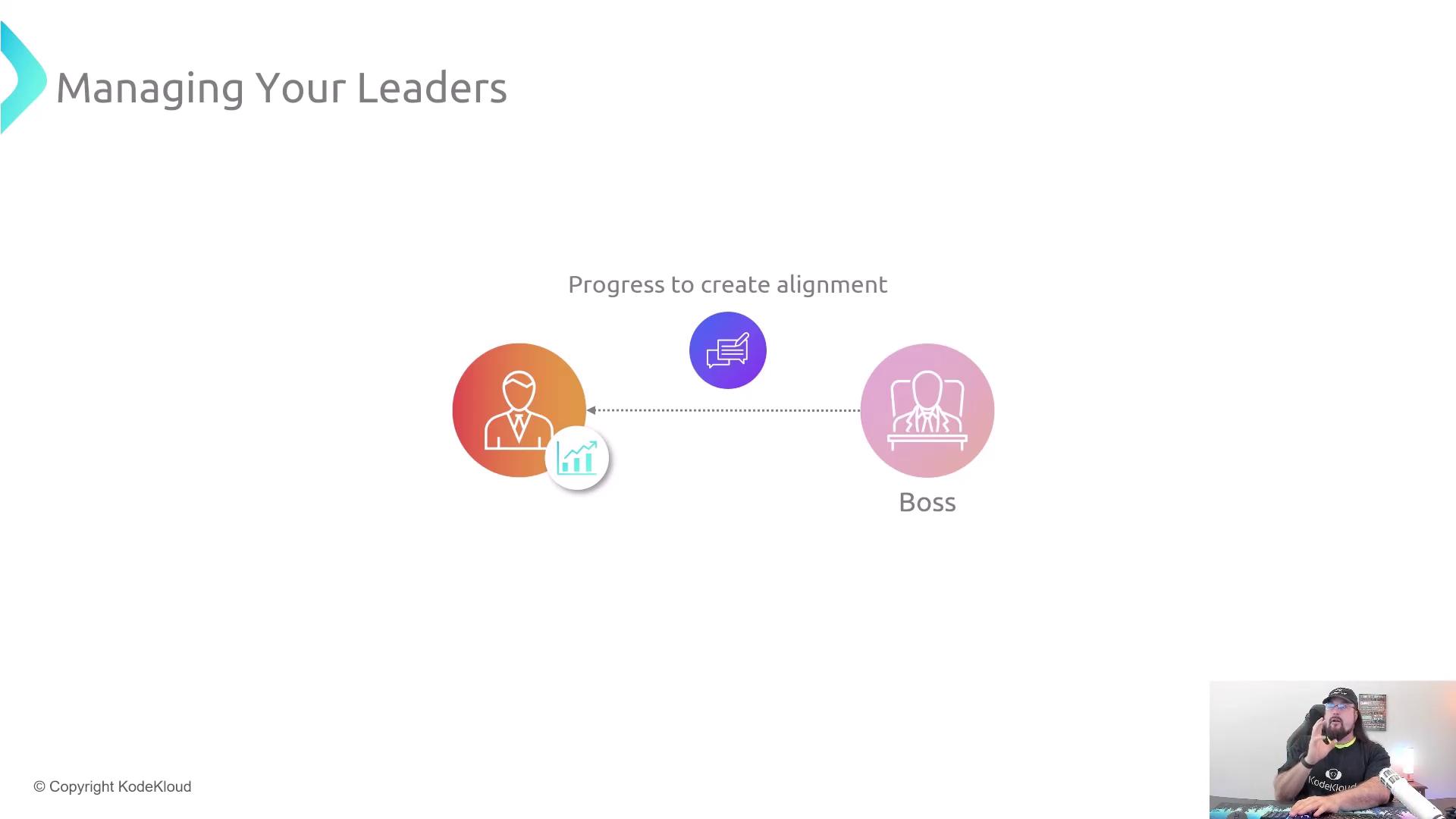
Leaders at different levels require tailored updates:| Leader Level | Focus | Communication Style | Frequency |
|---|---|---|---|
| C-Suite / CEO | Strategic vision and ROI | High-level summary | Monthly/Quarterly |
| VPs & Directors | Progress against objectives | Brief status reports | Bi-weekly/Weekly |
| Direct Manager | Context and next steps | Concise updates with impact | As needed |
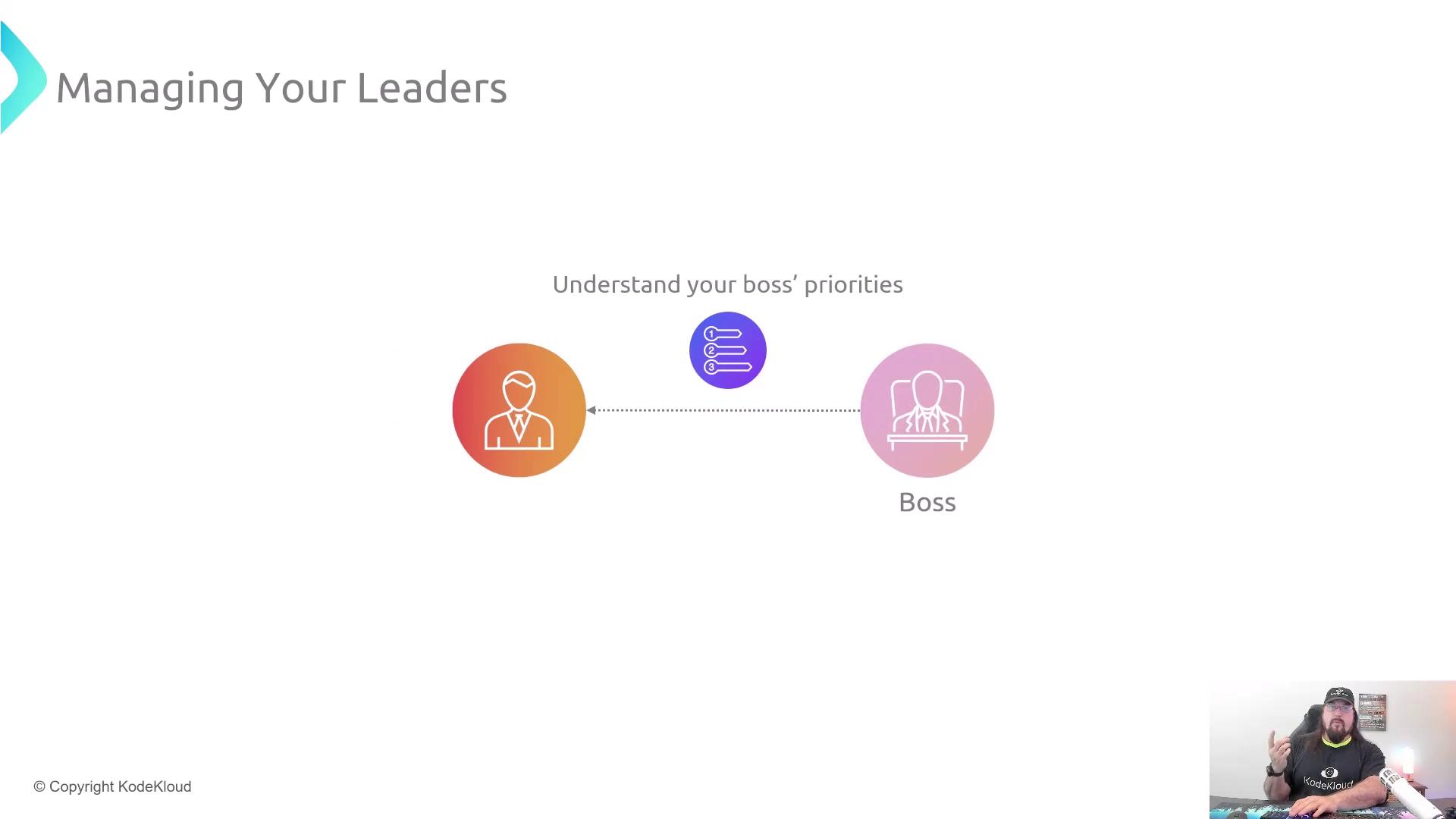
“We had an issue in production. We’re working to resolve it. ETA two hours.”
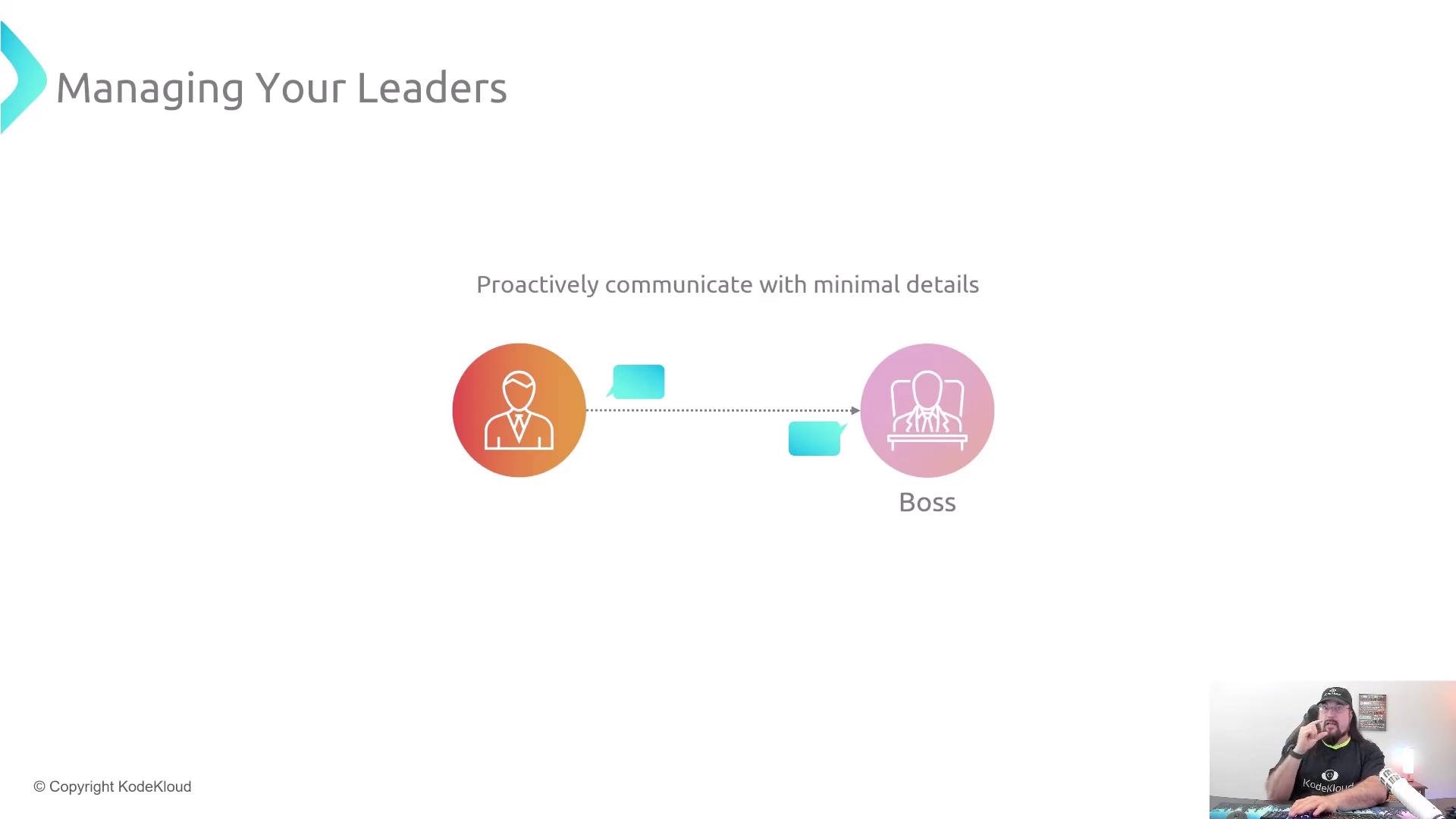
Avoid overwhelming executives with technical details—they need high-level confidence, not line-by-line logs.
Engaging Your Peers
Developers, QA engineers, data scientists, and project managers rely on shared infrastructure and services. Treat them as internal clients by:- Clarifying requirements: What environments, tools, or pipelines do they need?
- Aligning on SLAs: Define uptime, performance, and support windows.
- Sharing roadmaps: Keep everyone aware of upcoming changes that might affect work.
Nurturing Your Employees as Clients
Your direct reports are also clients whose growth and motivation matter:- Understand ambitions: Some focus on mastering current tasks; others seek leadership or new challenges.
- Offer tailored feedback: Align coaching with individual goals.
- Provide opportunities: Rotate responsibilities, sponsor training, or assign stretch projects.
Serving External Clients
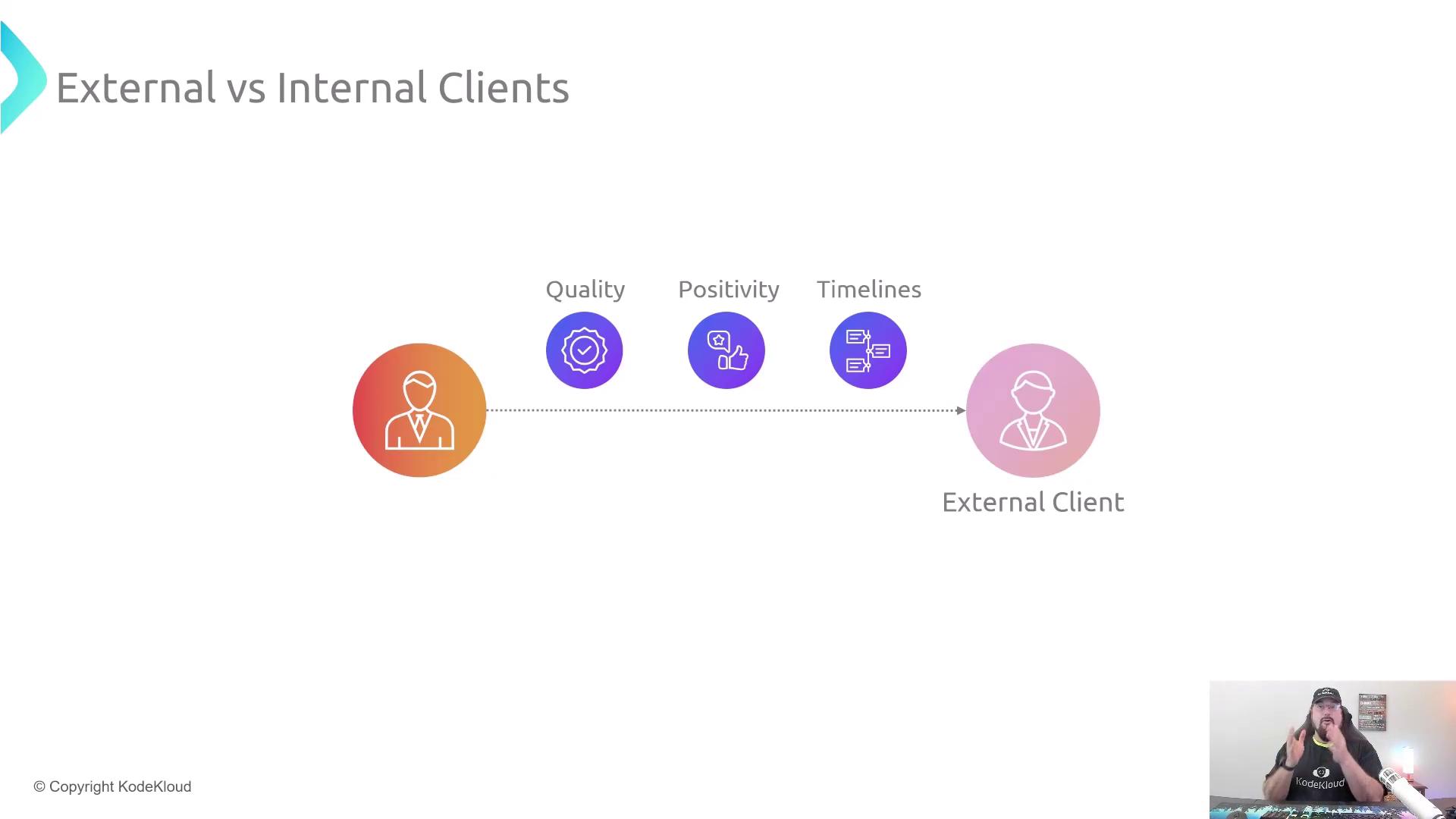
External customers expect clear timelines, reliable service, and honesty about constraints. Adopt a “can-do” mindset:- Acknowledge limitations: “With our current priorities, that scope isn’t feasible. If we adjust X, we can explore it.”
- Define scope, time, cost: Be transparent about trade-offs.
- Maintain quality: When deadlines are fixed, reduce scope rather than compromise on reliability.
A Client-Centric Approach
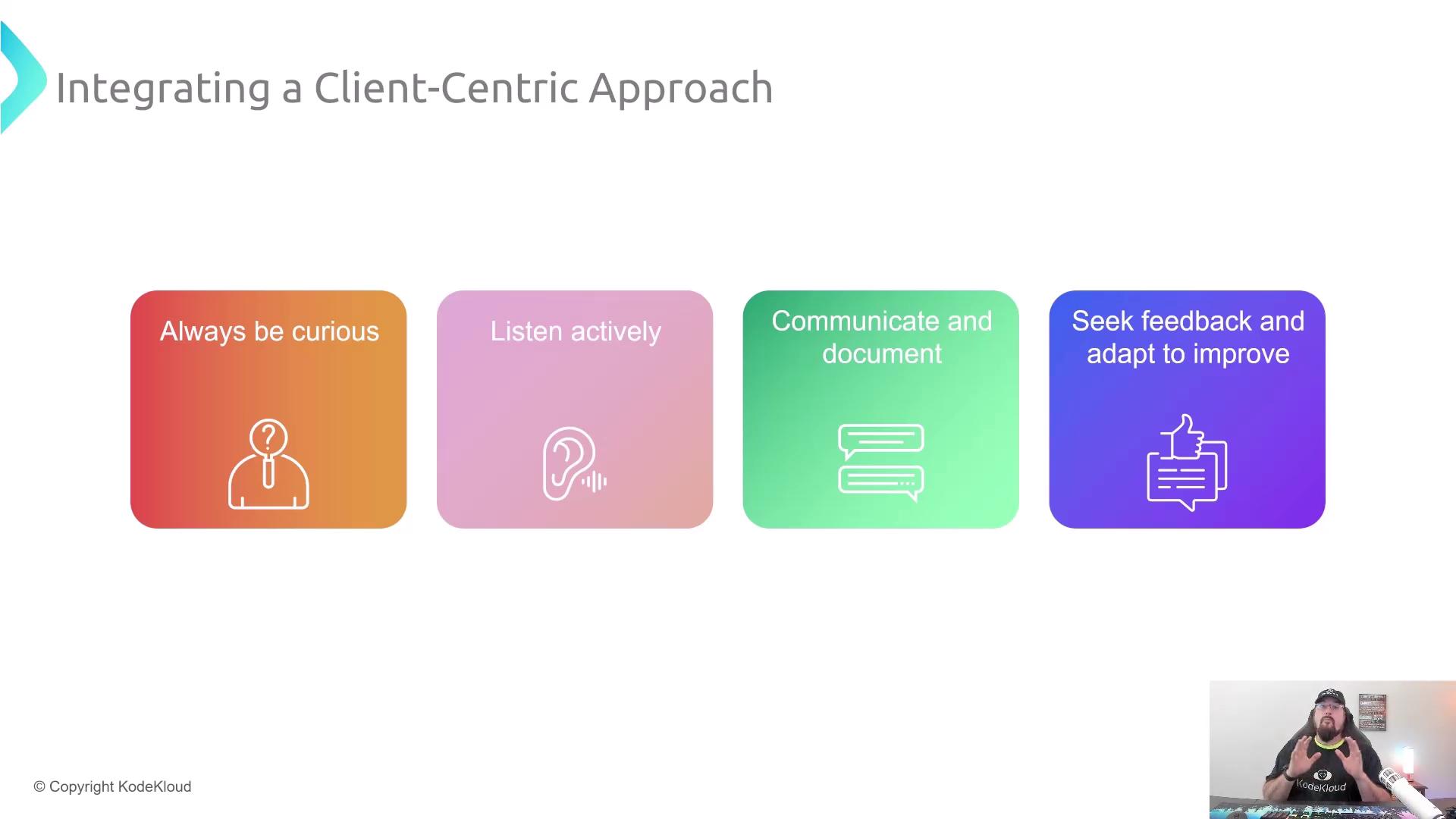
Across every client interaction, follow these four principles:- Always be curious: Ask “why” to understand the request’s impact.
- Listen actively: Paraphrase and confirm to avoid misunderstandings.
- Communicate and document: Use agendas, action items, and summaries for clarity.
- Seek feedback and adapt: Establish loops to ensure ongoing alignment.
Summary
Identifying clients in DevOps means recognizing everyone who relies on your expertise, resources, or decisions. By tailoring your approach for leaders, peers, employees, and external customers, you foster professionalism, trust, and alignment across all interactions.