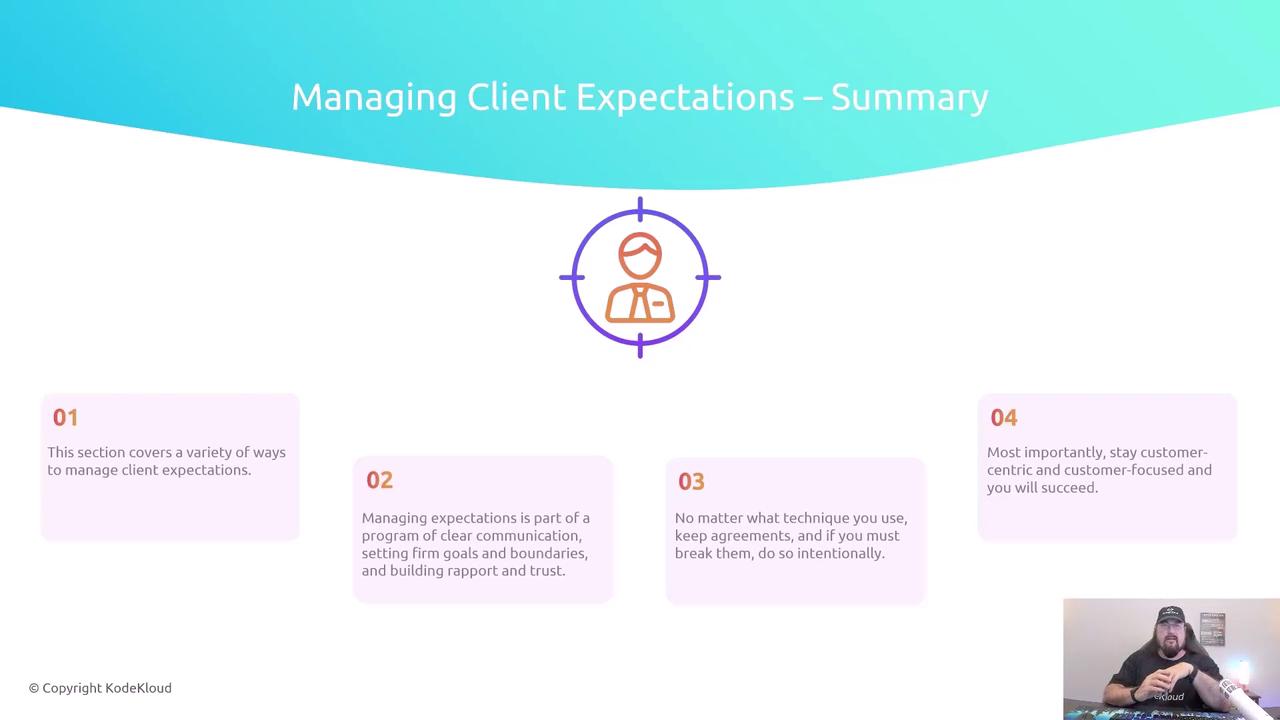
- Understand client needs and goals
- Communicate clearly and frequently
- Define scope and manage change
- Deliver value and quality
- Build rapport and trust
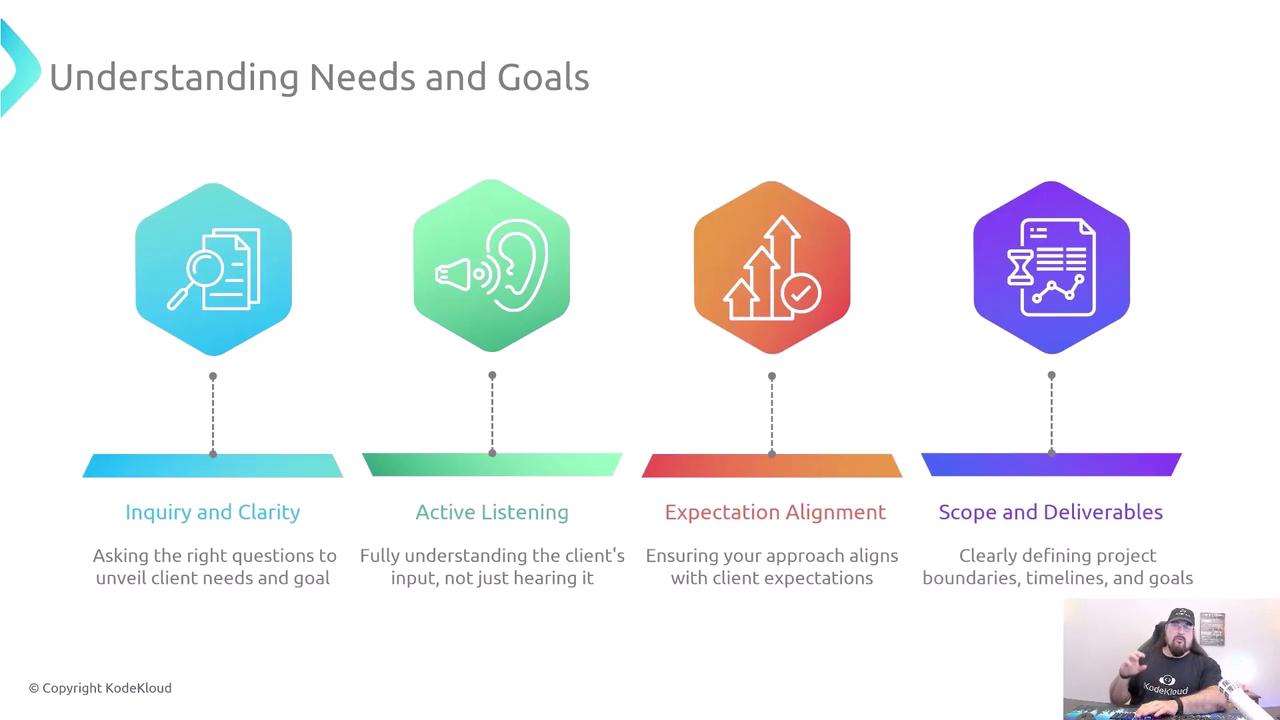
1. Understanding Needs and Goals
Success starts with uncovering what your client truly wants and why. Use these best practices:- Inquiry and Clarity
• Ask open-ended questions: “What problem are we solving?” “Who is the end user?”
• Drill down: “How will this feature impact revenue or efficiency?” - Active Listening
• Paraphrase key points and confirm understanding.
• Take structured notes during calls or workshops. - Expectation Alignment
• Summarize agreed outcomes in writing—email or shared doc.
• Use checklists to verify every requirement. - Scope and Deliverables
• Define boundaries, timelines, and milestones upfront.
• Renegotiate any changes before deadlines slip.

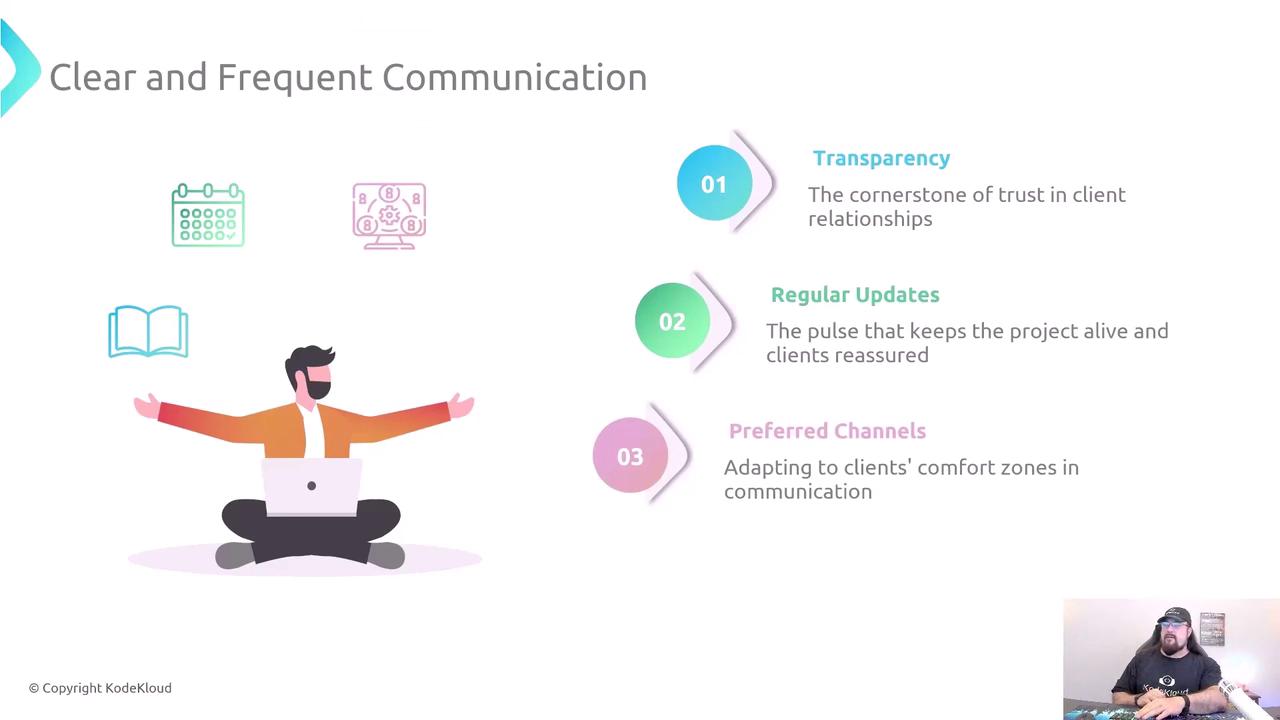
2. Clear and Frequent Communication
Transparent updates build trust and prevent surprises. Follow this framework:| Channel | Use Case | Best Practice |
|---|---|---|
| Formal status, deliverables | Bullet summaries & clear subject lines | |
| Instant Messaging | Quick questions, clarifications | Define response SLAs (e.g., < 4 hours) |
| Video Updates | Demos, stakeholder briefings | Keep videos < 5 minutes, share transcript |
- Transparency: Report issues and risks immediately, along with mitigation plans.
- Regular Cadence: Schedule weekly or biweekly updates—consistent timing matters.
- Preferred Tools: Adapt to the client’s ecosystem (Slack, Teams, Zoom).
Setting up a shared dashboard (e.g., Jira, Trello) ensures everyone has 24/7 visibility into progress.
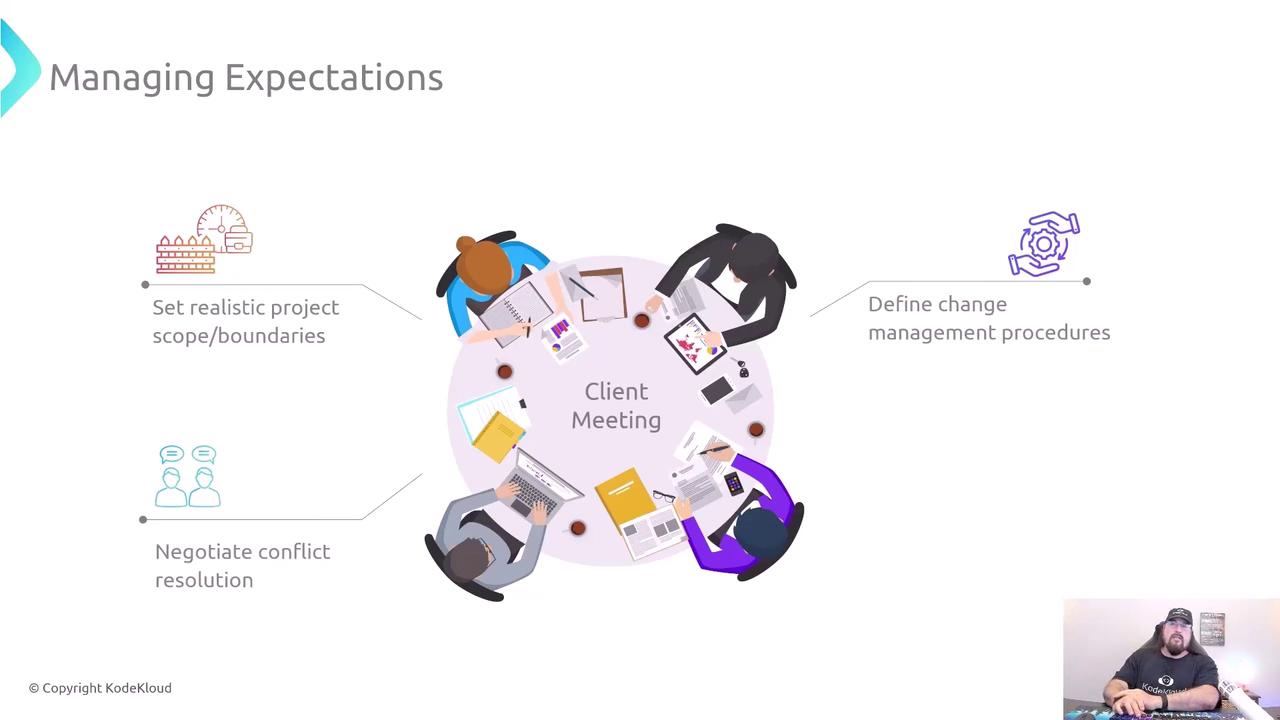
3. Defining Scope and Managing Change
Clear boundaries prevent scope creep and conflicts. Implement these steps:- Conservative Estimates
• Add contingency buffers (20–30%) if the team lacks prior experience. - Proof of Concept (PoC)
• Validate unknowns early to reduce risk in the main implementation. - The Project Triangle
• Cost ↔ Time ↔ Scope: shifting one factor affects the others. - Change-Request Process
• Define how new requests are submitted, reviewed, and approved.
• Document Service Level Agreements (SLAs), Objectives (SLOs), and KPIs.
Ignoring a formal change-procedure risks untracked work, budget overruns, and missed deadlines.
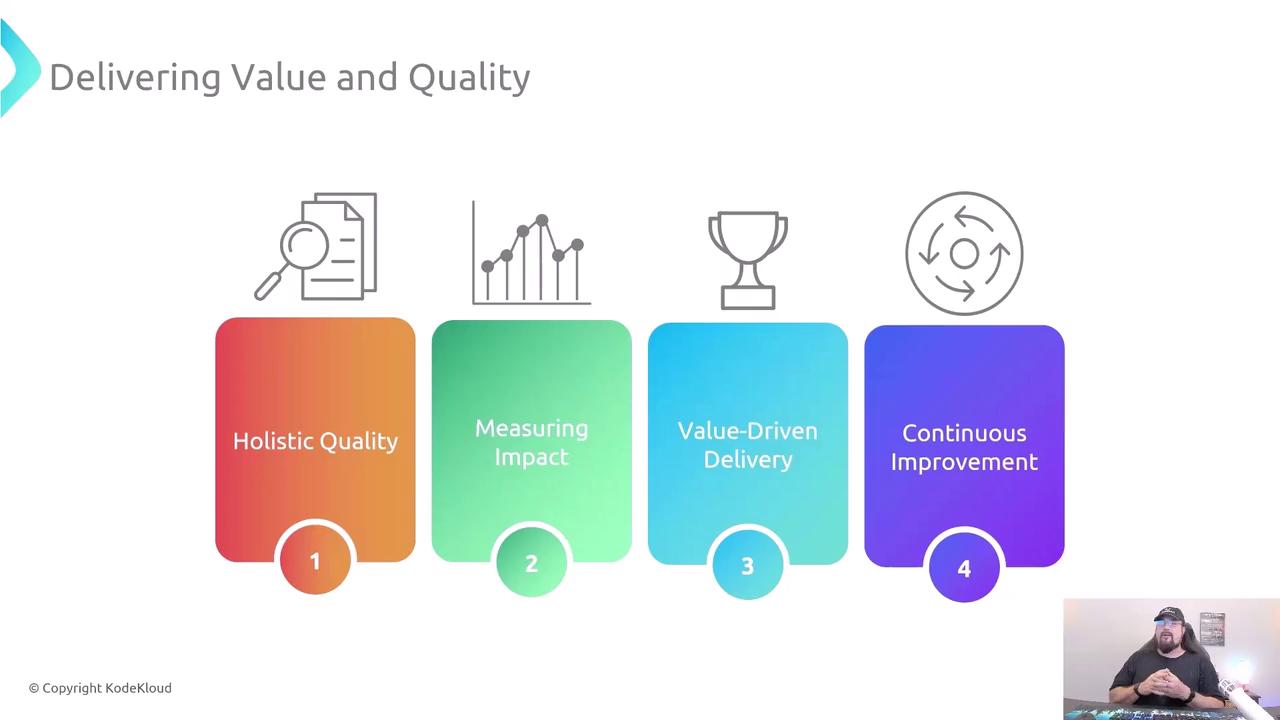
4. Delivering Value and Quality
Align every deliverable to client goals and measure success with hard data:-
Holistic Quality
• Reliability, performance, and maintainability must all be validated. -
Key Metrics
Metric Definition Target Uptime Percentage of time system is live ≥ 99.9% Release Frequency Number of production deployments Weekly / Biweekly ROI (Gain–Cost)/Cost ≥ 150% in 6 months -
Value-Driven Delivery
• Apply the Pareto Principle: 20% of features often yield 80% of the value. -
Continuous Improvement
• Collect feedback after each sprint or milestone and refine processes.
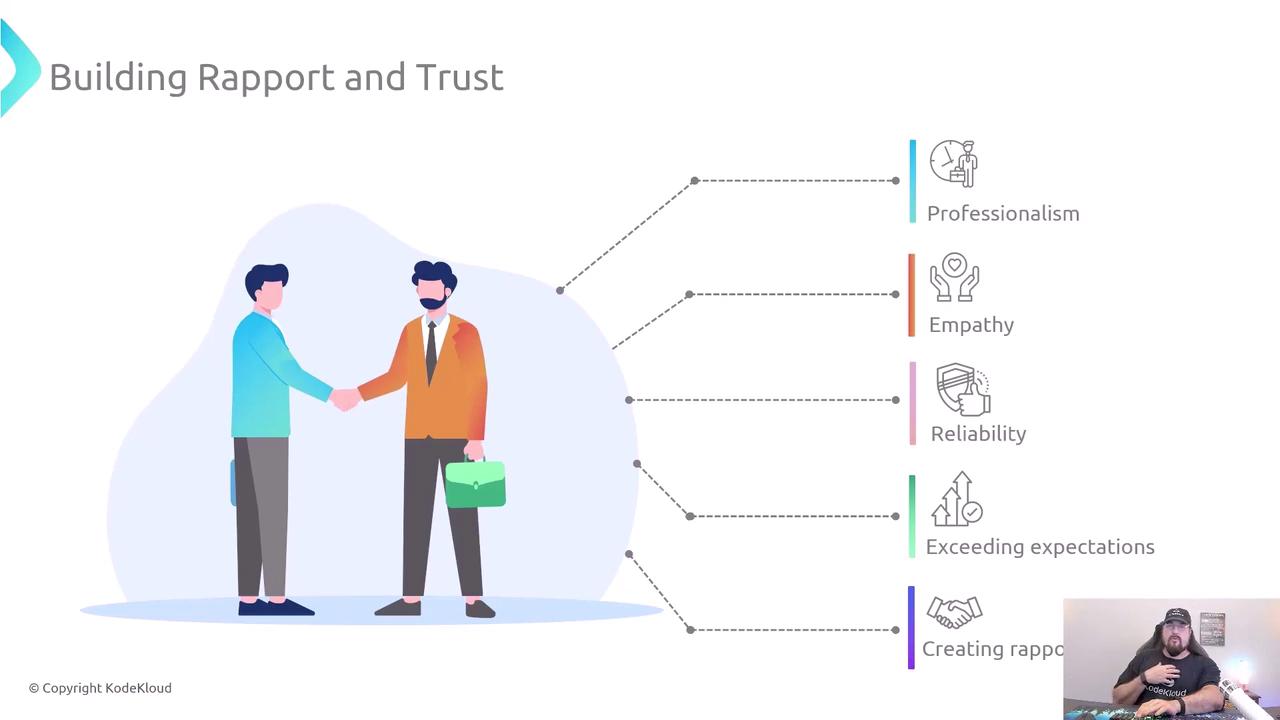
5. Building Rapport and Trust
Long-term relationships rely on empathy and reliability:- Professionalism & Empathy
• Acknowledge concerns and emotions; respond with respect. - Reliability
• Deliver on promises or renegotiate proactively. - Exceed Expectations
• Surprise clients with extra insights, faster delivery, or a bonus deliverable. - Collaborative Partnership
• Invite clients into retrospectives and planning sessions.
Summary & Next Steps
By mastering these five pillars—Needs & Goals, Communication, Scope & Change, Value & Quality, and Rapport & Trust—you’ll consistently meet or exceed client expectations. Keep your agreements clear, maintain open feedback loops, and stay customer-centric.