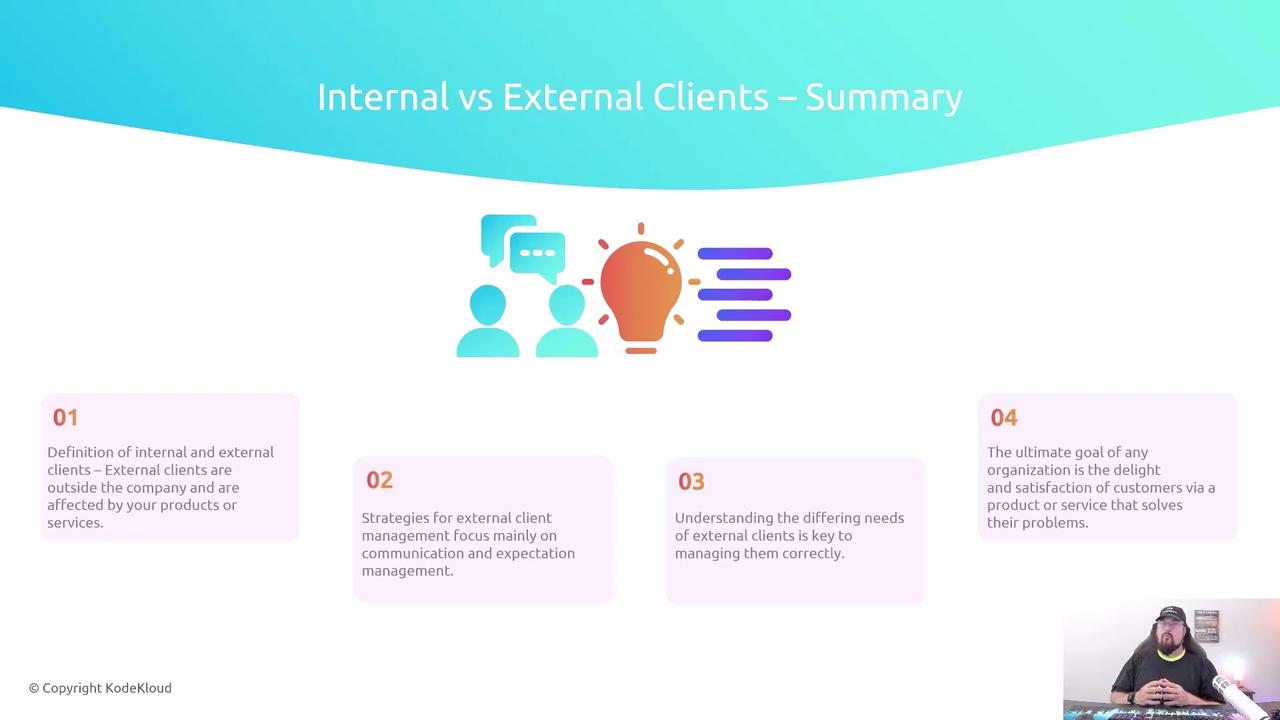
1. Defining Internal and External Clients
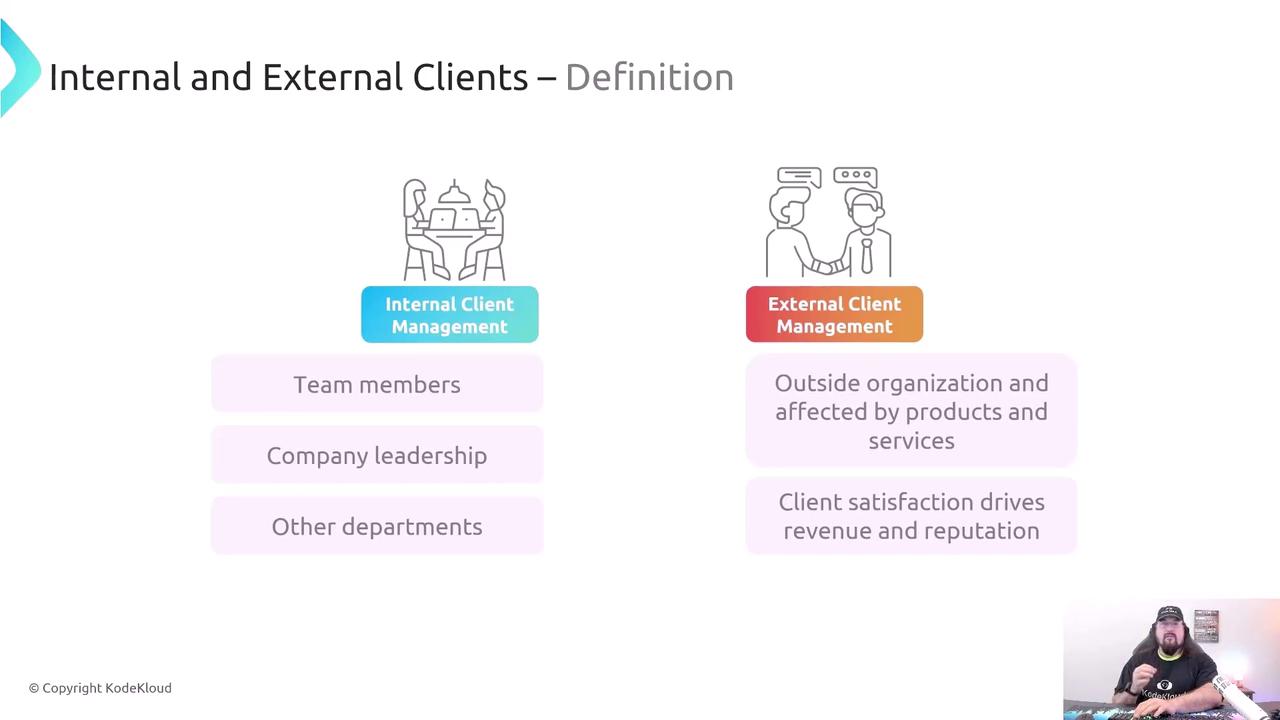
- Internal Clients
Team members, leadership, other departments, and business units within your organization. - External Clients
Outside organizations or individuals consuming your products or services.
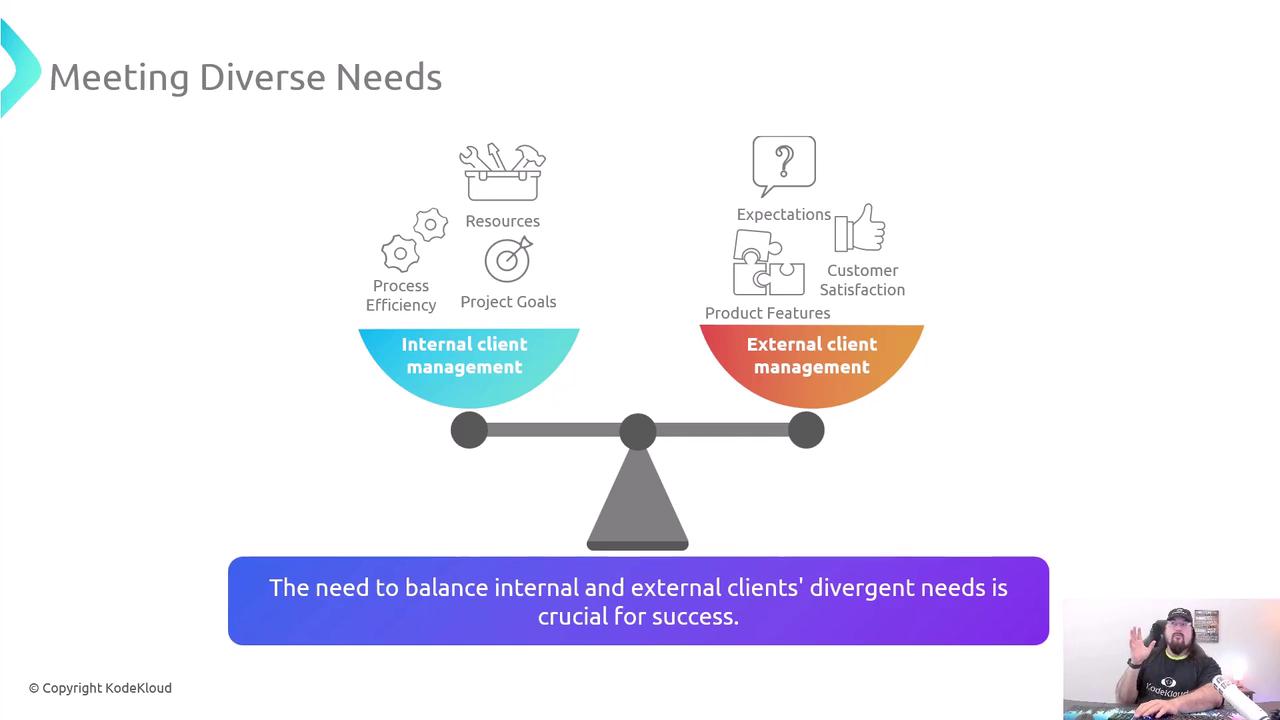
2. Balancing Divergent Focuses
- Internal Focus: Process improvements, team development, technical debt reduction, roadmap delivery.
- External Focus: New product features, SLAs, compliance standards, security audits, uptime guarantees.
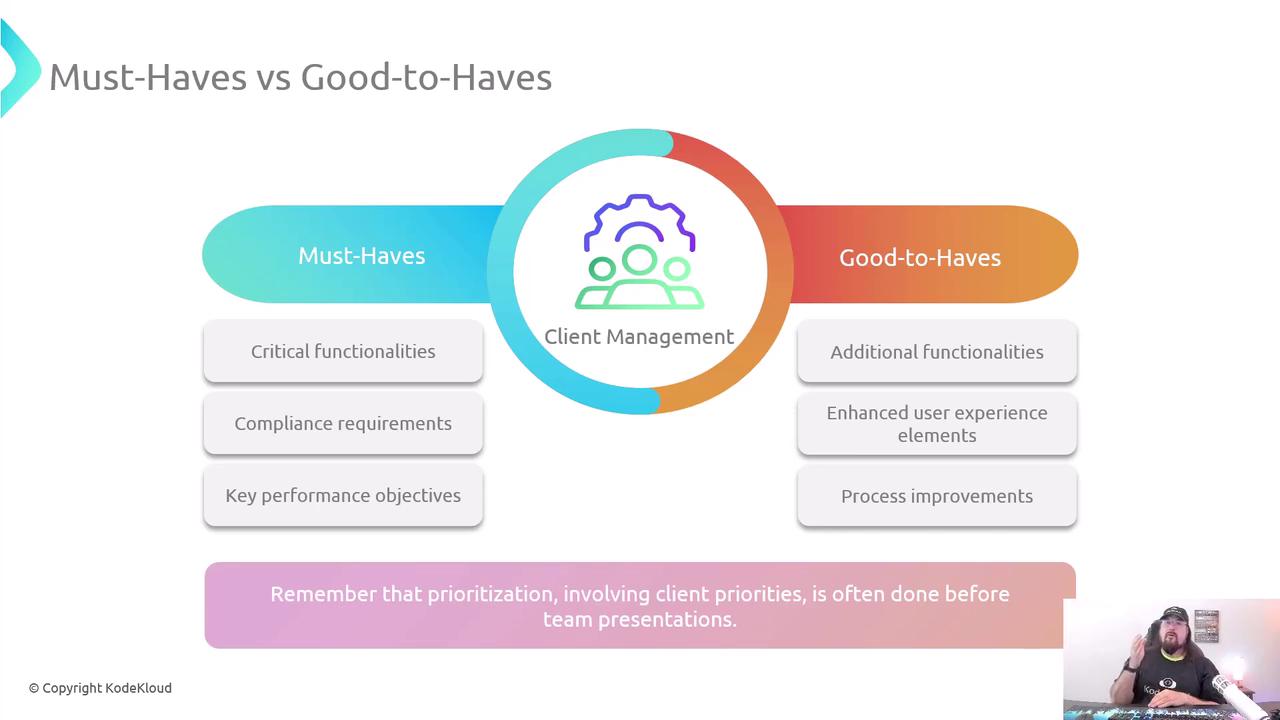
3. Prioritizing Requirements: Must-Haves vs Good-to-Haves
Categorize every client request into Must-Haves and Good-to-Haves:| Category | Description | Examples |
|---|---|---|
| Must-Haves | Critical functionalities or compliance and performance objectives. | Regulatory compliance, core API endpoints, security fixes. |
| Good-to-Haves | Enhancements that improve UX, add convenience, or refine visuals. | UI animations, custom themes, extra reporting graphs. |
4. Managing Technical Debt and System Maintenance
Ongoing upkeep is non-negotiable. Common tasks include:- OS patching, hardware refreshes
- Dependency updates (libraries, containers, orchestration tools)
- Refactoring legacy code and cleaning up configurations
5. Communication Best Practices
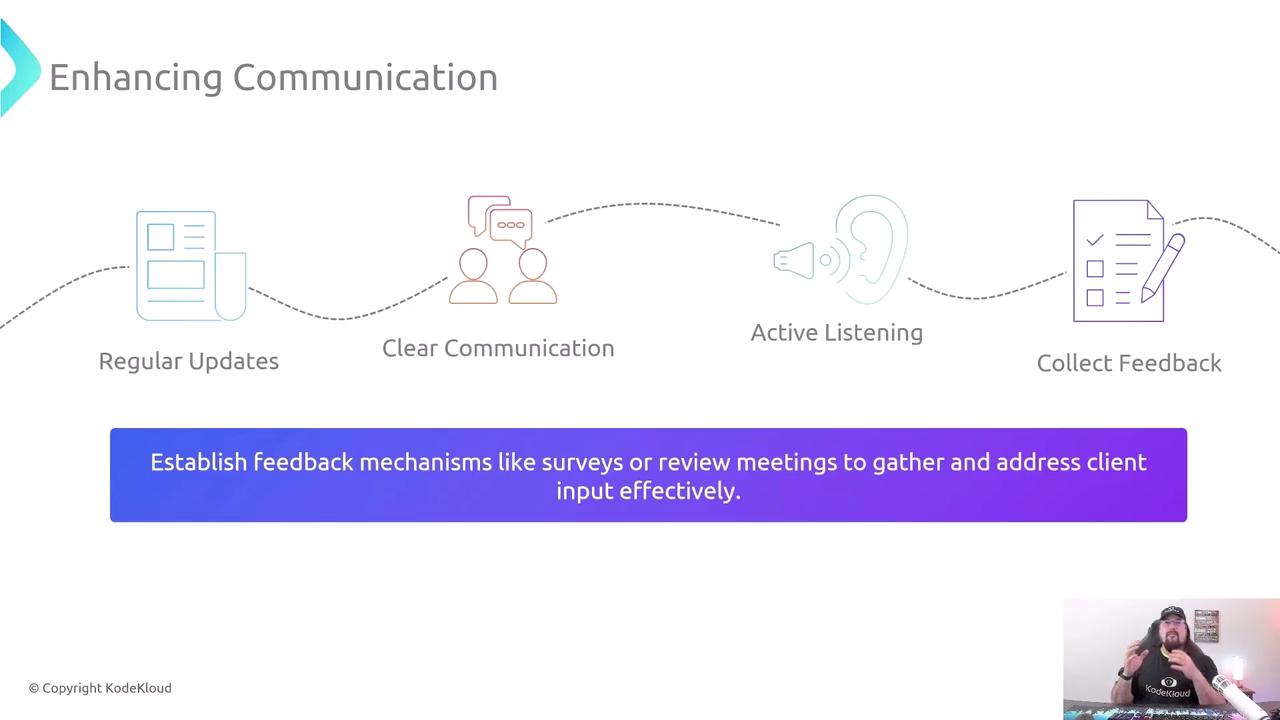
Consistent, transparent communication builds trust with both internal and external stakeholders:- Regular Updates
Share status at predictable intervals (e.g., quarterly roadmaps rather than vague timelines). - Clarity & Conciseness
Apply the Seven C’s: clear, concise, concrete, correct, coherent, complete, courteous. - Active Listening
Acknowledge feedback and thank clients for input—positive or negative. - Feedback Channels
Use surveys, forums, anonymous suggestion boxes, email threads, or Discord servers.
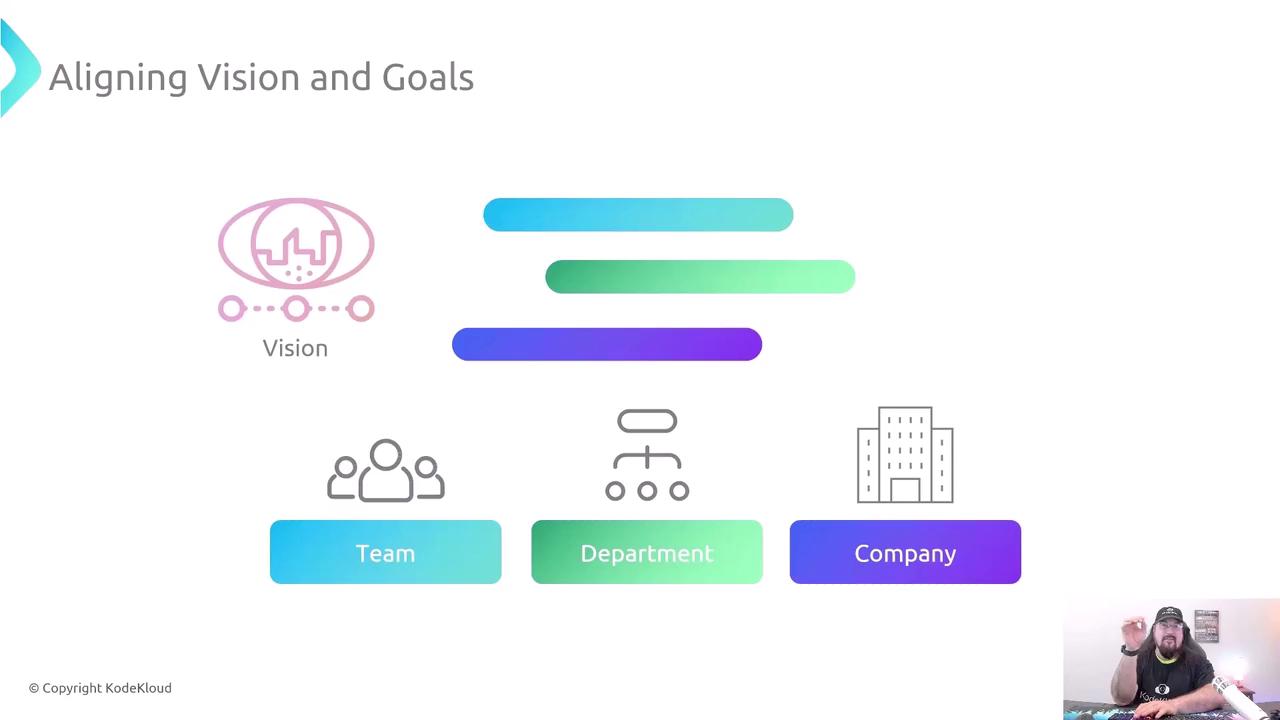
6. Aligning Vision, Mission, and Goals
Every team member should connect daily work to the company’s higher purpose:- Vision: Long-term aspirations for the company and product.
- Mission: How the organization achieves its vision.
- Goals & Strategy: Measurable objectives at team, department, and company levels.
7. Continuous Improvement: Delight Your Customers
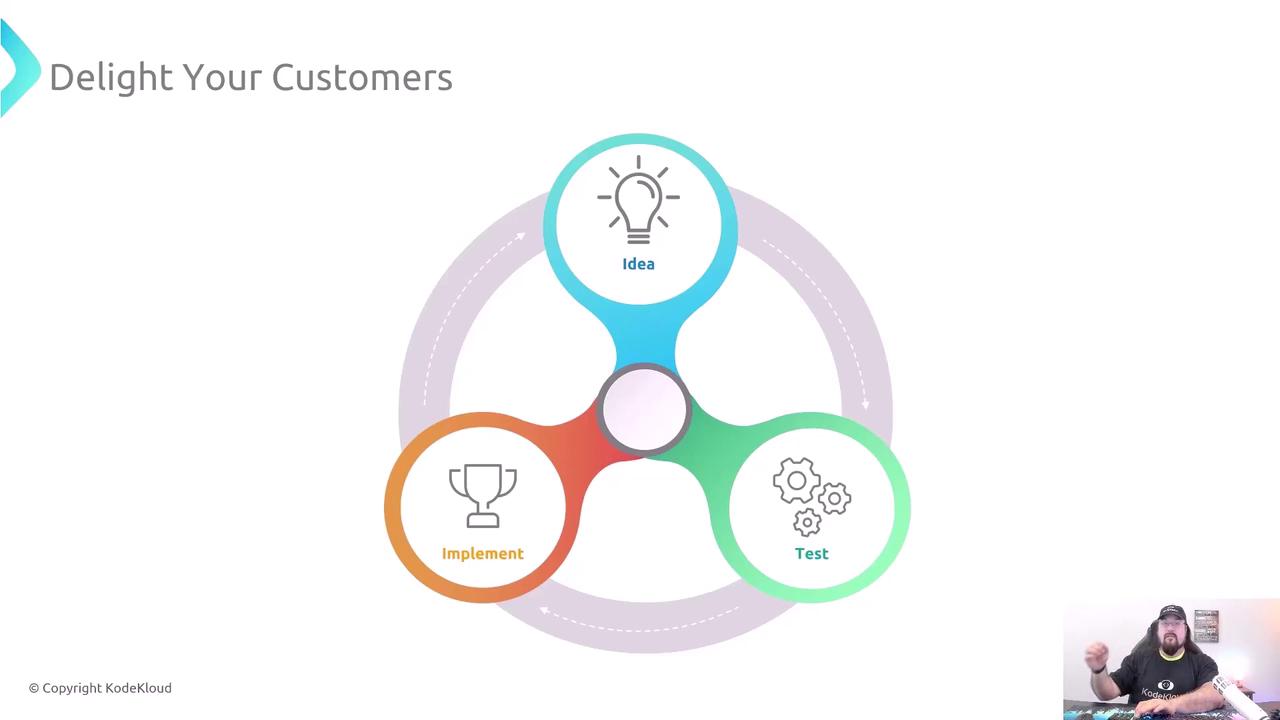
Anticipate client needs and deliver surprises that add value:- Ideation: Brainstorm innovations aligned to client pain points.
- Pilot: Roll out new features to a small user group and gather feedback.
- Scale: Expand successful experiments across all users.
8. Summary of Best Practices
- Define internal vs external stakeholders clearly.
- Prioritize must-haves without neglecting system health.
- Communicate regularly, concisely, and listen actively.
- Align vision, mission, strategy, and team goals.
- Foster innovation with rapid feedback loops.