

In Go, it’s recommended to share memory by communicating, rather than communicating by sharing memory. This approach minimizes the need for locks and other synchronization primitives common in languages like Java or C++.
Understanding Channels
Traditionally, multithreaded programming involves protecting shared data structures using locks. Threads often compete for these locks, which can lead to complexities and performance bottlenecks. In contrast, Go’s concurrency model leverages goroutines and channels to handle data exchange more elegantly. Instead of managing locks explicitly, developers pass references or copies of data between goroutines using channels—ensuring that only one goroutine interacts with a particular piece of data at any given time.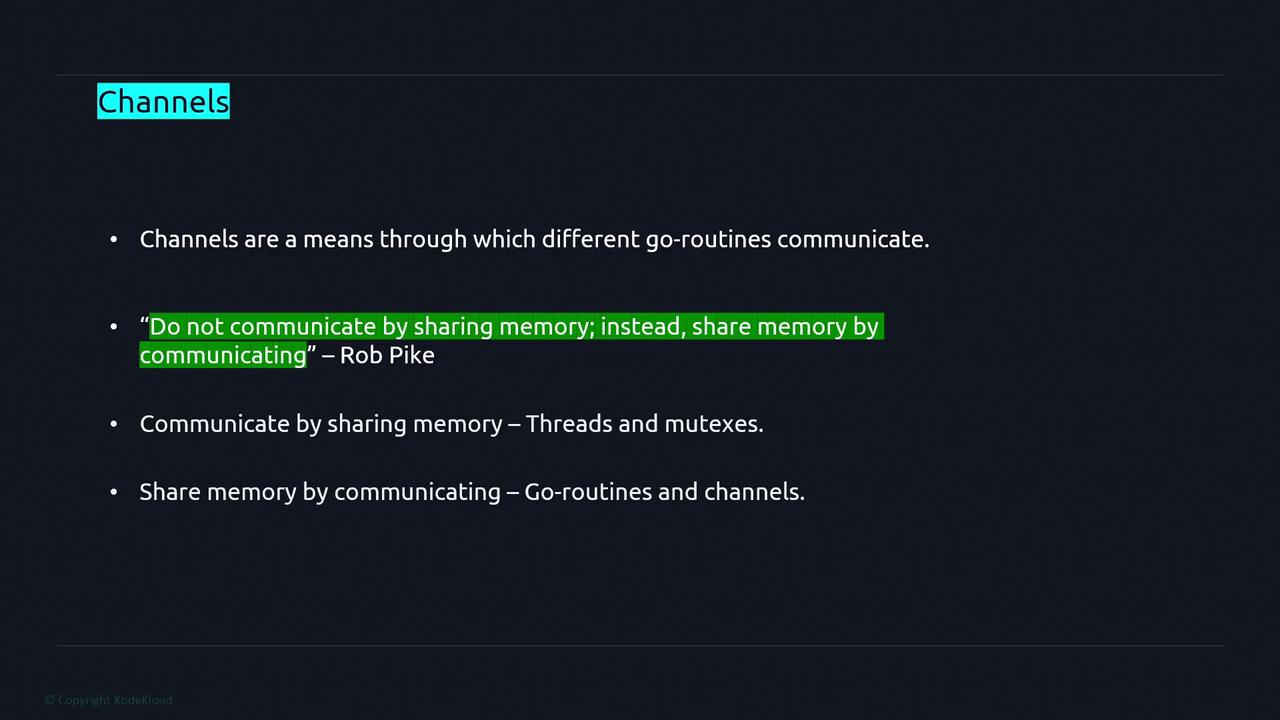
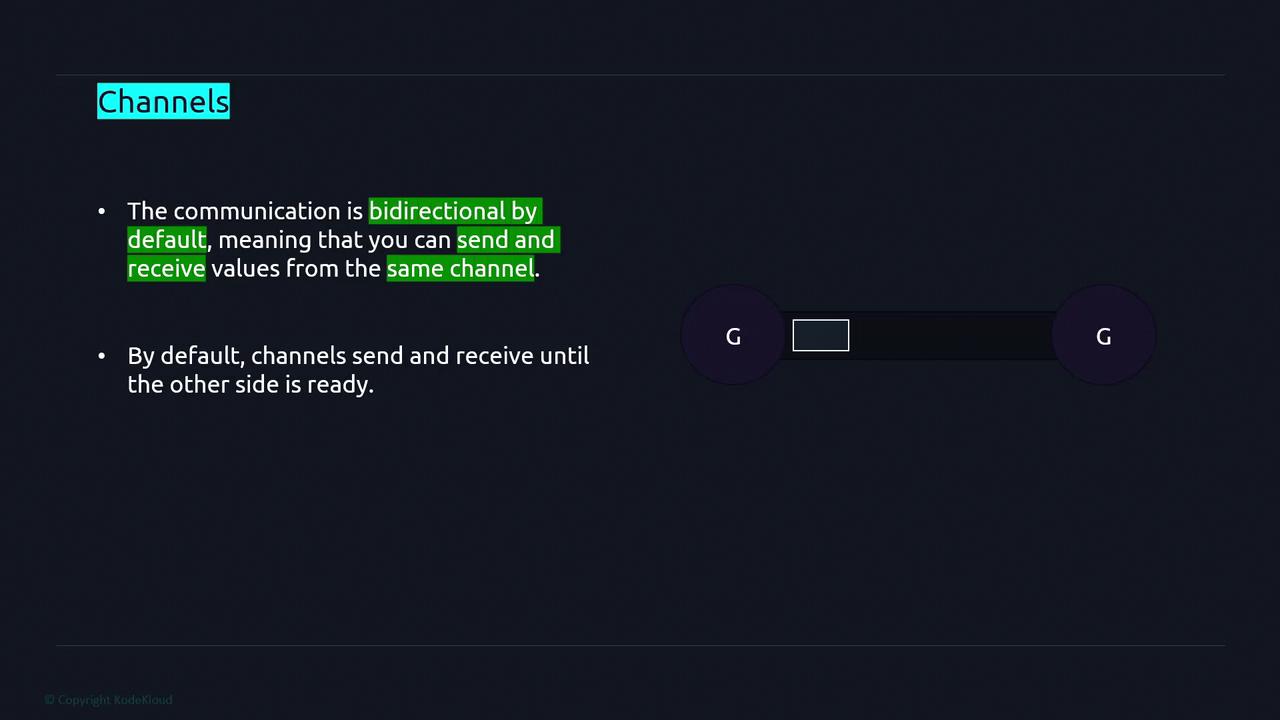
Declaring and Initializing Channels
In Go, each channel is tied to a specific data type (e.g., int, string). The keywordchan is used during declaration. You can declare a channel and initialize it using the make function as demonstrated below:
Channel Operations
Channels in Go offer several built-in operations that simplify the management of concurrent tasks. These operations include sending and receiving values, closing the channel, and checking its capacity or current length.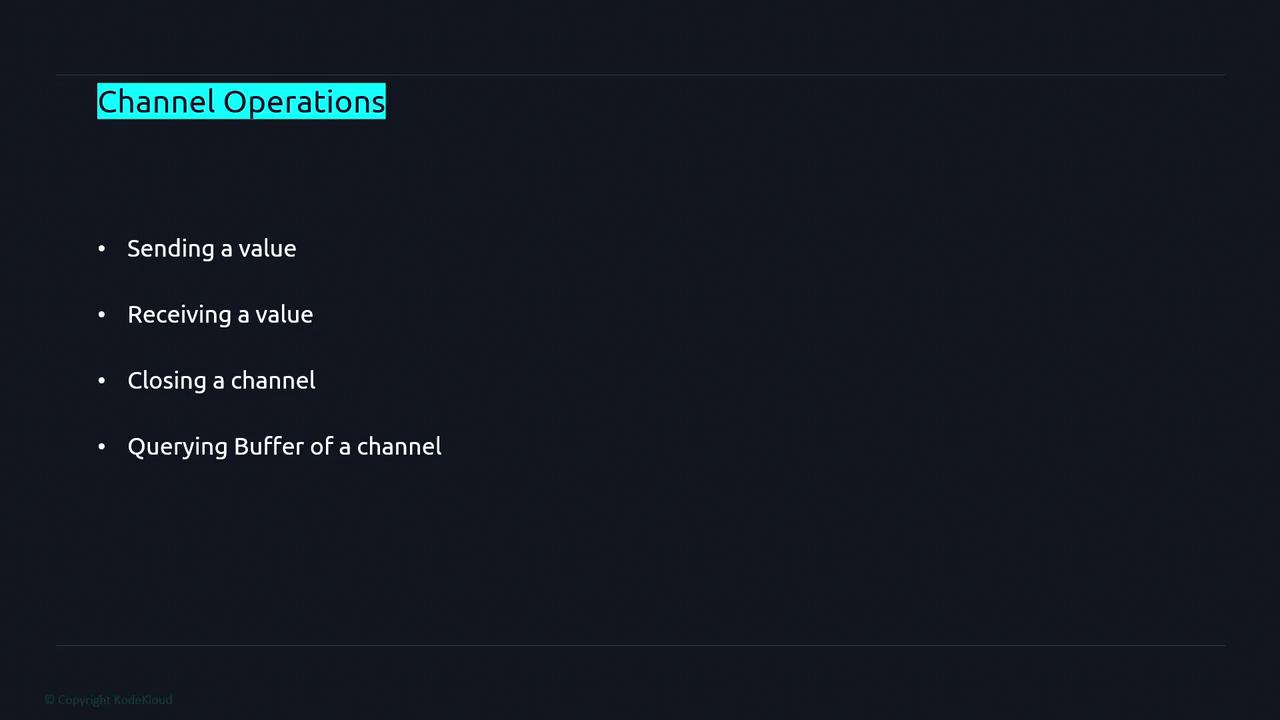
- To send a value into a channel, use the send operator (
<-)
To send a value into a channel, use the send operator (
<-). Ensure that the value is assignable to the channel’s declared type.- To receive a value from a channel, position the send operator on the left sid…
To receive a value from a channel, position the send operator on the left side of the assignment. The returned value is stored in the variable.
- When no further values need to be sent on a channel, close it using the built…
When no further values need to be sent on a channel, close it using the built-in
close function.- Use the
capfunction to retrieve the total size of a channel’s buffer
Use the
cap function to retrieve the total size of a channel’s buffer.- The
lenfunction returns the number of elements that are currently pending …
The
len function returns the number of elements that are currently pending in the channel’s buffer.