

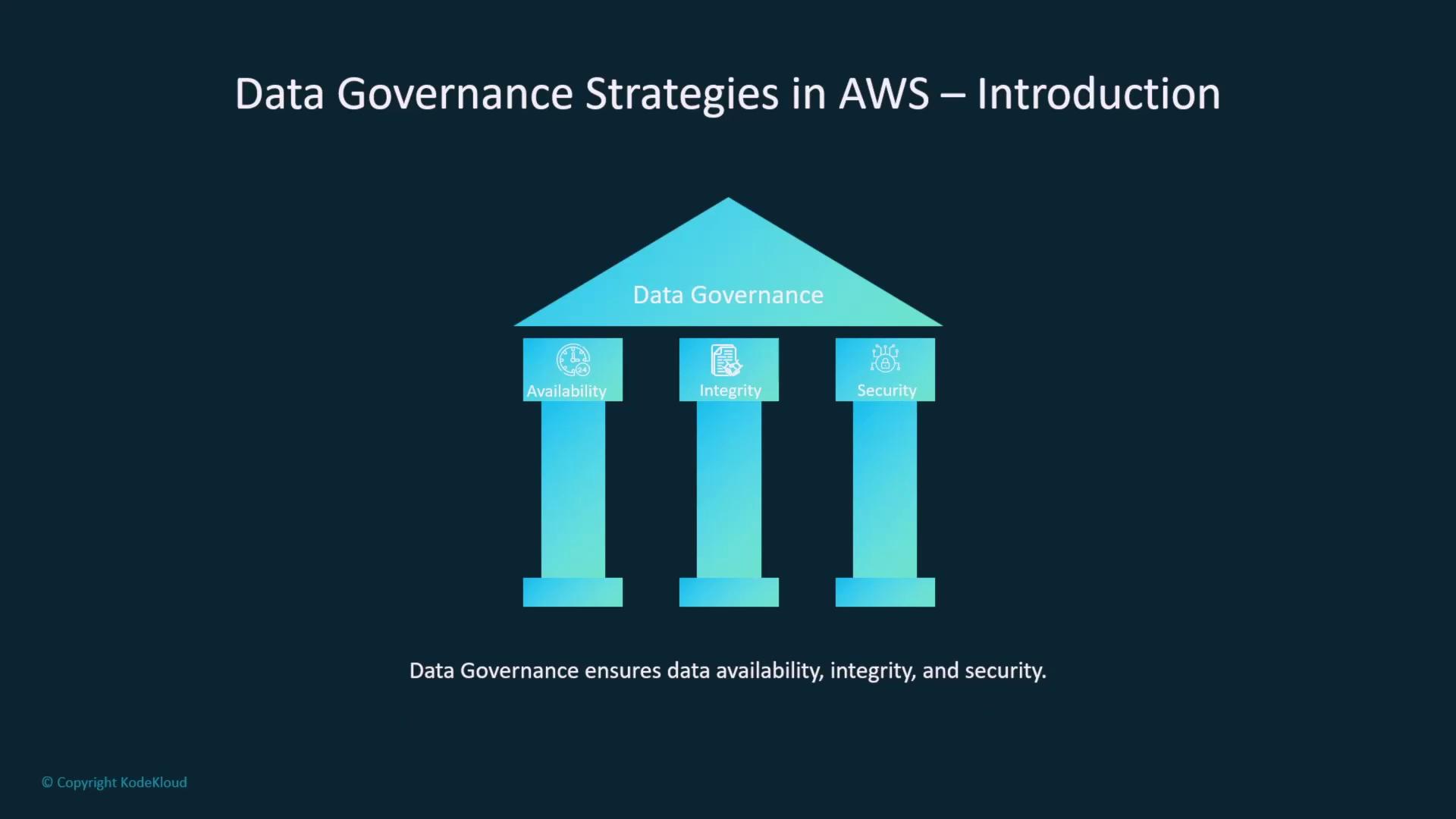
Key Components of Data Governance
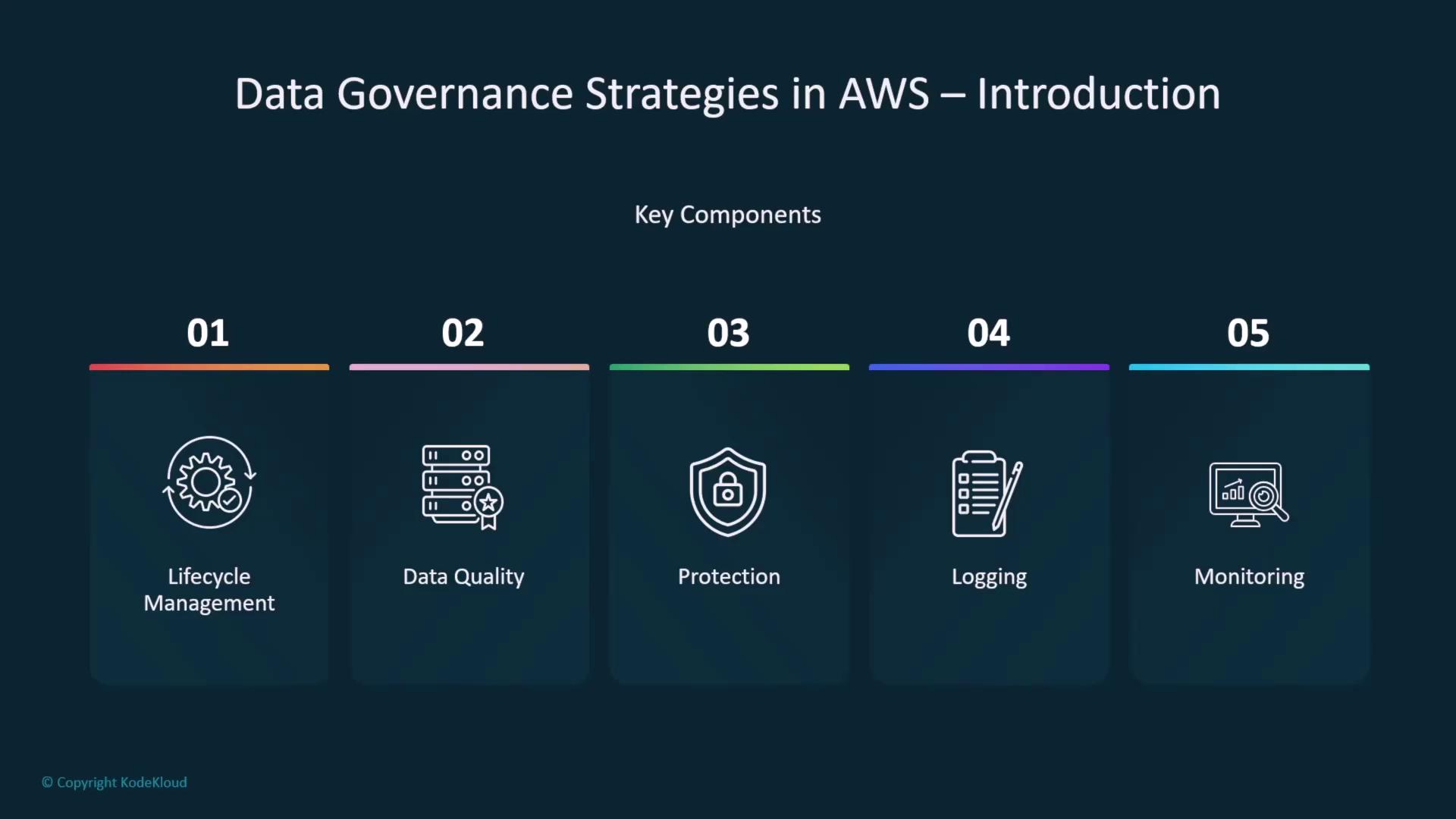
Robust data governance relies on several core components designed to enhance operational efficiency and security:- Lifecycle Management: Ensure data is appropriately transitioned between storage tiers.
- Data Quality: Maintain high standards of accuracy and consistency.
- Data Protection: Secure data against unauthorized access.
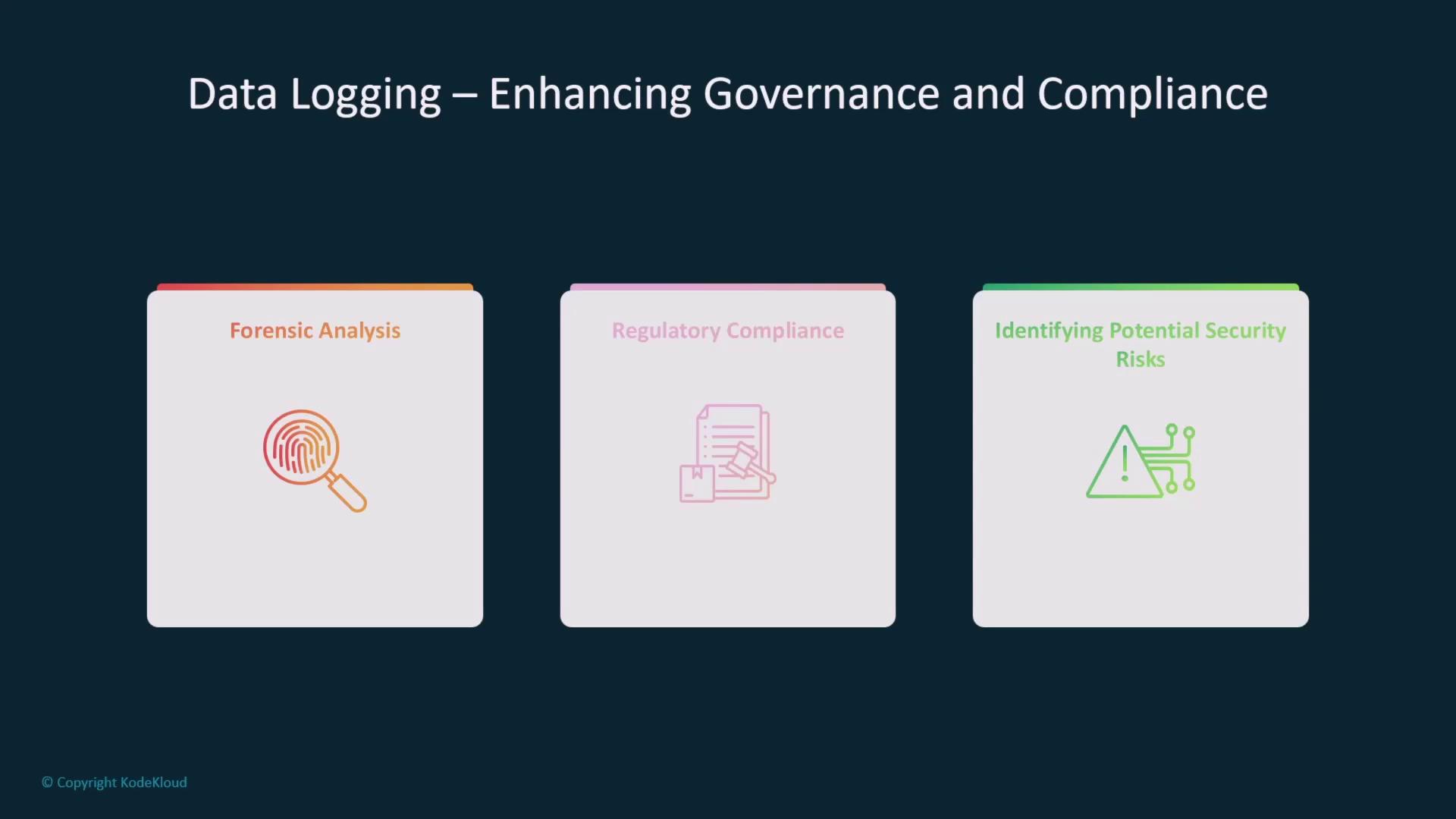
- Logging: Keep records of data access and modifications to facilitate troubleshooting, auditing, and security analyses.
- Monitoring: Detect anomalies and unauthorized activities promptly.
Data Lifecycle Management in AWS
AWS provides powerful tools for data lifecycle management. With S3 lifecycle rules, you can automate data archiving, transition data across various storage classes (such as hot, warm, or cold), and optimize storage costs by moving older data (e.g., data older than 90 days) to more cost-effective tiers or archive zones. This automated process not only improves cost efficiency but also bolsters security by applying enhanced protection to archived data.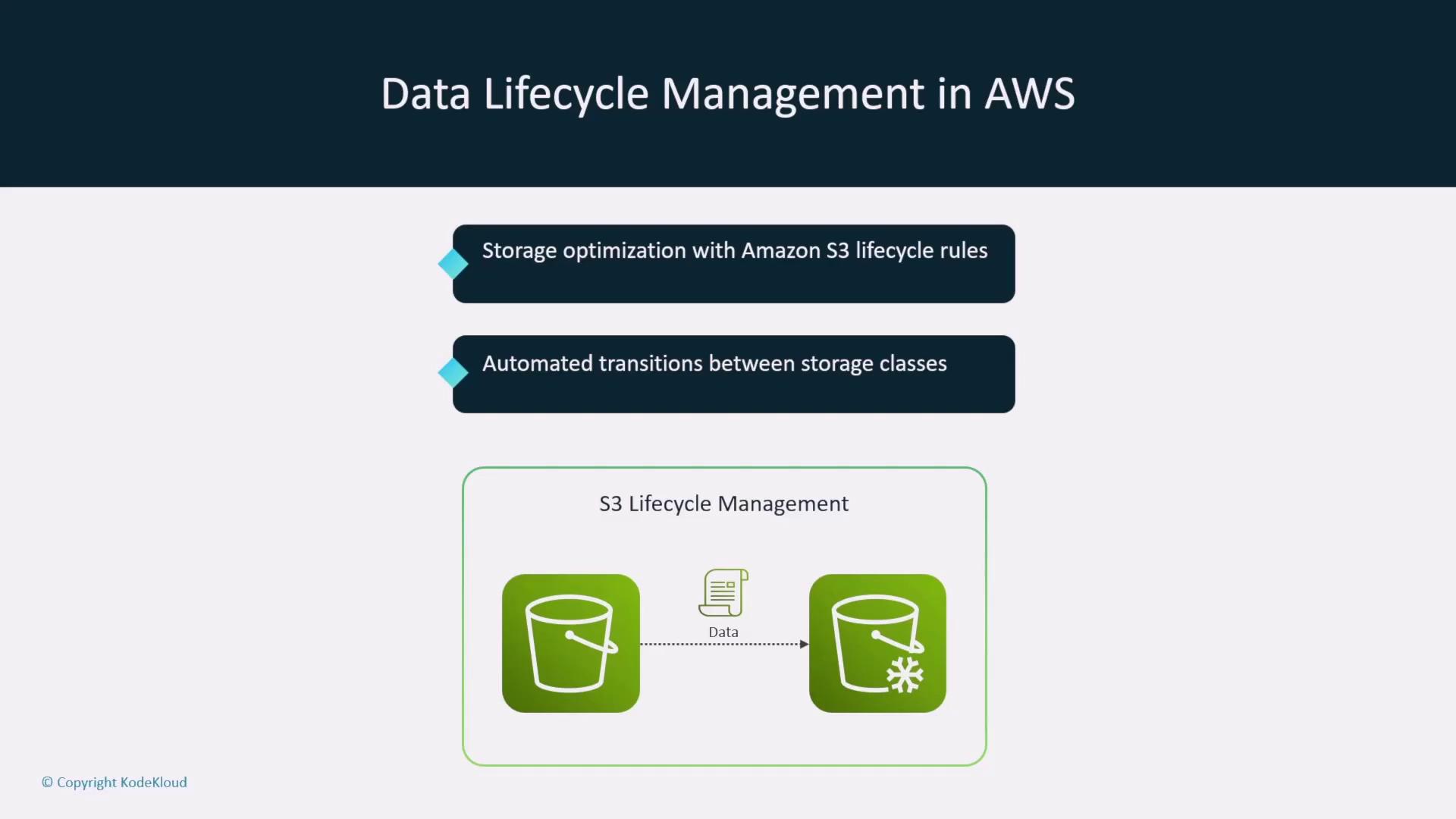
Data Logging
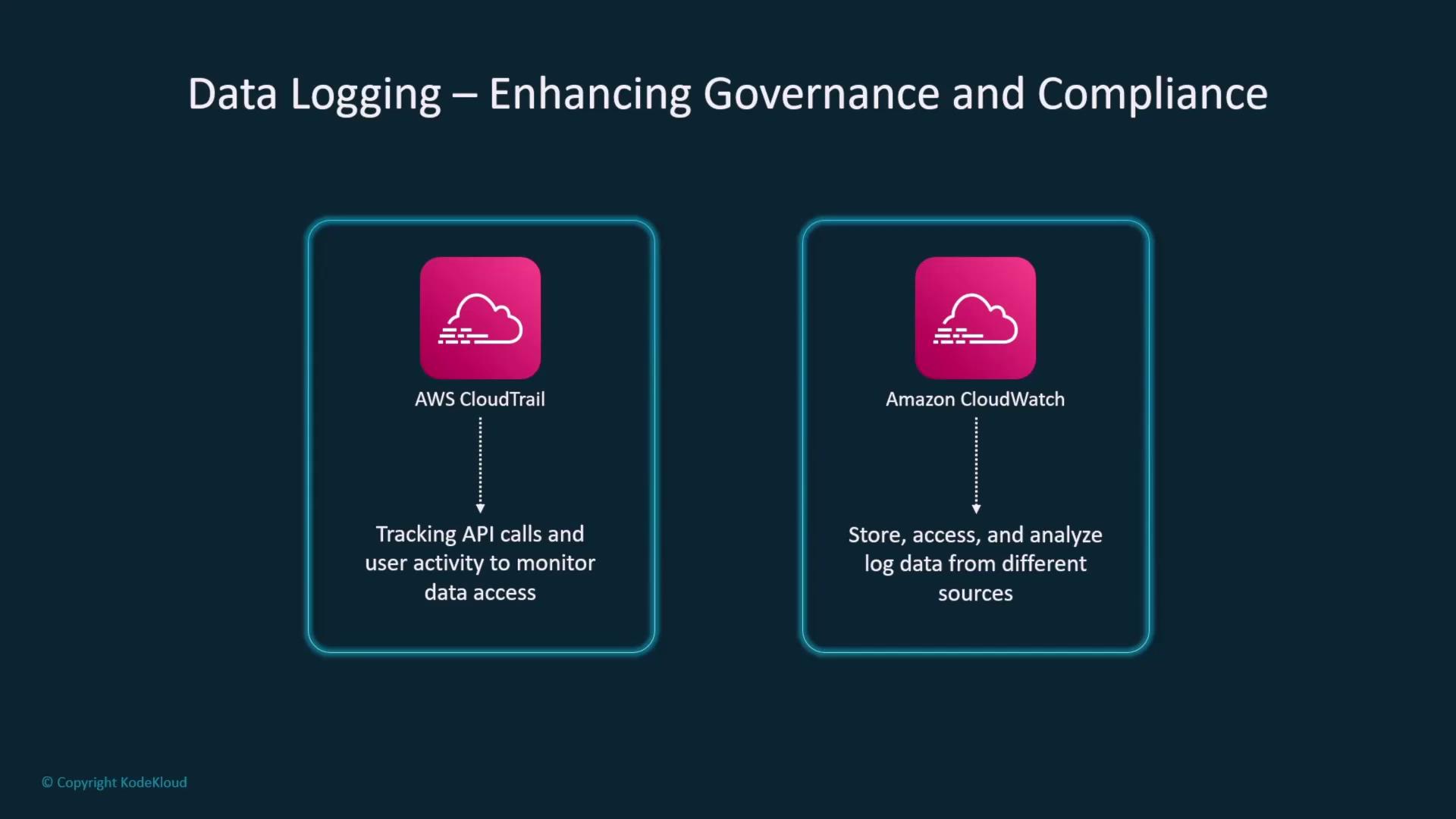
Effective logging is essential for maintaining a secure and compliant data environment. By tracking data access and modifications, logging plays a vital role in:- Troubleshooting technical issues.
- Auditing system usage.
- Conducting comprehensive security analyses.
Data Curation and Understanding
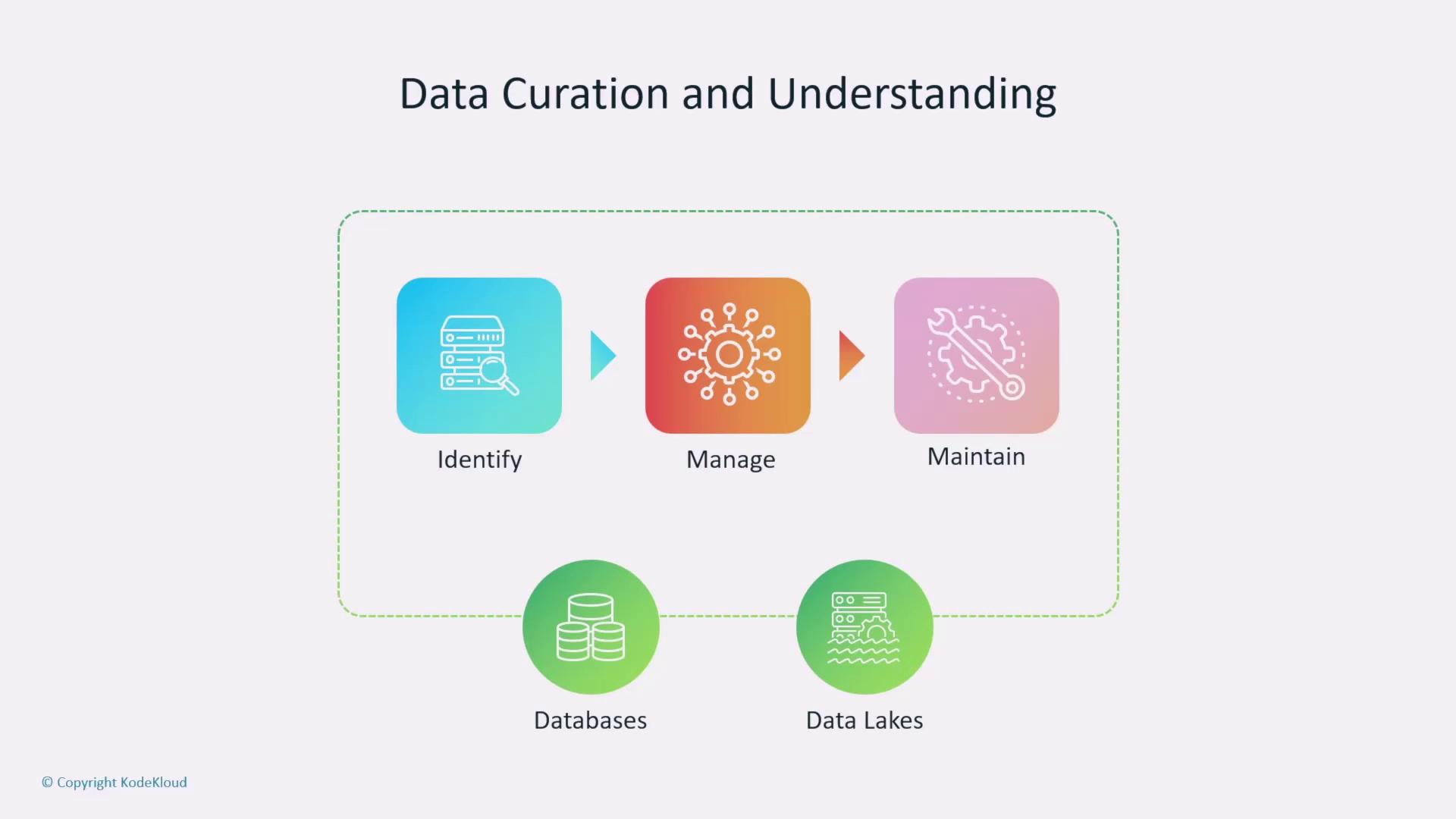
Data curation involves identifying, managing, and maintaining data across diverse repositories, such as:- Amazon S3 for data lakes.
- Amazon Redshift for data warehousing.
- DynamoDB, DocumentDB, RDS, and Aurora for SQL and NoSQL databases.
- In-memory data stores like Redis or managed services such as ElastiCache.
Data Protection and Privacy
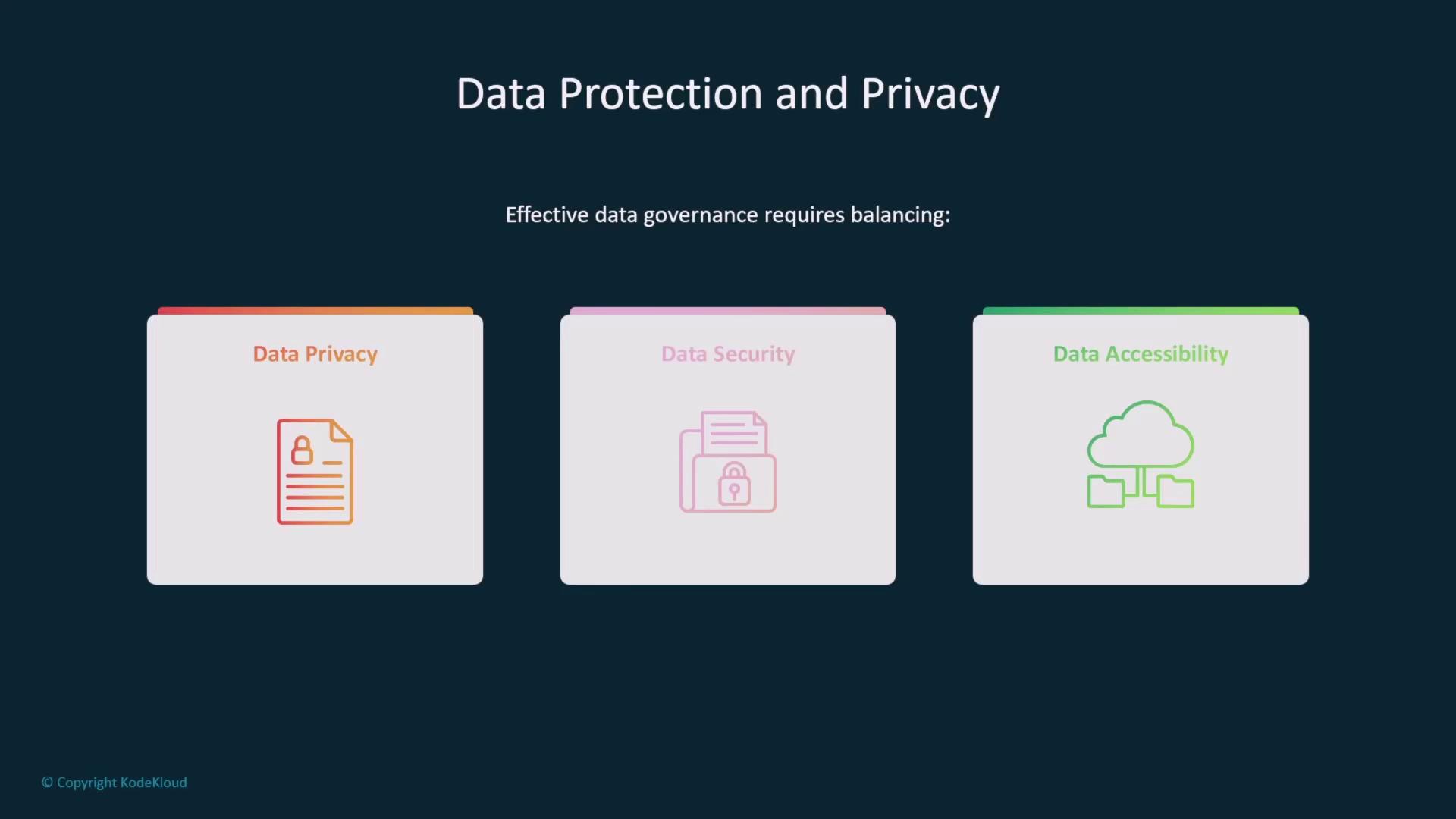
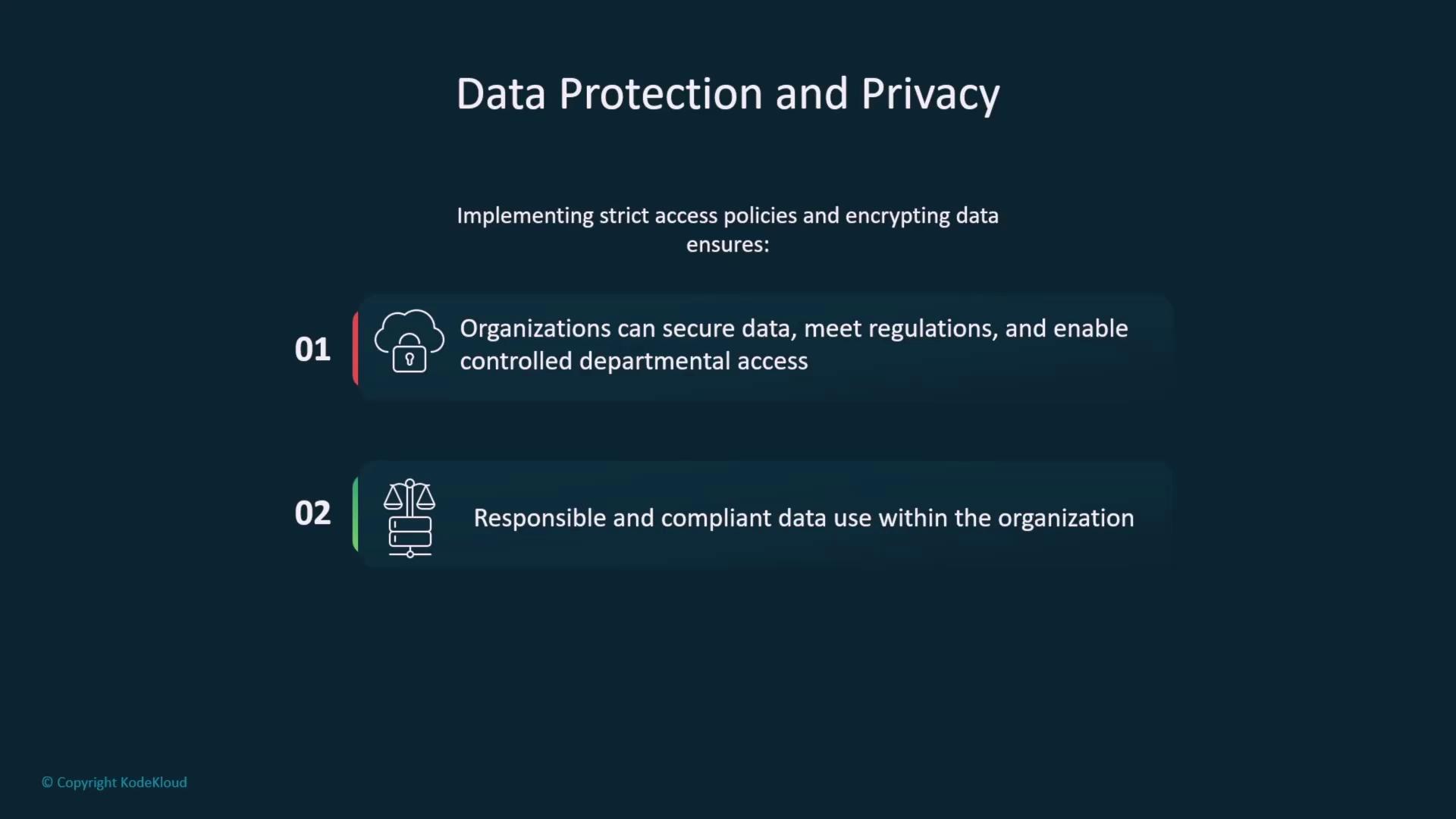
Balancing data protection with privacy and accessibility is a complex challenge. AWS Lake Formation enables control down to the cell, row, and column level by leveraging fine-grained access control policies via IAM. This detailed access management applies to both centralized data lakes and traditional data stores such as RDS using PostgreSQL privileges. Key points in data protection and privacy include:- Enforcing least-privilege access.
- Implementing strict access policies.
- Securing data flows by tracking all inputs and outputs.
Data Quality Management
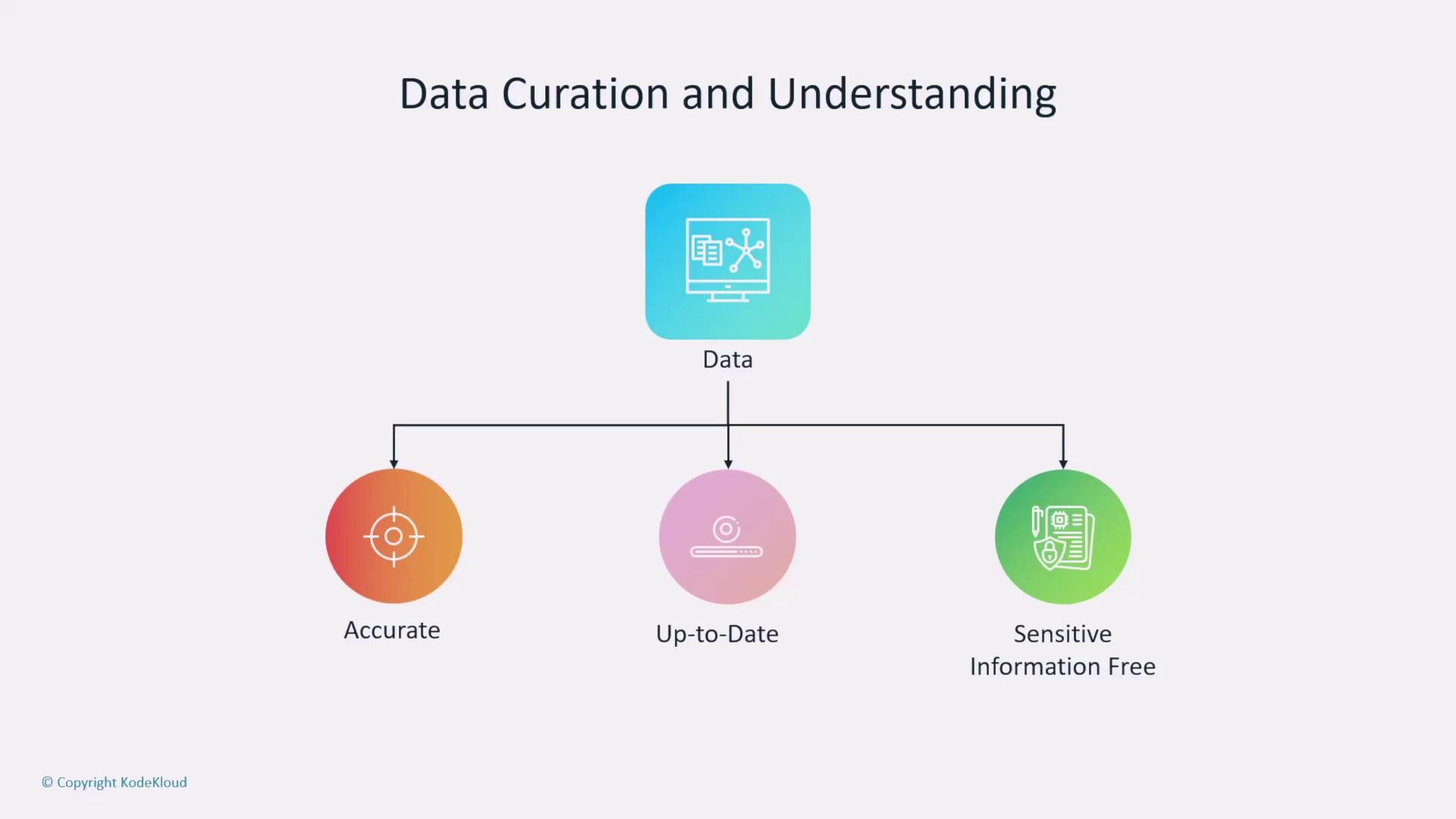
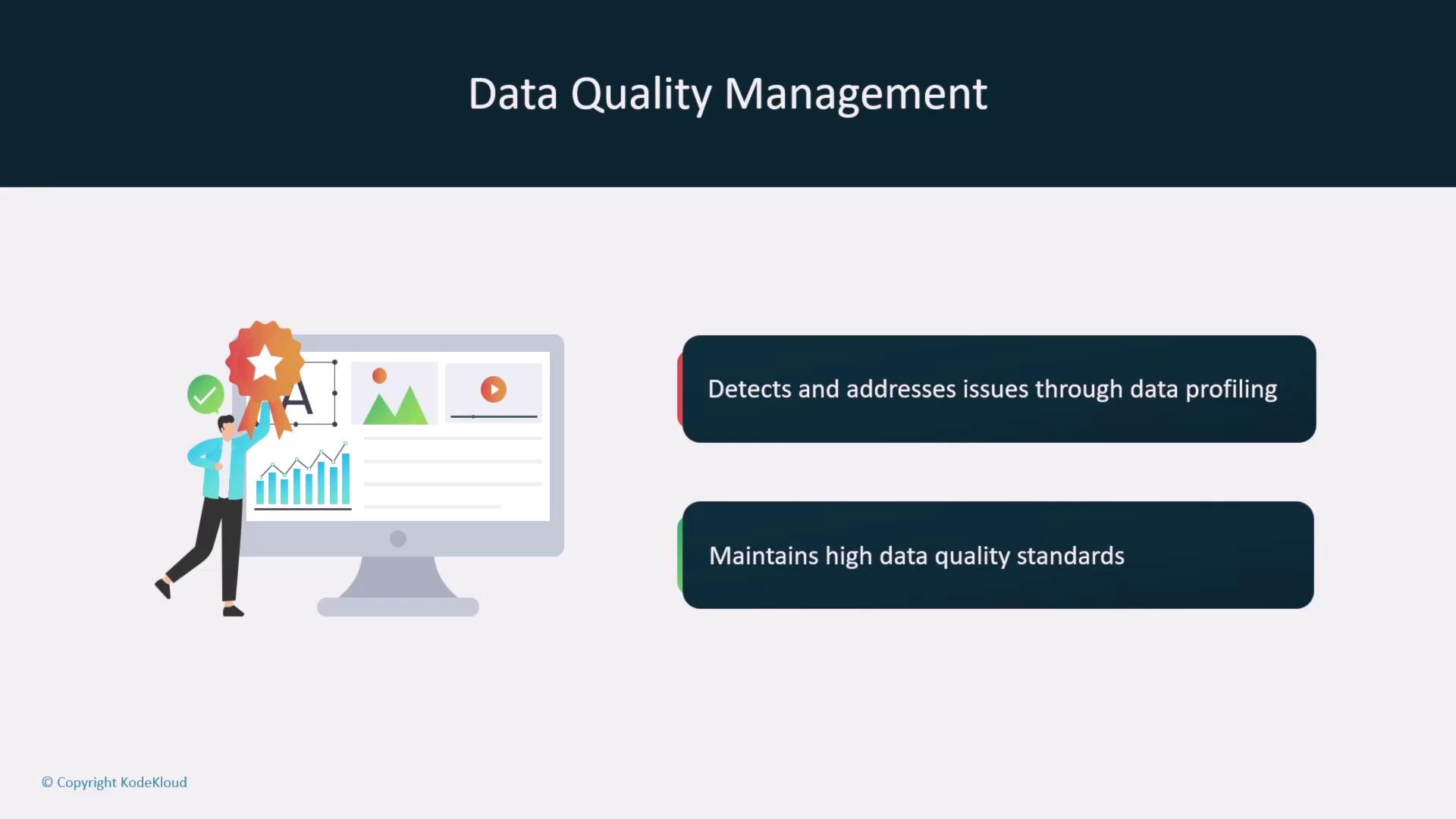
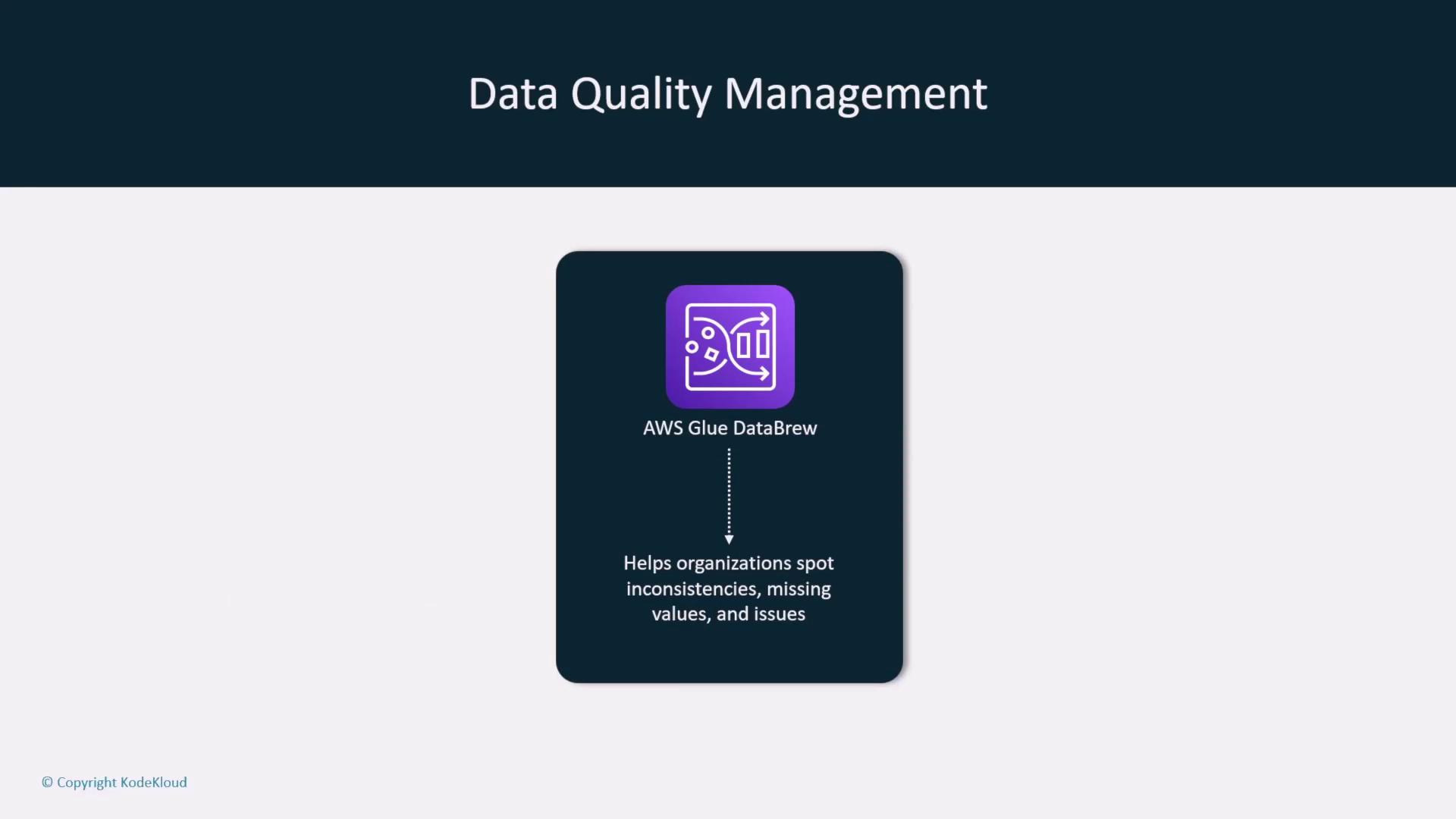
Monitoring and profiling data continuously are vital for managing data quality. Key focus areas in data quality management include:- Detecting skewed data distributions.
- Identifying recency issues.
- Resolving inconsistencies and missing values.
Master Data Management (MDM)
Master Data Management (MDM) is essential for ensuring consistency across different systems by establishing a single source of truth. Using solutions like Amazon Redshift as a centralized data warehouse, combined with AWS Glue for ETL processes, can ensure that all data references the primary source accurately. Maintaining reliable data lineage and attribution is critical, whether you are using AWS Lake Formation or another alternative.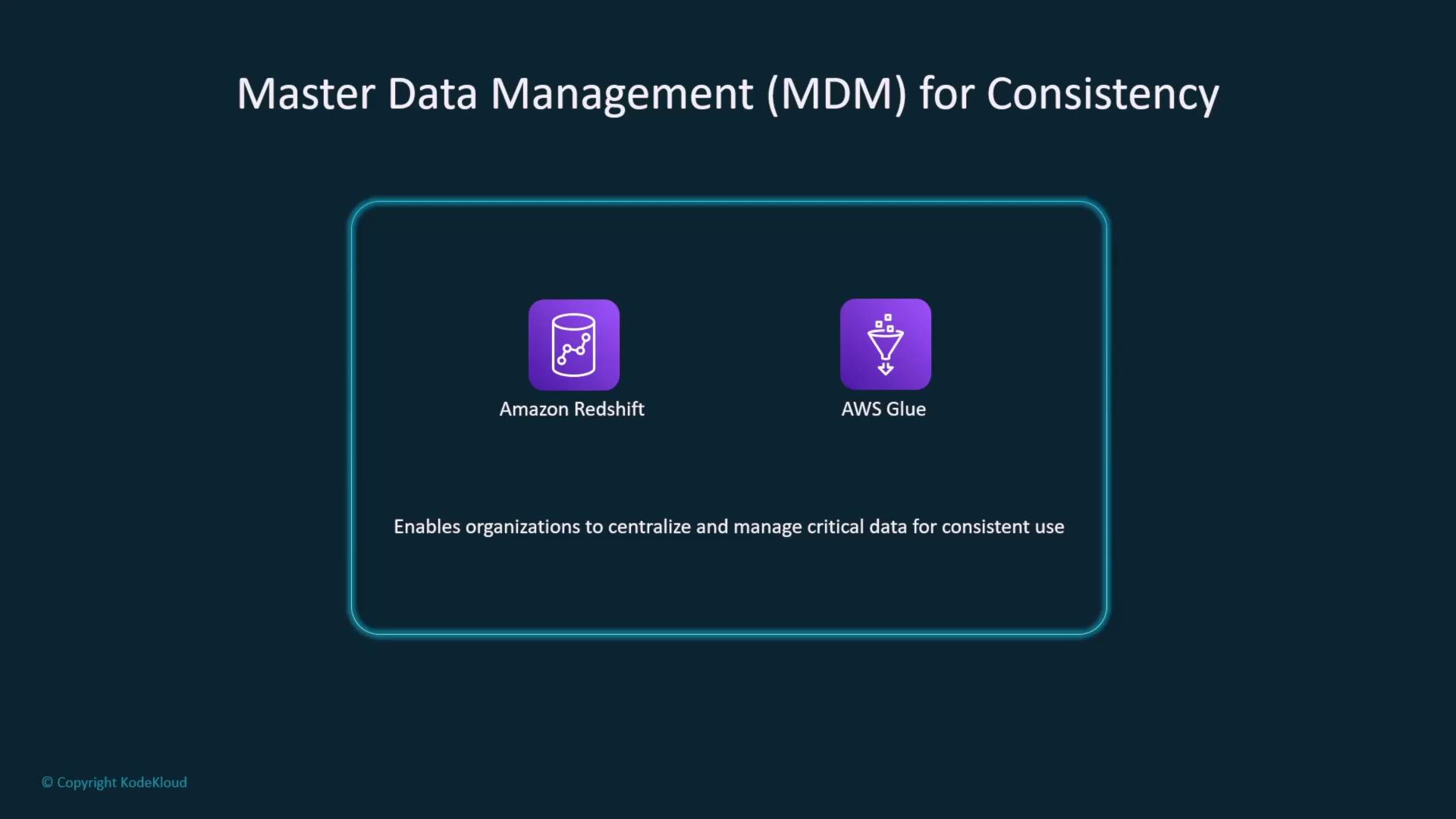
Data Access Control and Compliance
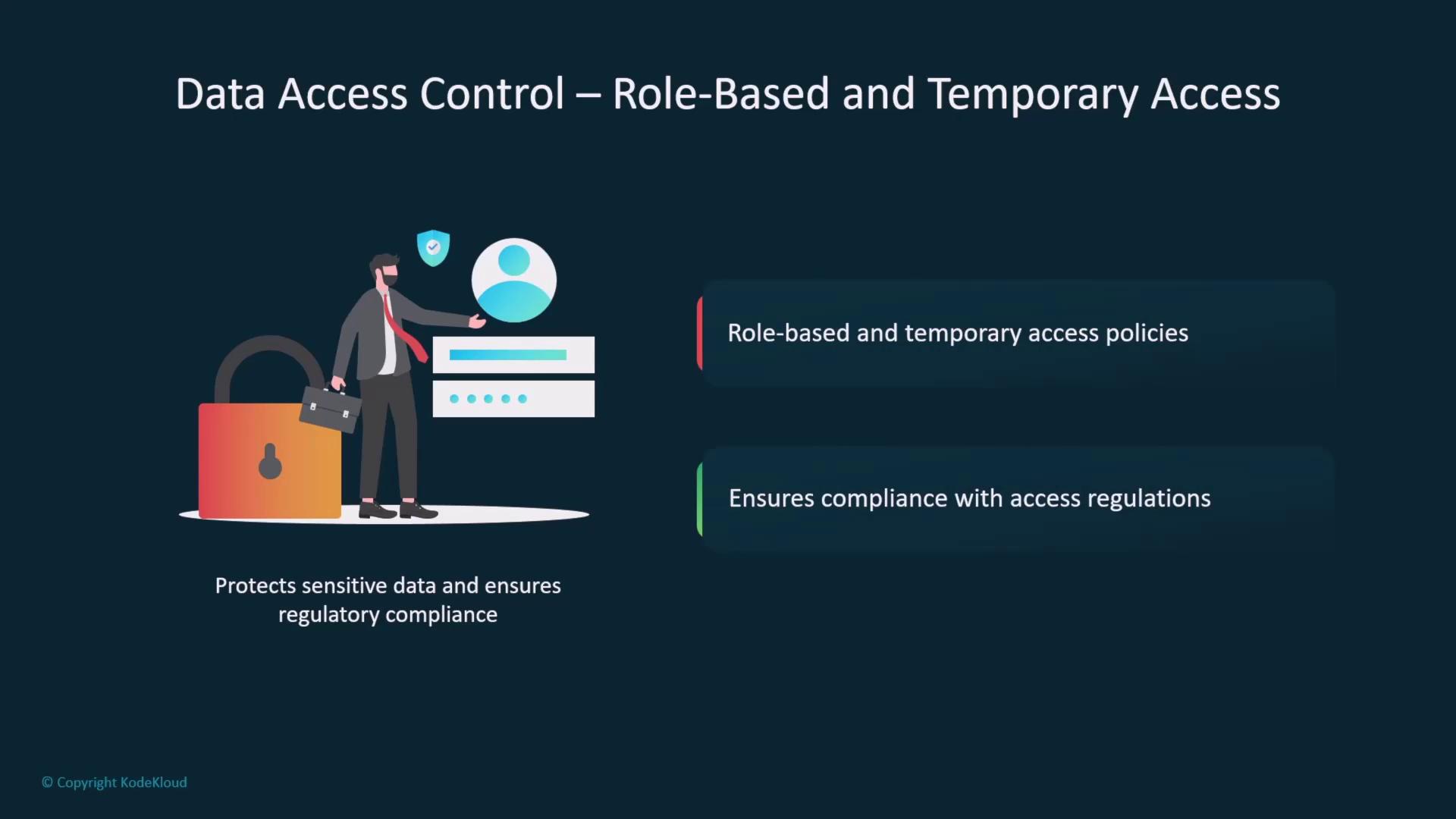
Maintaining regulatory compliance and protecting sensitive data require strict role-based and temporary access controls. Elements of an effective data access control strategy include:- Controlling data access based on established roles.
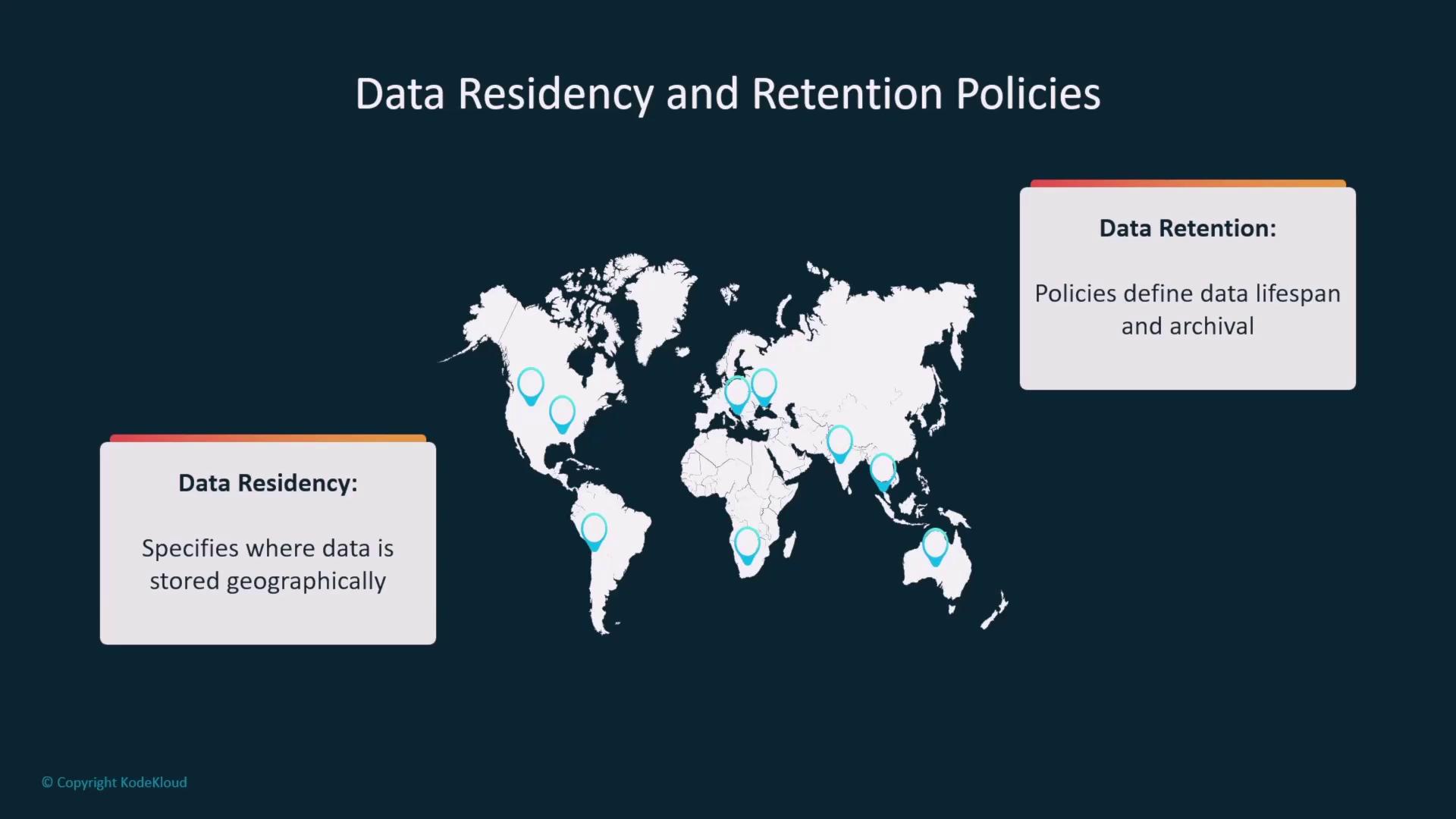
- Enforcing geographical data residency.
- Complying with data retention policies, such as those mandated by GDPR.
Data Monitoring and Observation
In addition to detailed logging, continuous monitoring is crucial for identifying data anomalies and ensuring security. Tools like AWS CloudWatch and built-in logging features in Lake Formation offer comprehensive insights into data access and transformations. This proactive approach supports security measures and aids in maintaining regulatory compliance by ensuring that all API calls captured by AWS CloudTrail are monitored.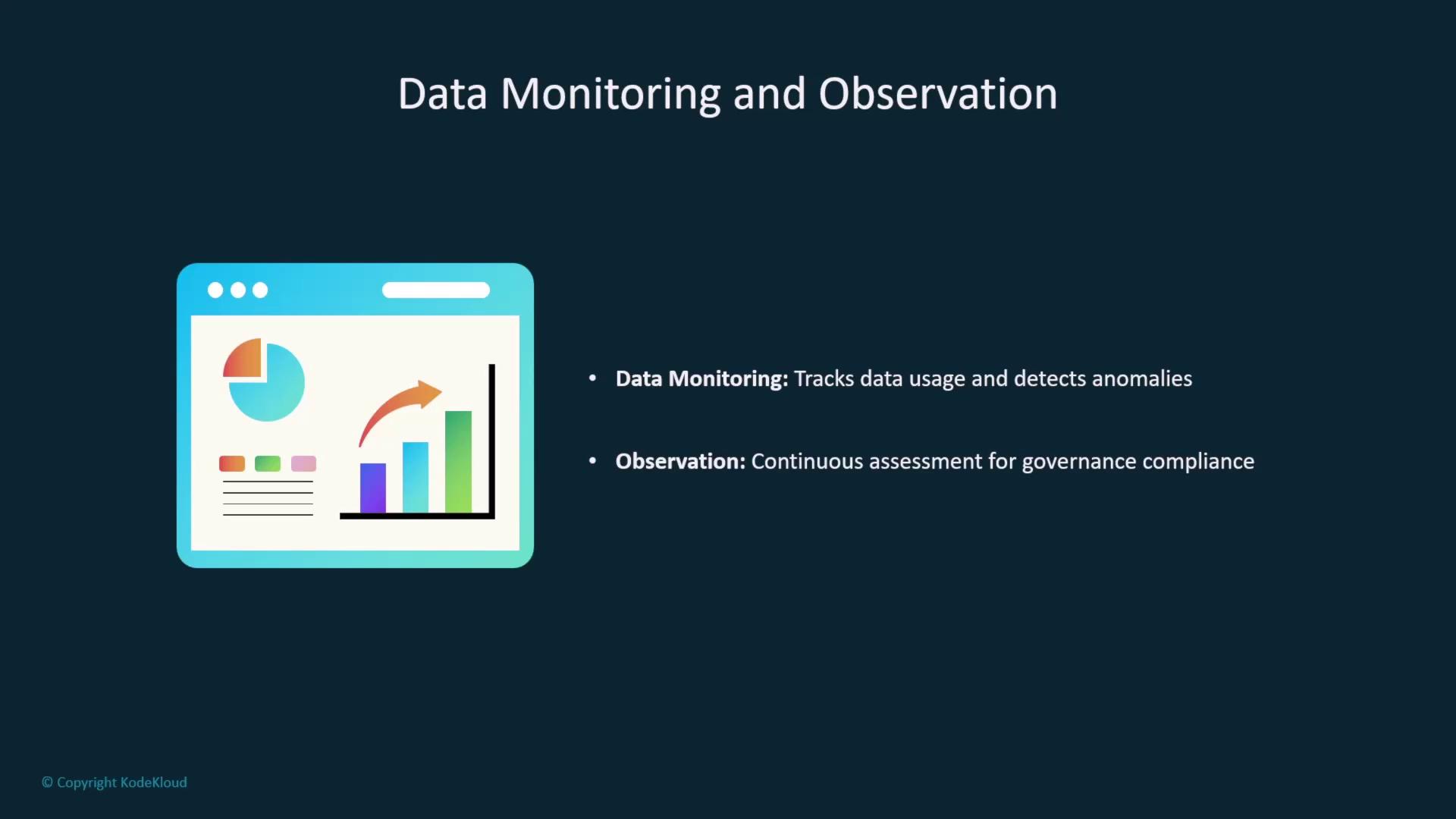
Conclusion
This guide has delved into the various pillars of an effective data governance strategy—from lifecycle management and curation to rigorous access controls and monitoring. These principles form the foundation of AWS data governance, supporting both practical implementations and exam preparations for the AWS AI Practitioner certification.Embracing these data governance strategies will not only streamline your operations but also enhance the security and compliance of your AI initiatives. For more detailed information, explore AWS Documentation.