

How RAG Works
At its core, RAG integrates a large language model with an information retrieval system. The process retrieves external knowledge, merges it with the user prompt, and processes the combined input to generate a highly relevant response.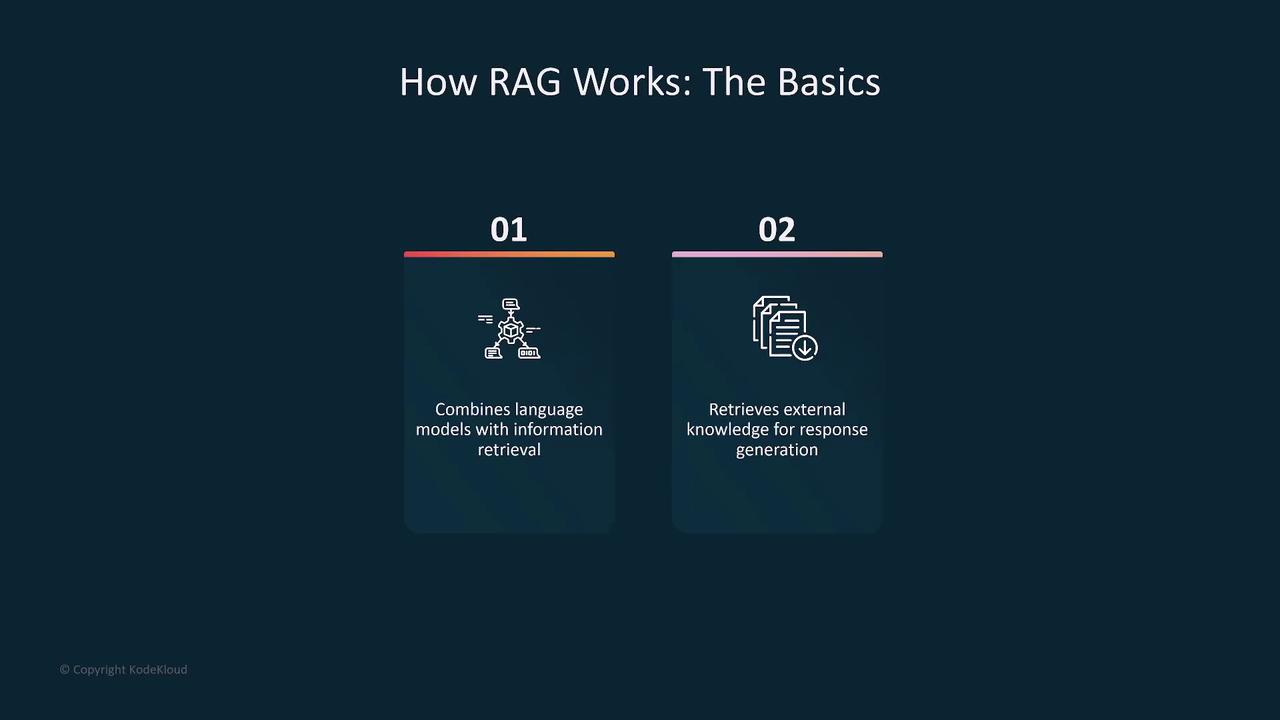
Understanding Prompts
A prompt is the user’s input that dictates the request. It can incorporate various contextual data sources such as documents, web pages, blogs, and technical documentation. By integrating semantically meaningful context, RAG steers the model towards generating more precise responses—especially useful when the base training data is outdated.
The Backbone of RAG: Vector Databases
A key component of RAG is the vector database, which stores data as vector embeddings. These embeddings—numerical representations capturing the meaning and relationships of data—enable rapid and efficient retrieval of contextually relevant information.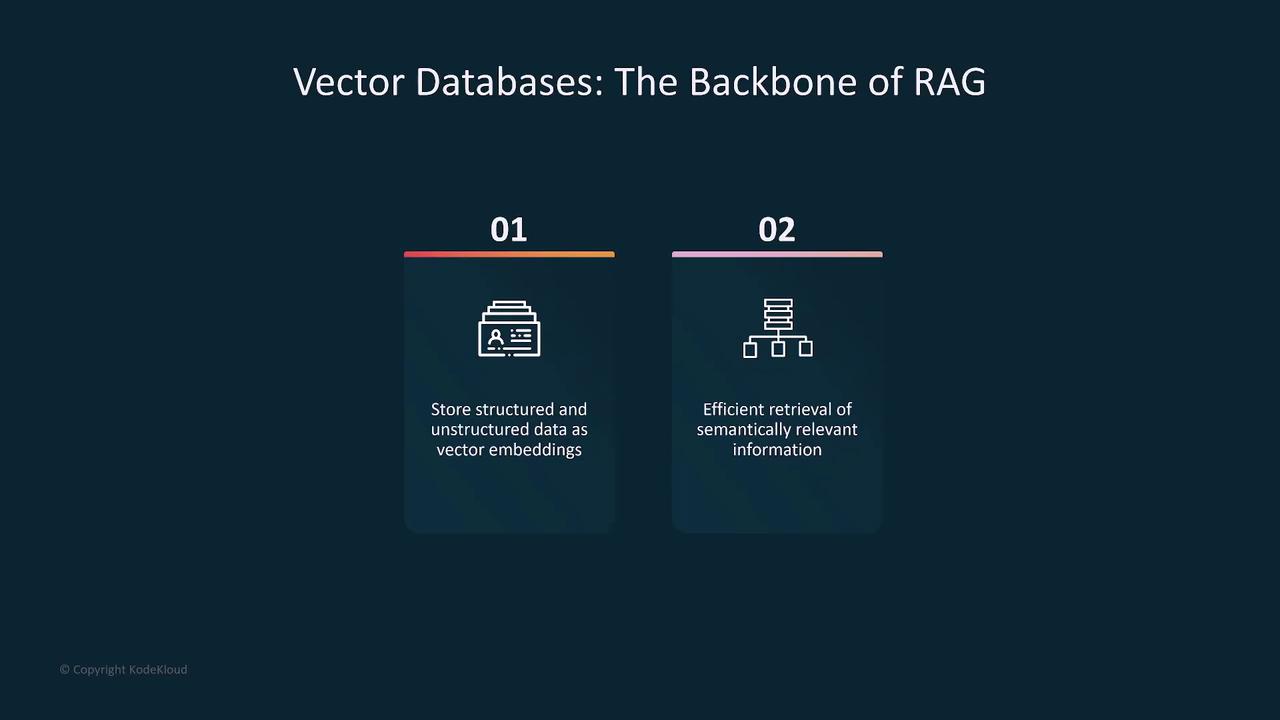
Business Applications
RAG significantly enhances various business applications. It improves search recommendations and text generation by embedding richer contextual data into the model’s responses. Additionally, RAG supports improved customer interaction, enhanced feedback loops, and accurate document extraction.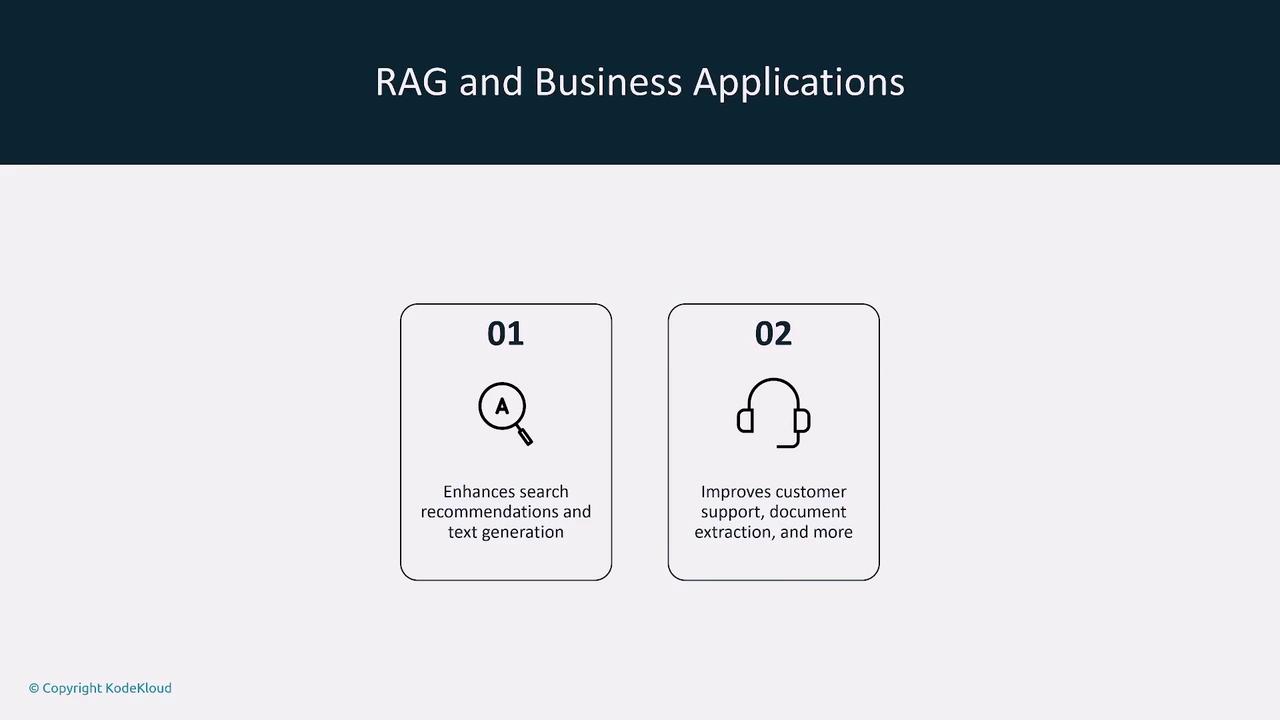
Cost Considerations
When implementing RAG, balancing performance and cost is crucial. RAG can be integrated at various stages:- Pre-prompt incorporation during training
- Mid-prompt application
- Post-response feedback loop adjustments
Carefully evaluate trade-offs between performance improvements and increased infrastructure costs when integrating RAG into your systems.
Enhancing In-Context Learning
RAG boosts in-context learning techniques—spanning multi-shot, few-shot, and zero-shot approaches—by embedding external examples into prompts. This enhancement is particularly effective in applications such as customer support, where previous interactions and specialized domain knowledge drive more comprehensive responses. Academic research and public information retrieval also benefit significantly from RAG’s enriched data sourcing.
Challenges and Final Thoughts
While RAG offers numerous benefits, it also presents challenges related to infrastructure demands, retrieval speed, and data filtering. Ensuring the security of external sources, preventing model poisoning, and mitigating bias are essential considerations during implementation.When deploying RAG solutions in production, be mindful of potential security vulnerabilities and data integrity issues. Ensure thorough testing and validation of all external data sources.