

Why Generative AI?
Generative AI has rapidly transformed industries since its emergence, becoming a force multiplier across a range of applications—from classification and text generation to image creation and human-like interactions. Leveraging pre-trained language models, generative AI enhances efficiency, personalization, and creativity for businesses.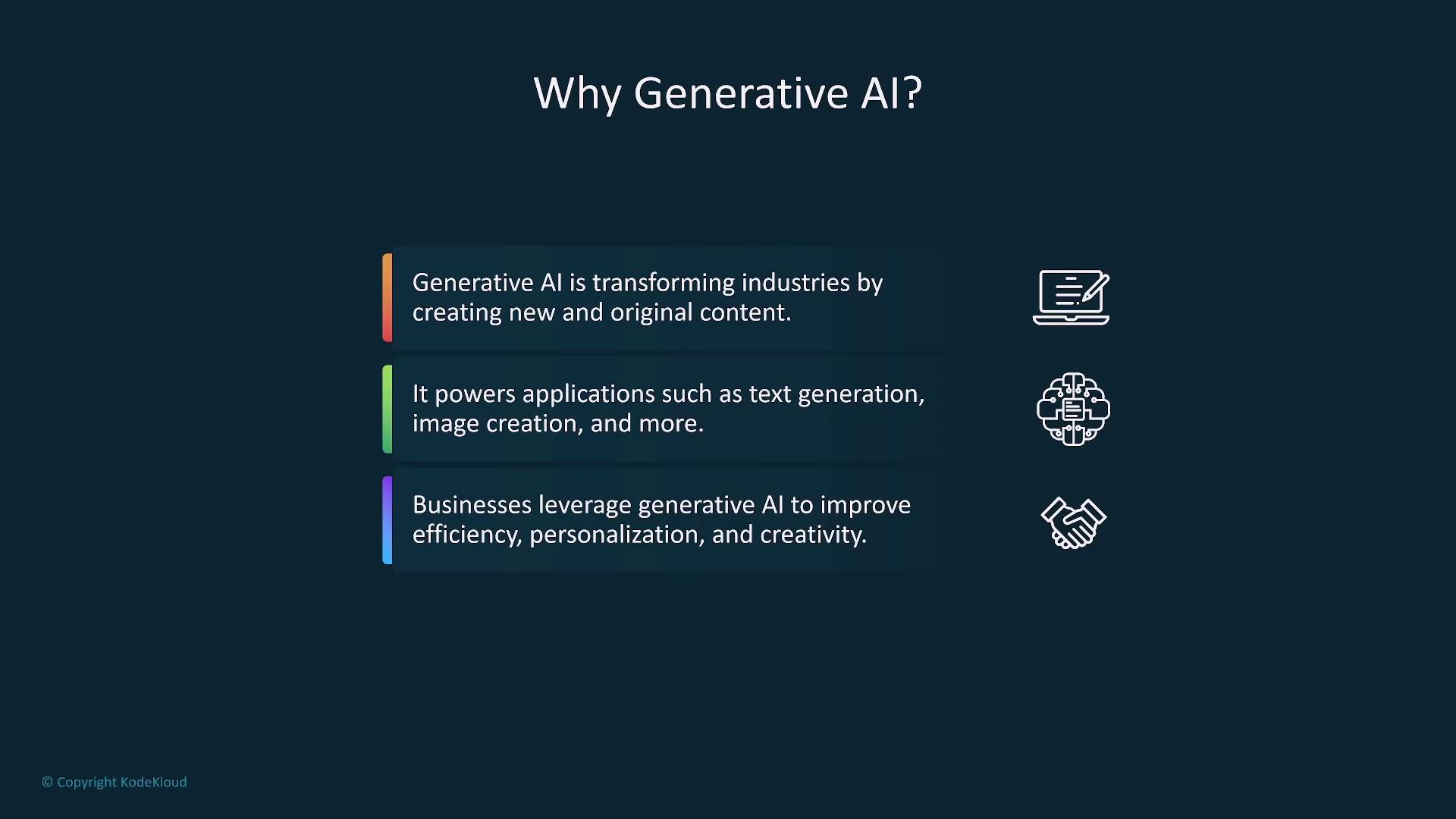
AI Models and the Transformer Architecture
AI models are algorithms trained on massive datasets to recognize and replicate patterns. Neural networks form the foundation of these models, allowing them to handle diverse data types including text, images, and videos. For instance, when generating text, models predict the next token (or minimal word unit) based on prior context and relational patterns.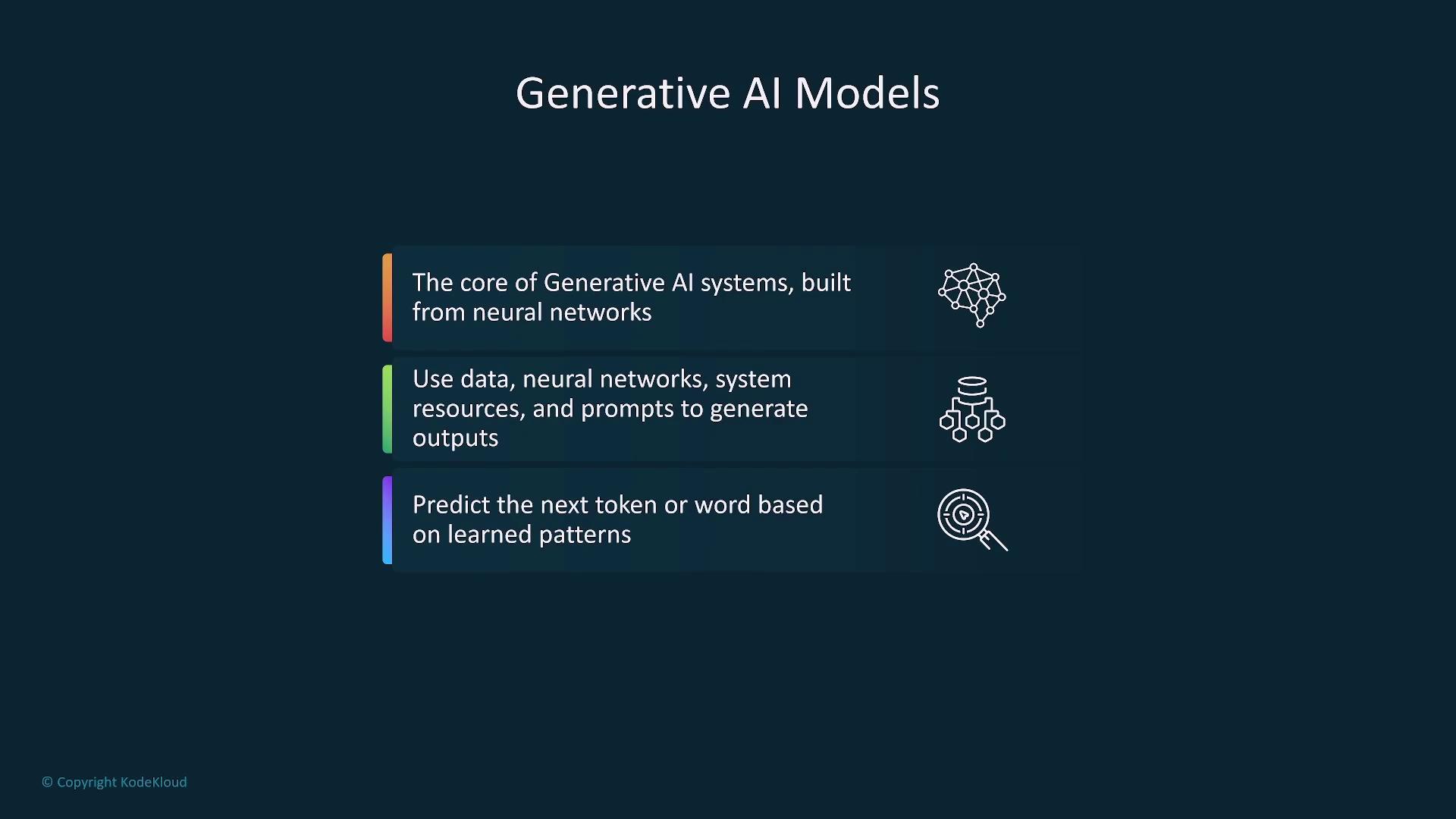
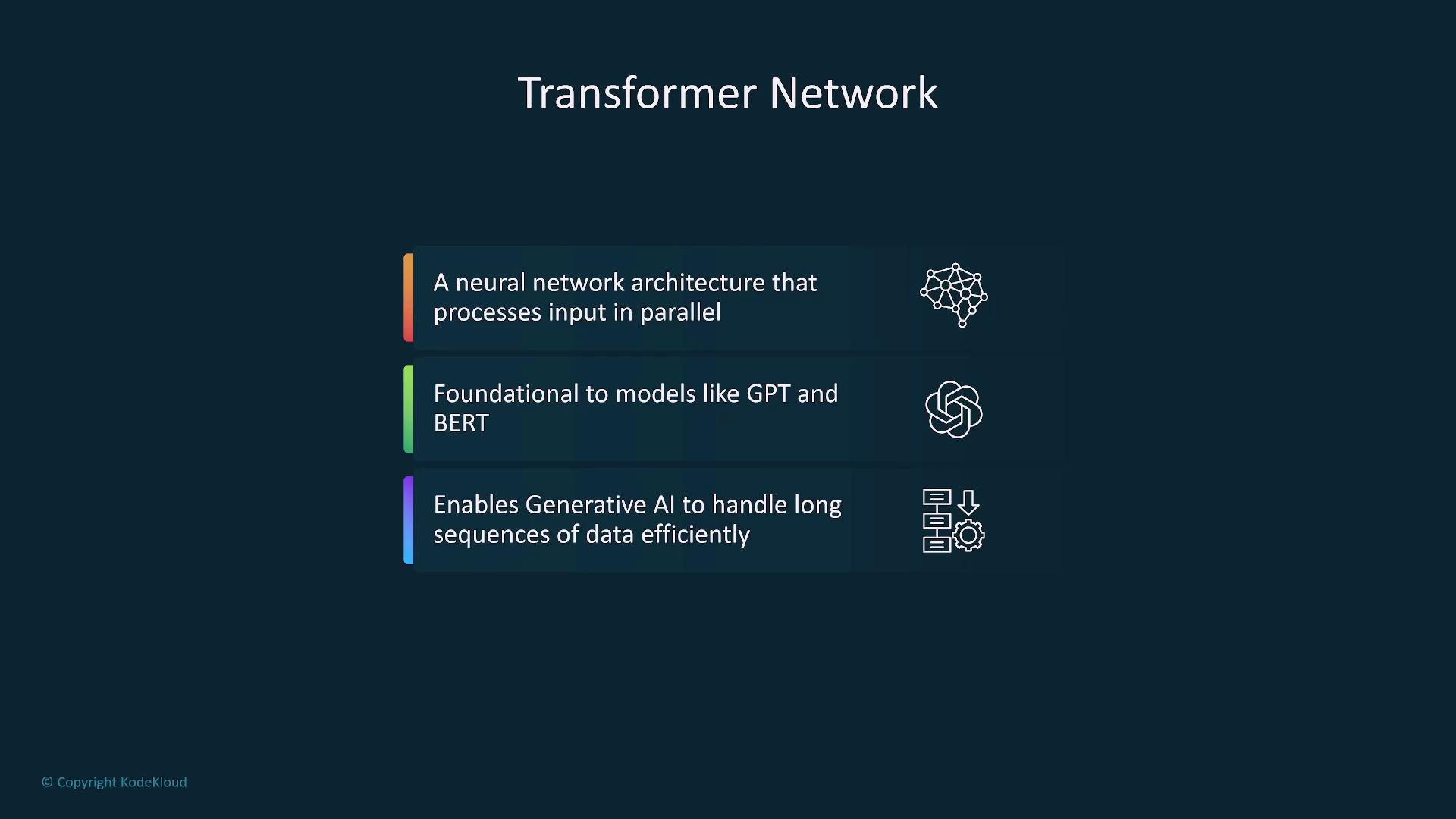
Context Windows
Transformers operate within a fixed-size “context window” that defines the model’s capacity to remember and process input data. A larger window allows for handling more extensive or complex inputs—from a few sentences to entire book chapters—thereby preserving context and structure in the model’s output.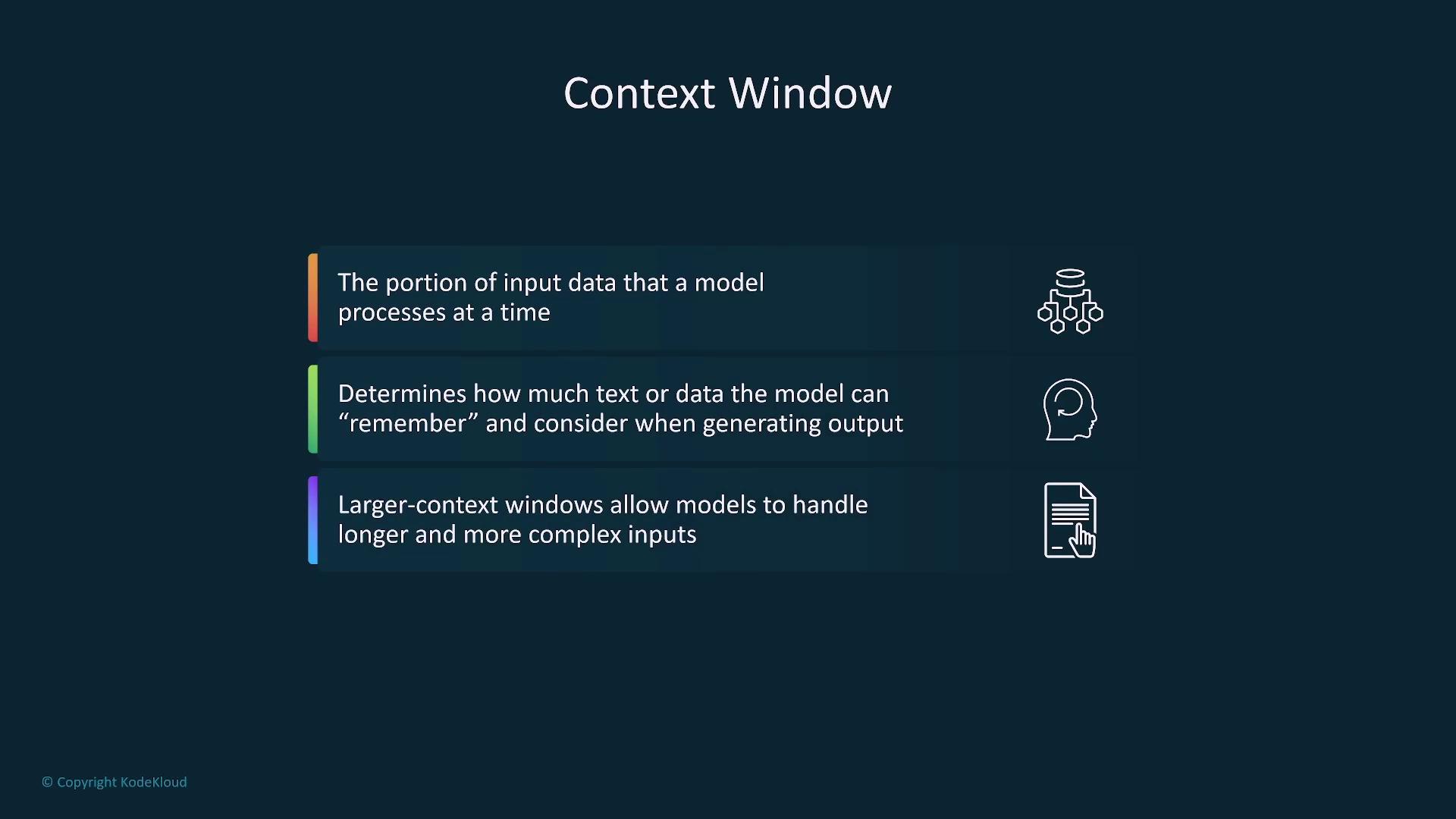
Tokens and Tokenization
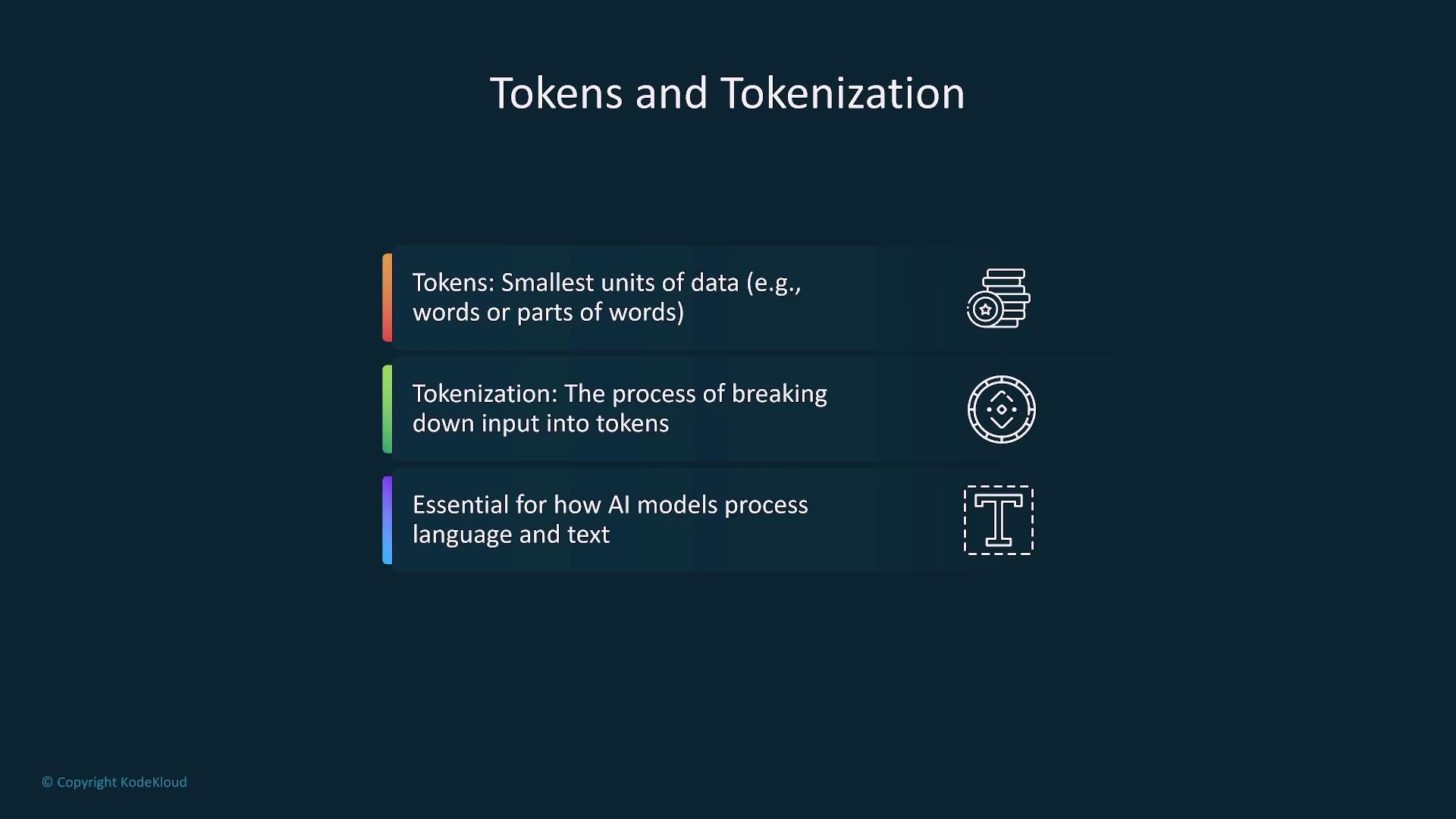
Generative AI models work by breaking text into smaller units called tokens. This tokenization process converts text into sequences, which makes it easier for the model to analyze and predict subsequent tokens based on learned patterns.Tokenization is essential because the model does not understand complete sentences; instead, it operates on these smaller token units to generate coherent and contextually relevant outputs.
Embeddings and Vectors
Embeddings are numerical representations of tokens that capture the semantic meaning of words or phrases. Each token is encoded as a multidimensional vector, where words with similar meanings—like “do,” “doing,” and “done”—are positioned closer together in vector space. This numerical transformation is crucial for mathematical computations within AI models.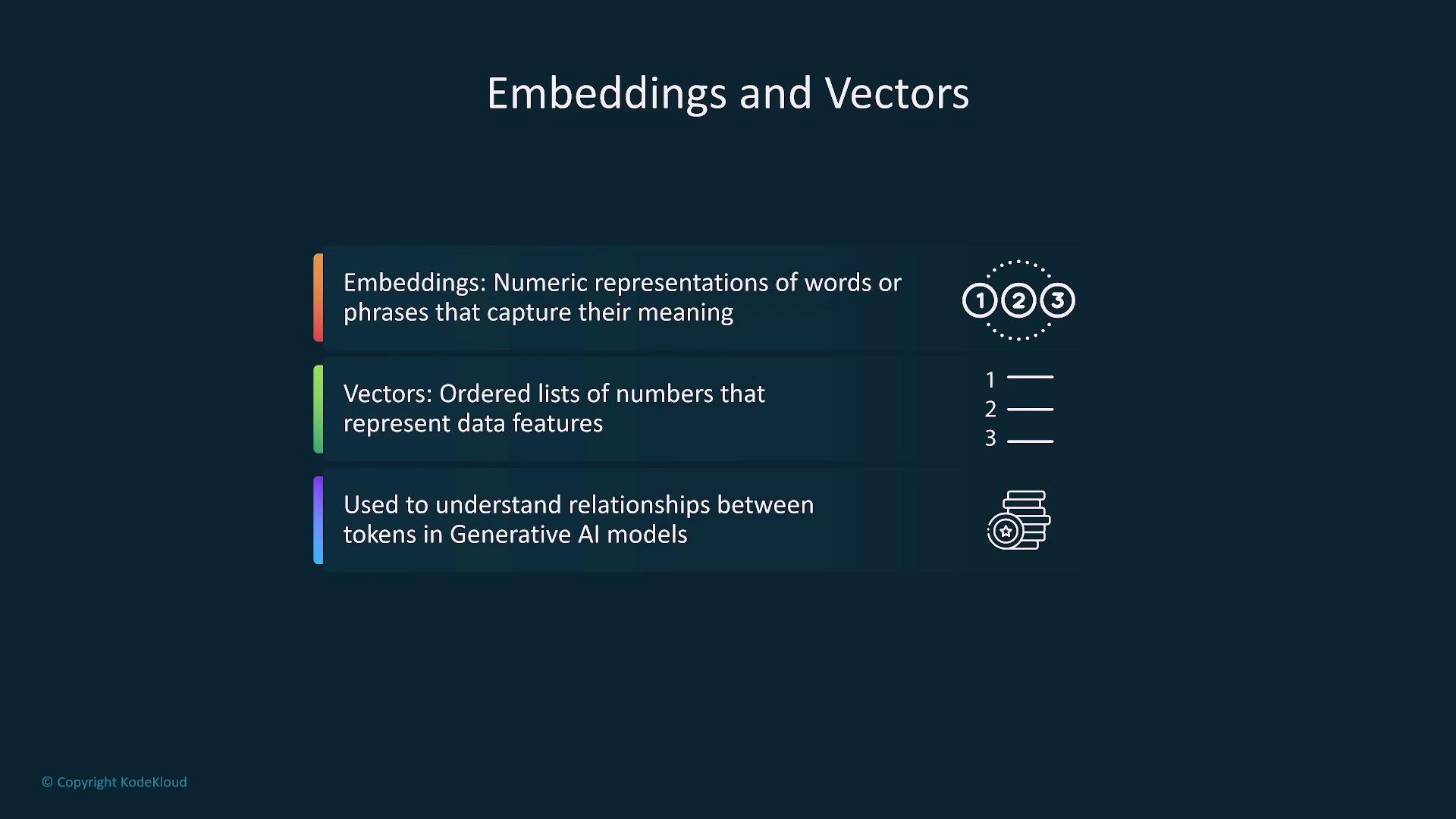
Chunking
Chunking is the process of breaking down extensive data into smaller, more manageable sections. For example, a large article about dog breeds might be segmented into chunks focused on individual breeds or specific breed characteristics.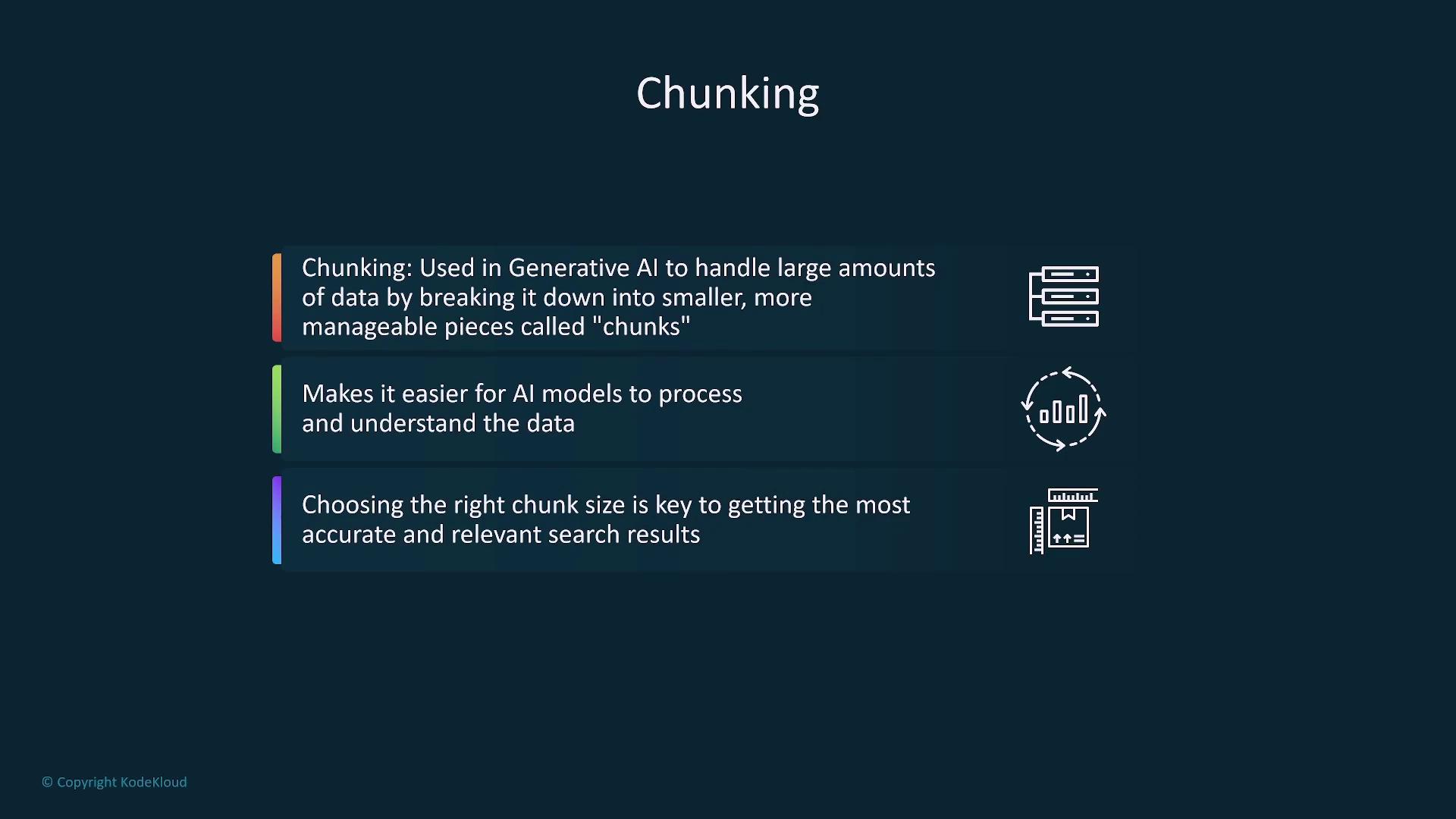
Large Language Models (LLMs)
Large Language Models, such as GPT and BERT, are based on transformer architectures and are trained on extensive text datasets. These models are highly versatile, capable of tasks like text completion, translation, and summarization, and they can generate human-like text from minimal examples.
Prompt Engineering
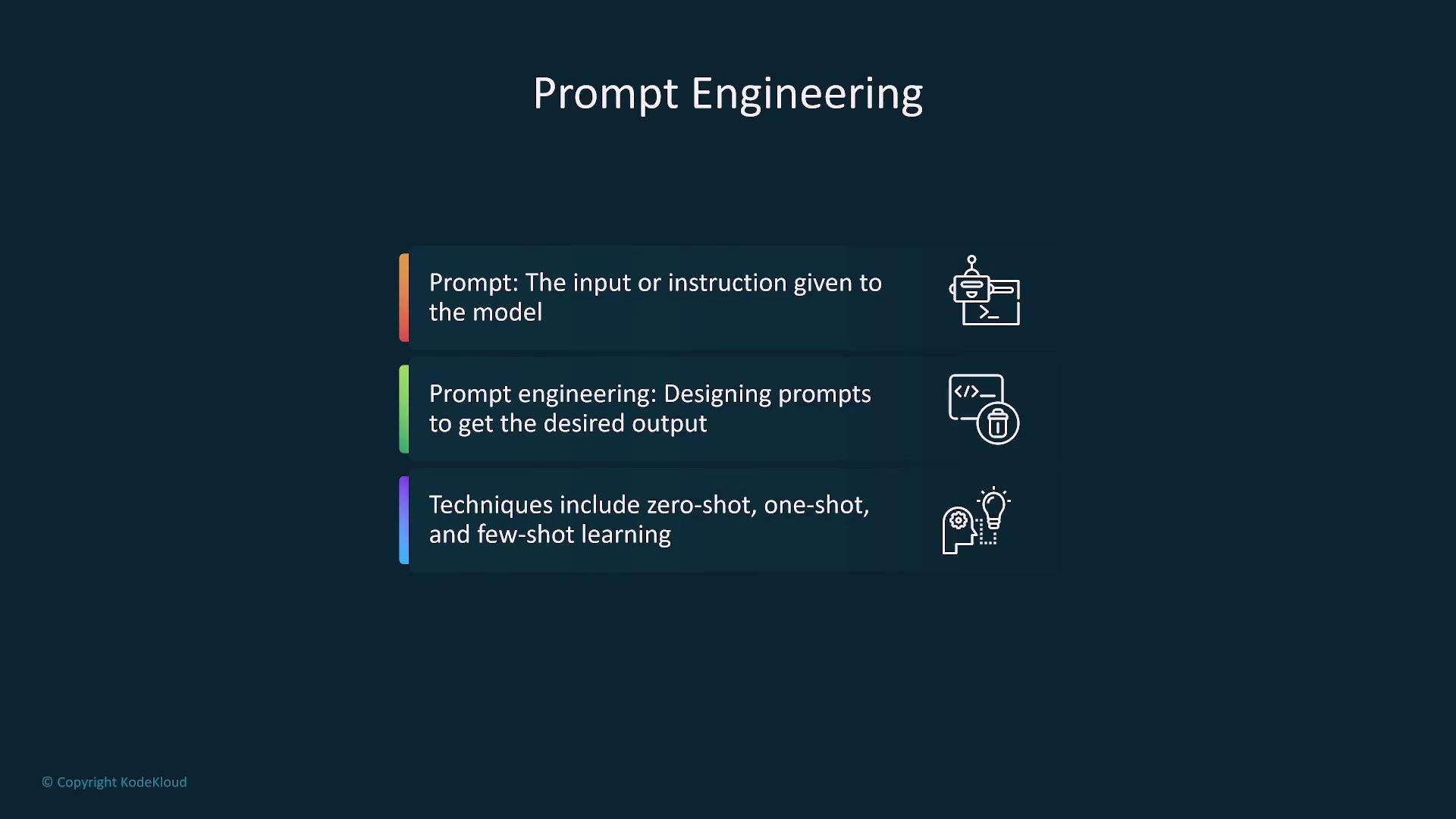
Prompt engineering involves designing and refining the inputs provided to an AI model to guide the generation of desired outputs. The quality of the prompt has a direct impact on the model’s performance, especially given the constraints of its context window. Techniques in prompt engineering include:- Zero-shot learning: Instructing the model to perform a task without providing any examples.
- One-shot learning: Offering a single example as guidance.
- Few-shot learning: Providing several examples to help the model understand and replicate the task.
Multimodal Models
Unlike single-mode models that focus on one data type, multimodal models can simultaneously process and generate various forms of data—such as text, images, audio, and video. These models are adept at tasks like generating images from text descriptions, captioning images, and conducting complex multimedia analyses. Diffusion models, a subset of multimodal models, are particularly known for generating high-quality visuals. They work by iteratively transforming random noise into coherent images, videos, or audio clips.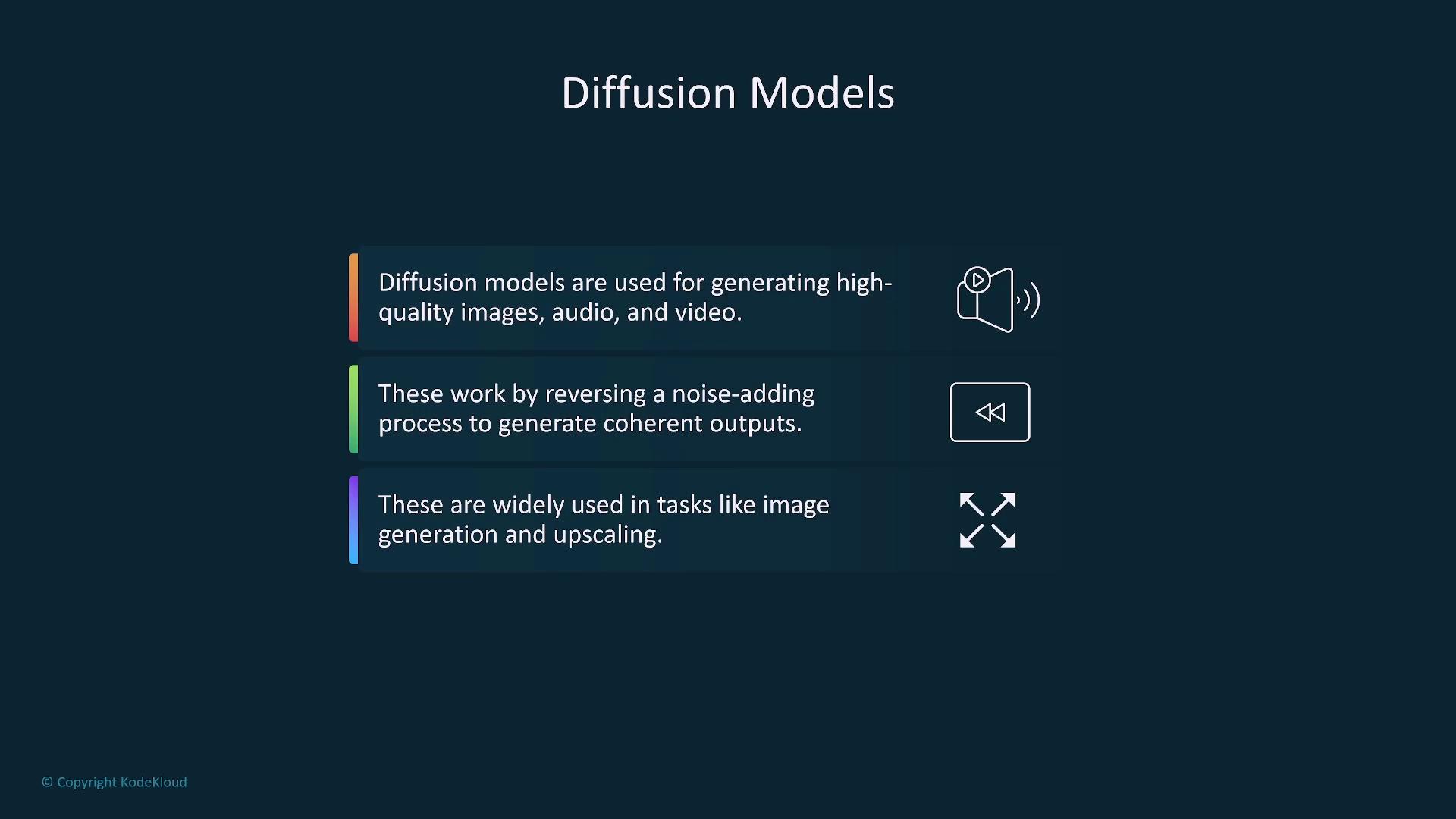
Conclusion
This lesson provided an overview of critical generative AI concepts, including large language models, transformer architectures, context windows, tokenization, embeddings, chunking, prompt engineering, and multimodal models. Each concept is fundamental to how generative AI creates original and coherent outputs from extensive datasets. Before you proceed, we encourage you to take the end-of-section quiz to reinforce your understanding. We look forward to guiding you through the next lesson.For additional insights on these topics, explore the Kubernetes Documentation, Docker Hub, and Terraform Registry.