

- The exam builds on foundational knowledge and explores AI, machine learning, and generative AI concepts in depth.
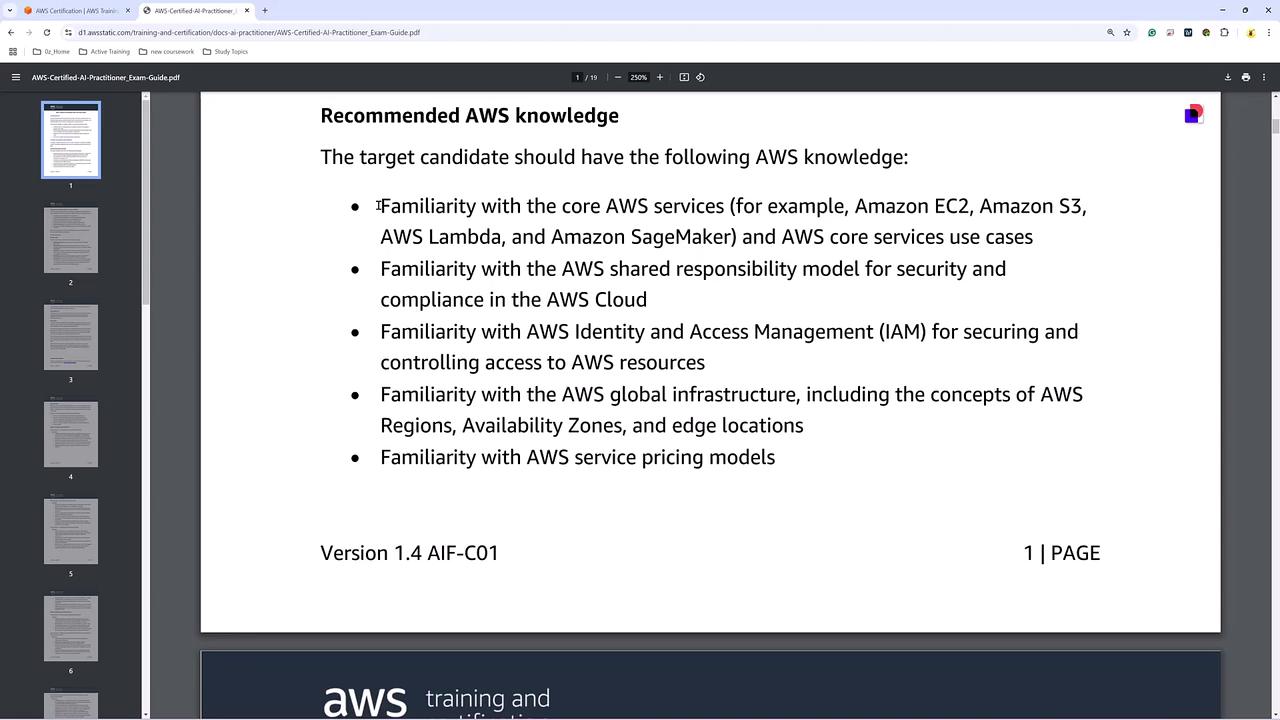
- It is recommended that candidates have at least six months of hands-on experience with AI/ML technologies on AWS.
- While the exam covers a broad range of AI Practitioner topics, you will not be required to code, perform data engineering, execute complex machine learning workflows, or manage in-depth security and governance issues.
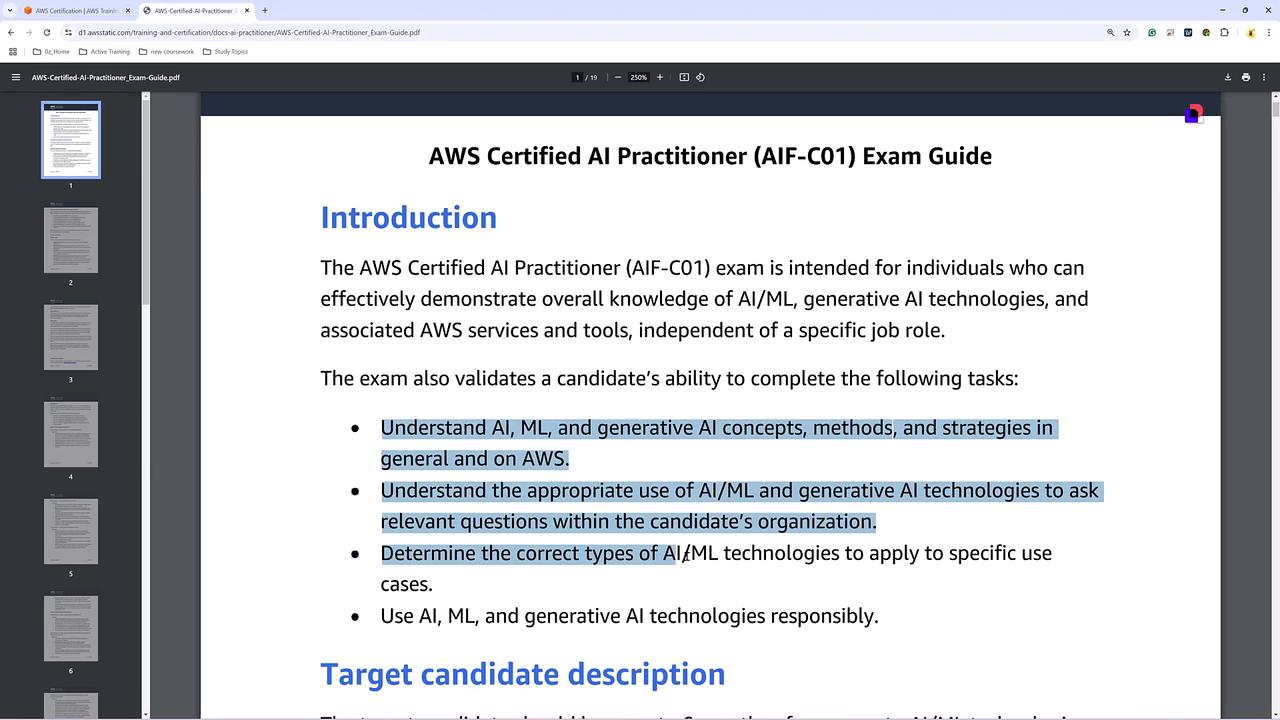
Ensure that you understand artificial intelligence, machine learning, and generative AI technologies along with their basic principles and appropriate use cases. Although hands-on development and coding are not exam topics, a strong grasp of the underlying concepts is crucial.
Exam Structure and Question Types
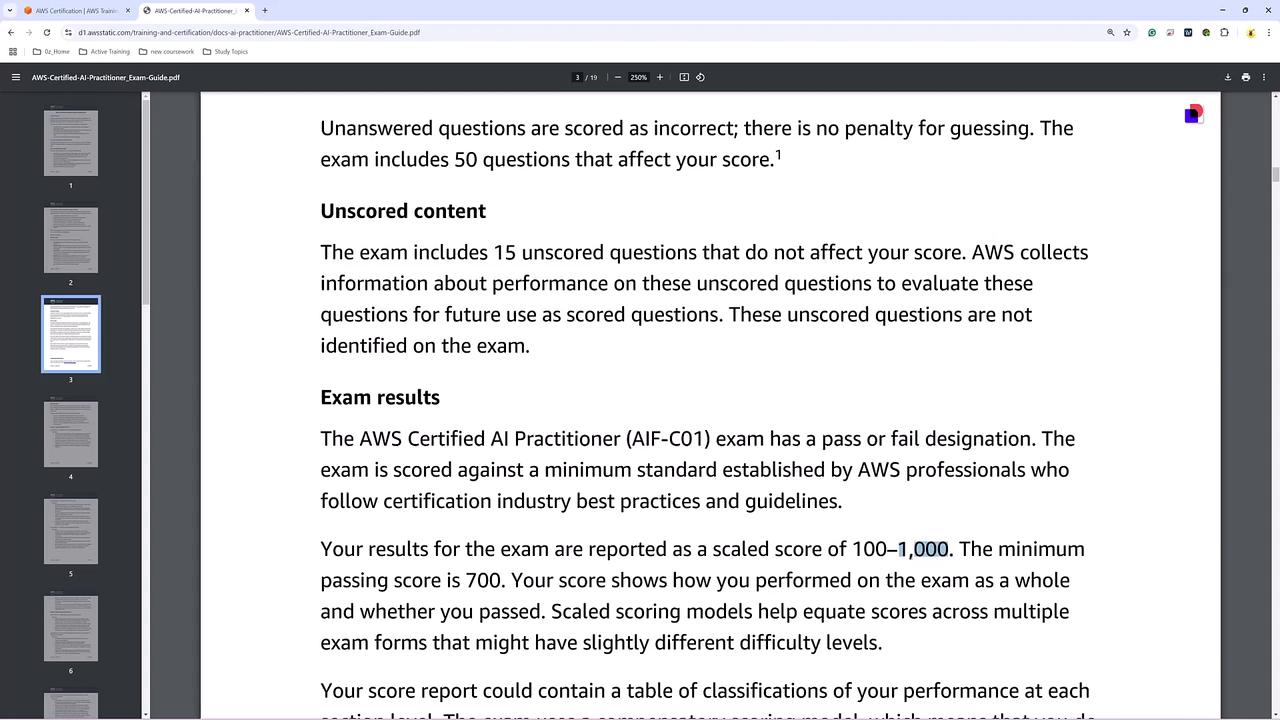
The exam comprises 65 questions in total. Out of these, 50 questions are scored, and 15 unscored experimental questions help validate new items. Although my personal experience did not include question types such as ordering, matching, or case studies, be prepared for a variety of formats. If you encounter unusually difficult or unclear questions, remember they may be among the experimental ones.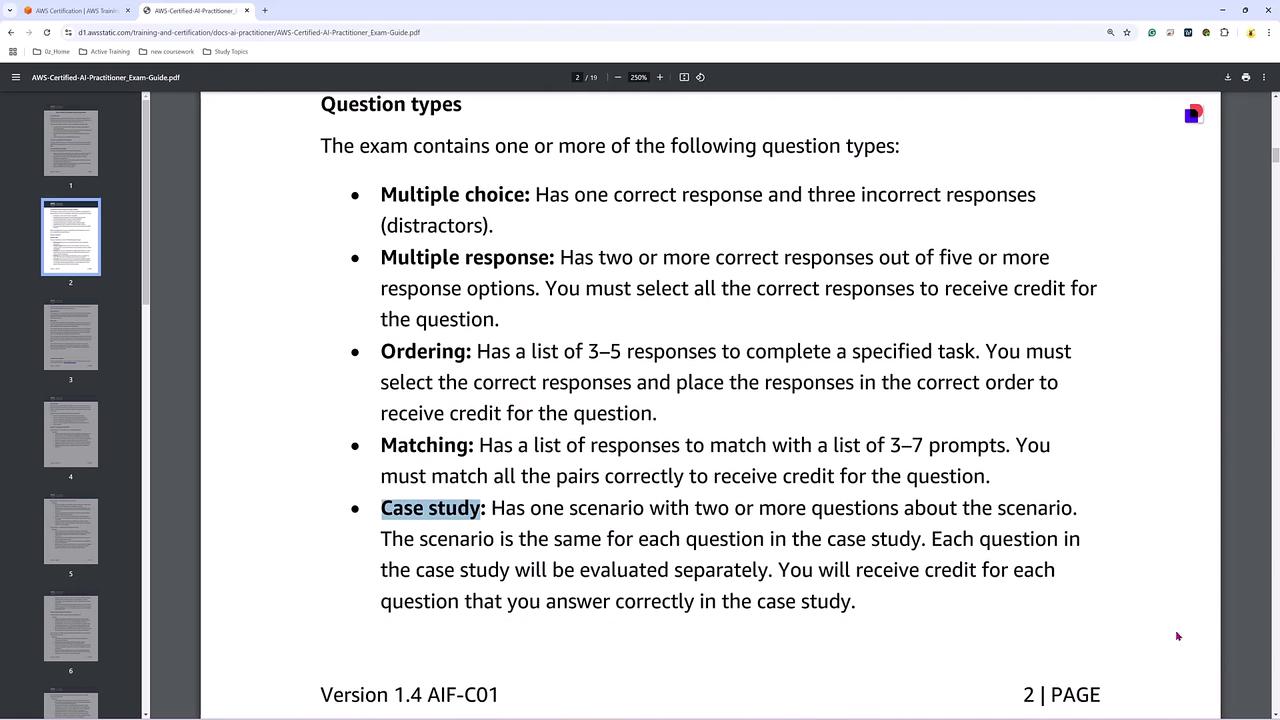
Exam Domains Overview
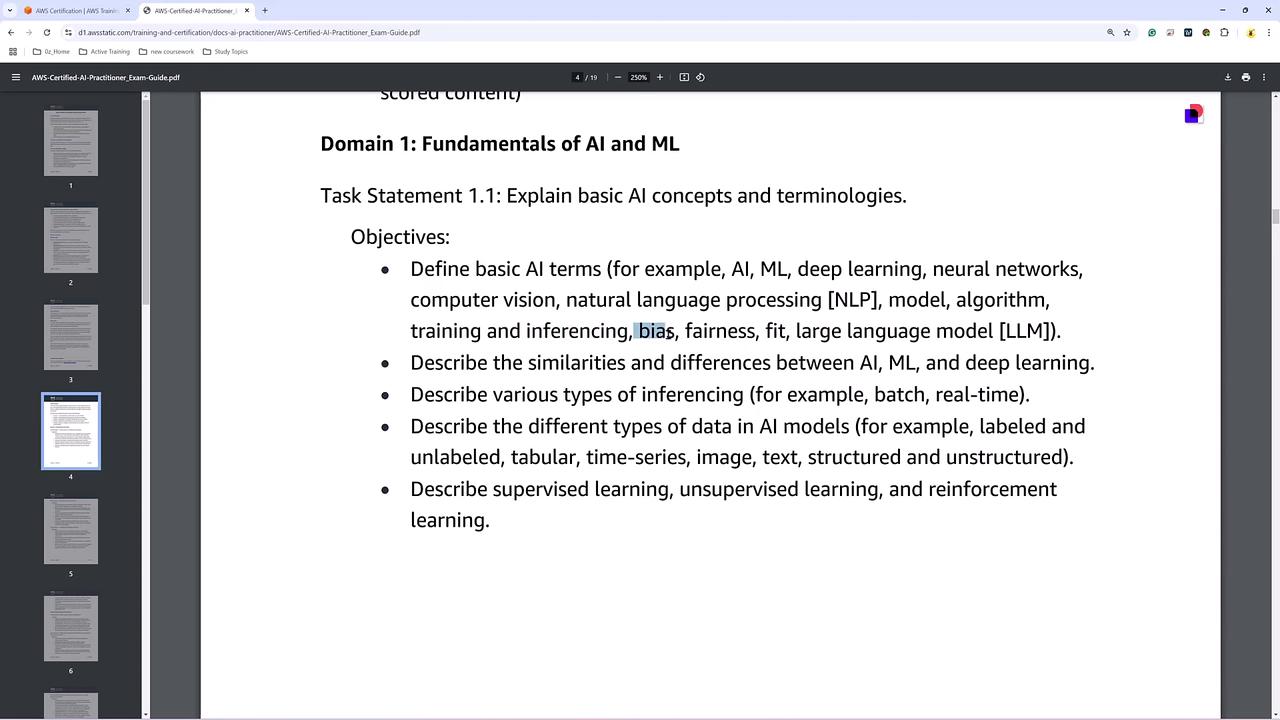
The exam is divided into five domains that address different areas of AI and ML. Each domain outlines specific objectives and tasks for candidates:Domain 1: Fundamentals of AI and ML
This domain introduces basic AI terminology and essential concepts such as:- Natural Language Processing (NLP)
- Inferencing techniques
- Core concepts like fit, bias, fairness, and deep learning
Domain 2: Fundamentals of Generative AI
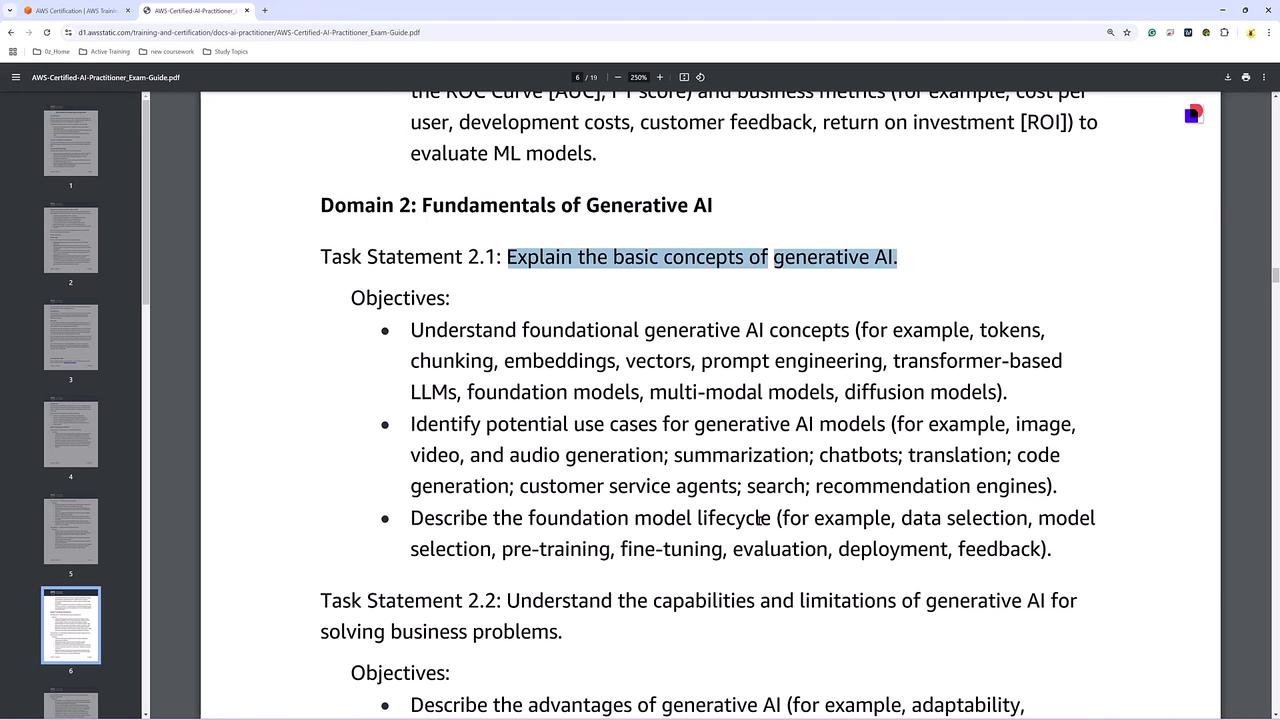
This domain covers the fundamentals of generative AI, including:- Basic concepts such as vectors and embeddings (Task 2.1)
- The capabilities and limitations of generative AI (Task 2.2)
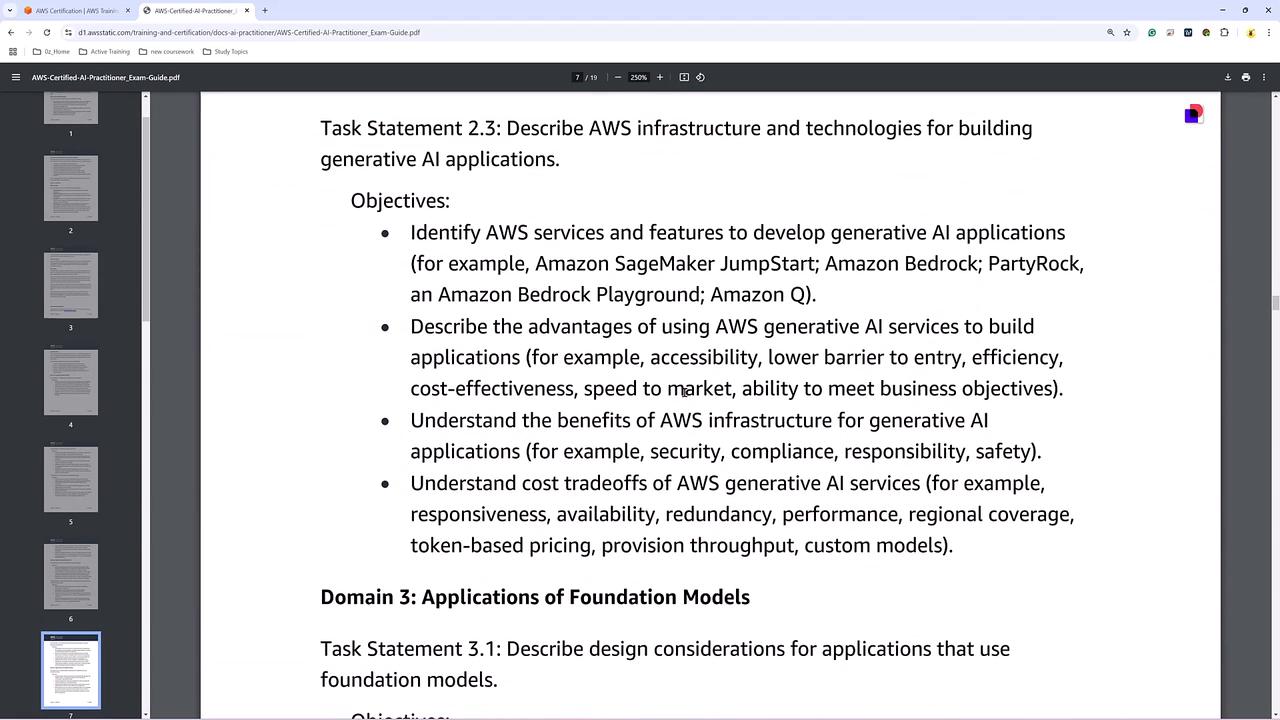
- AWS infrastructure and technologies that support AI initiatives (Task 2.3)
Domain 3: Applications of Foundation Models
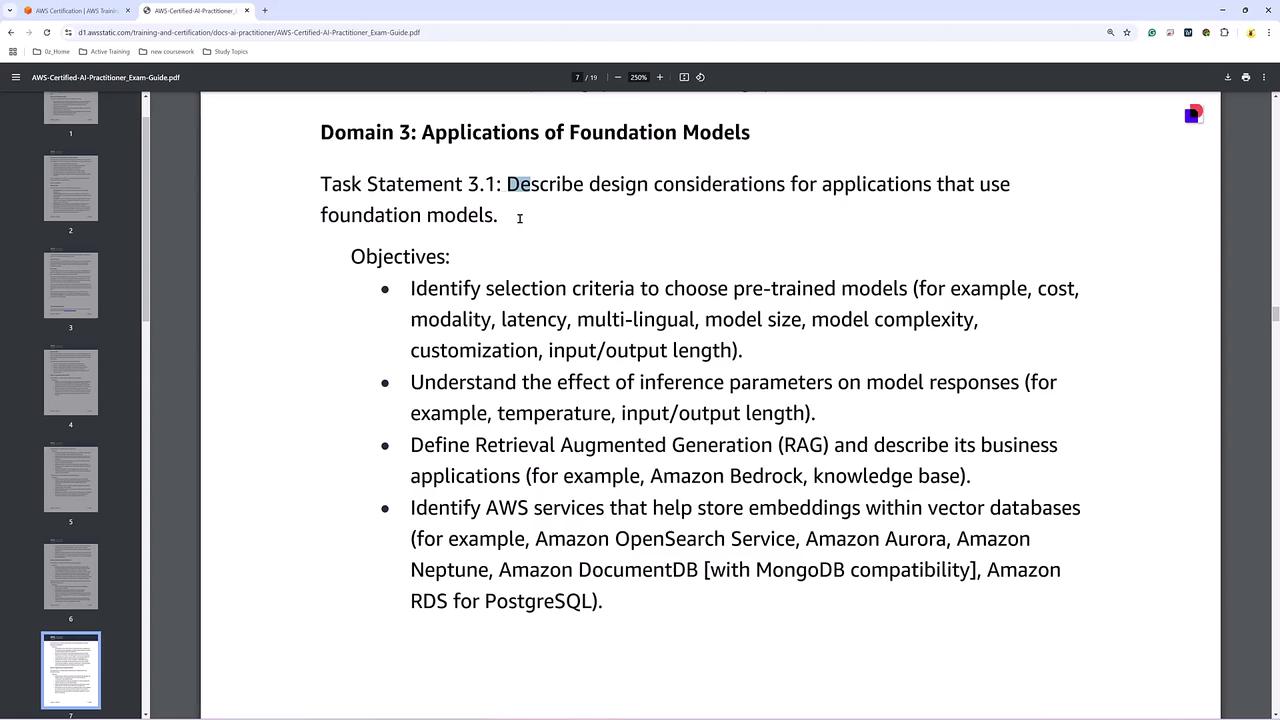
Representing nearly 30% of the exam, this domain focuses on:- Design considerations for applications using foundation models (Task 3.1)
- Effective prompt engineering techniques (Task 3.2)
- Training and fine-tuning processes for models (Task 3.3)
- Evaluation methods for foundation model performance, including metrics such as BERT score, BLEU, and ROUGE (Task 3.4)
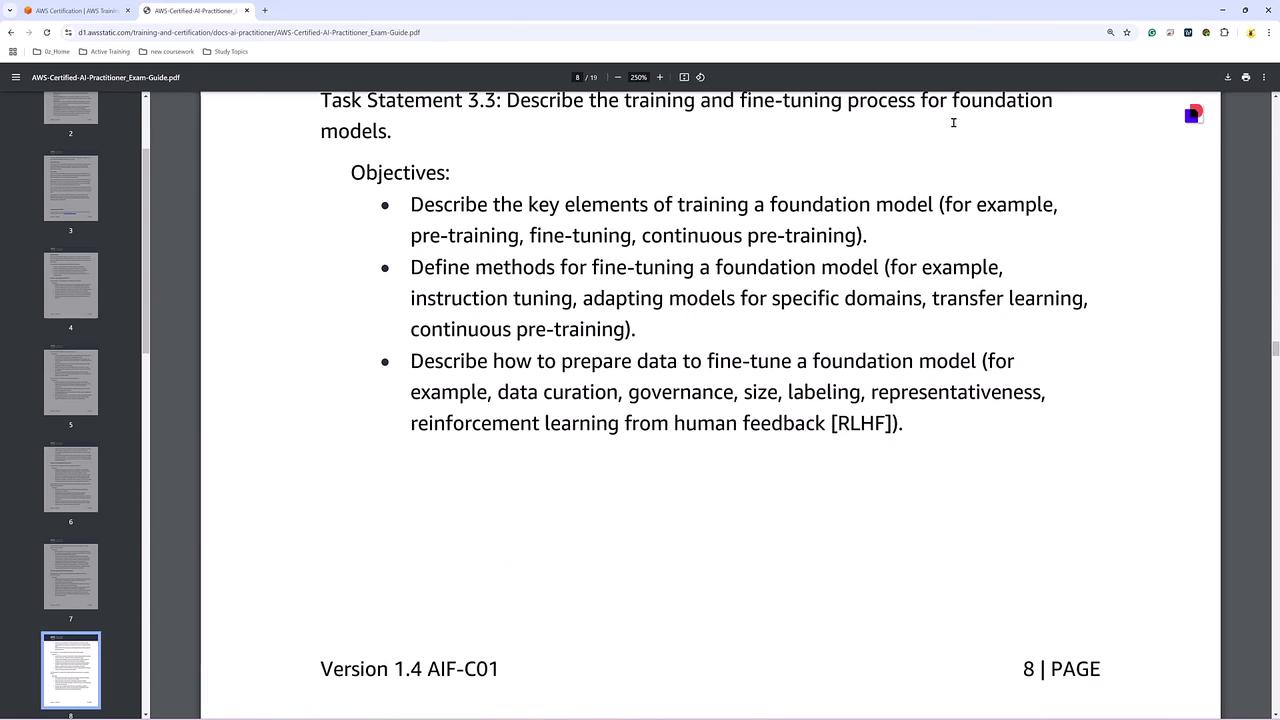
Domain 4: Guidelines for Responsible AI
This domain emphasizes the need for safety and ethical considerations when developing AI systems. Key topics include:- Developing and implementing responsible AI features (Task 4.1)
- Ensuring transparency and creating explainable models (Task 4.2)
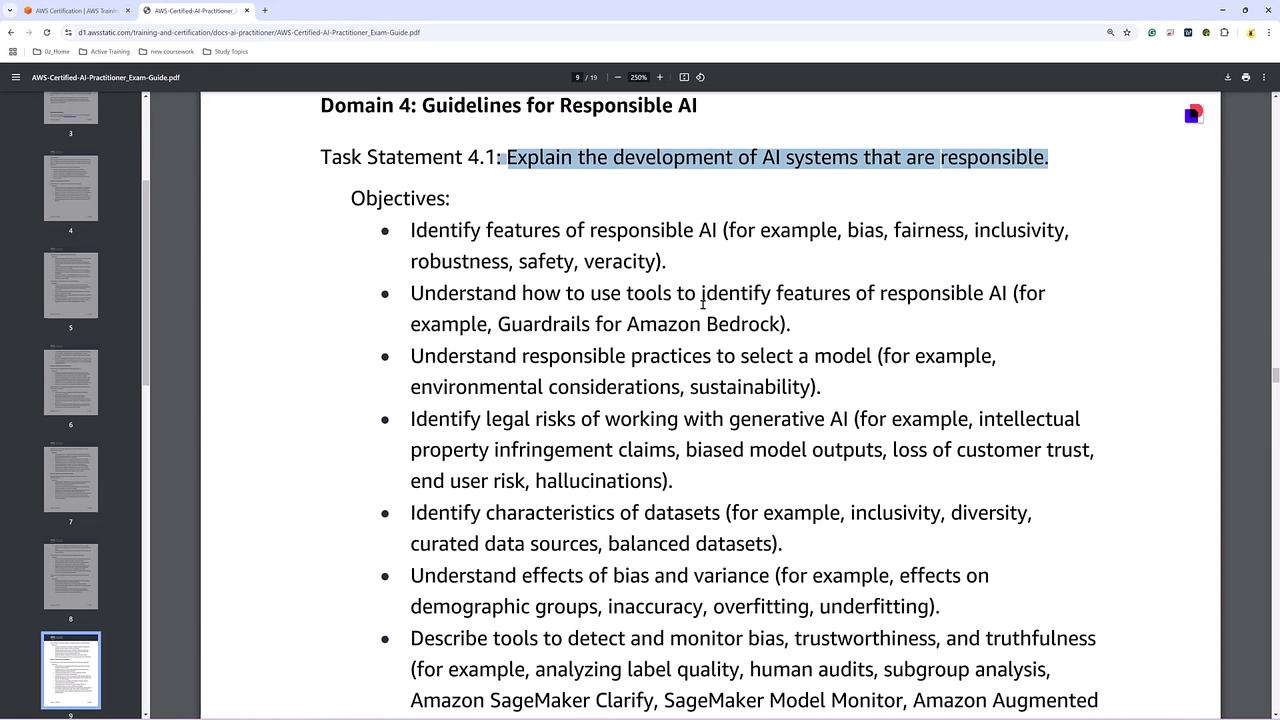
Domain 5: Security Compliance and Governance for AI Solutions
The final domain covers critical aspects of securing AI systems, focusing on:- Implementing appropriate security controls for AI systems
- Recognizing governance and compliance regulations for AI solutions
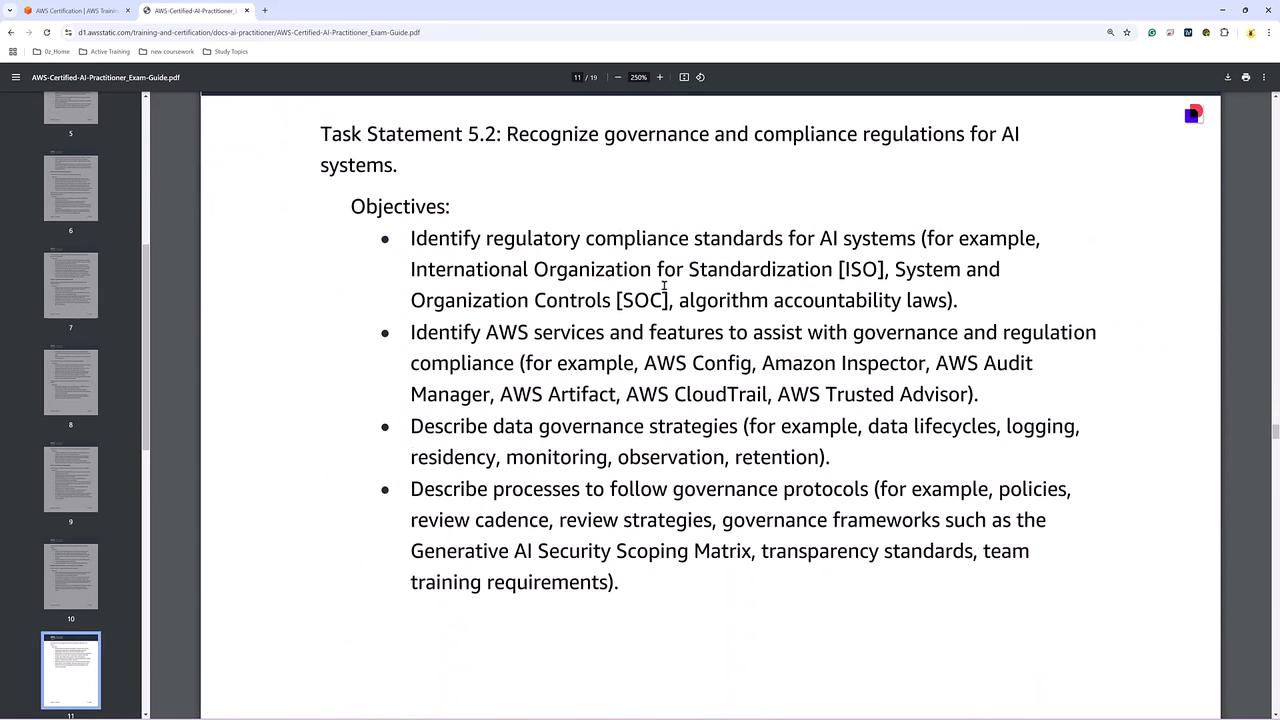
Additional Exam Details
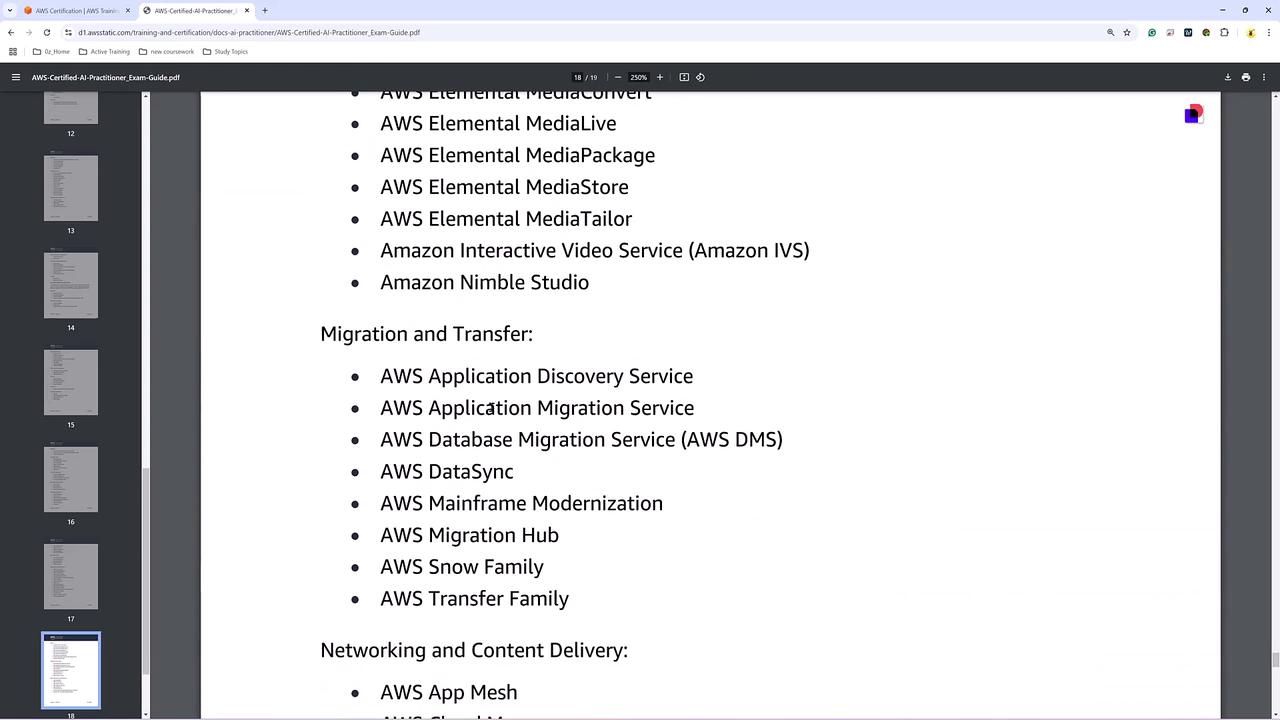
A valuable section in the exam guide is the appendix, which outlines the AWS services that may appear on the exam. This section helps you verify whether a specific AWS service is within the exam scope. For example, questions on services such as Audit Manager, Artifact, IAM, and Inspector have been included in previous exams. Conversely, topics related to financial applications, many compute services (e.g., Red Hat Enterprise offerings), numerous database services, and various developer tools are out of scope. Additionally, many networking and content delivery services, as well as several security components (aside from core services like IAM), are not exam subjects.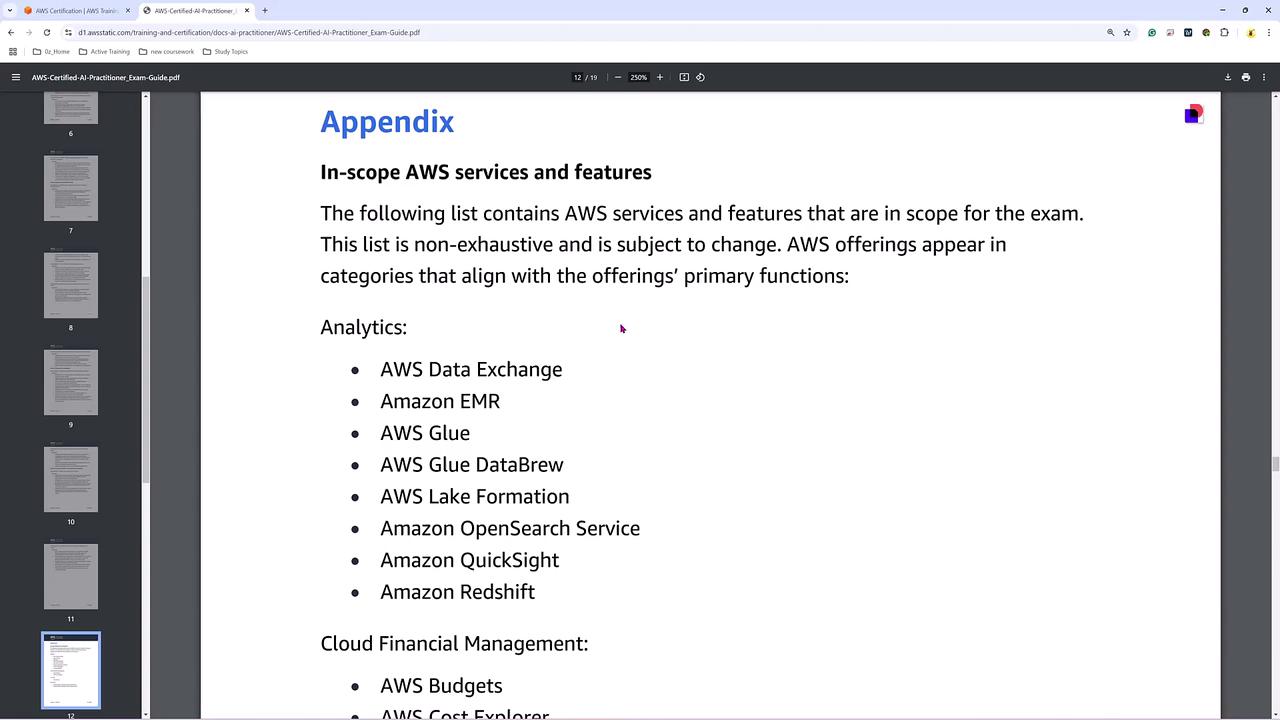
Conclusion
This guide provides a comprehensive overview of the AWS Certified AI Practitioner exam. By reviewing each domain and assessing your strengths and weaknesses, you can tailor your study plan effectively. Be sure to research and clarify any unfamiliar terms, and use the official AWS exam guide as a reference to reinforce your learning.Take the time to practice with sample questions and familiarize yourself with the exam format. A well-rounded preparation strategy will significantly increase your chances of success.