1. Defining the Problem and Data Collection
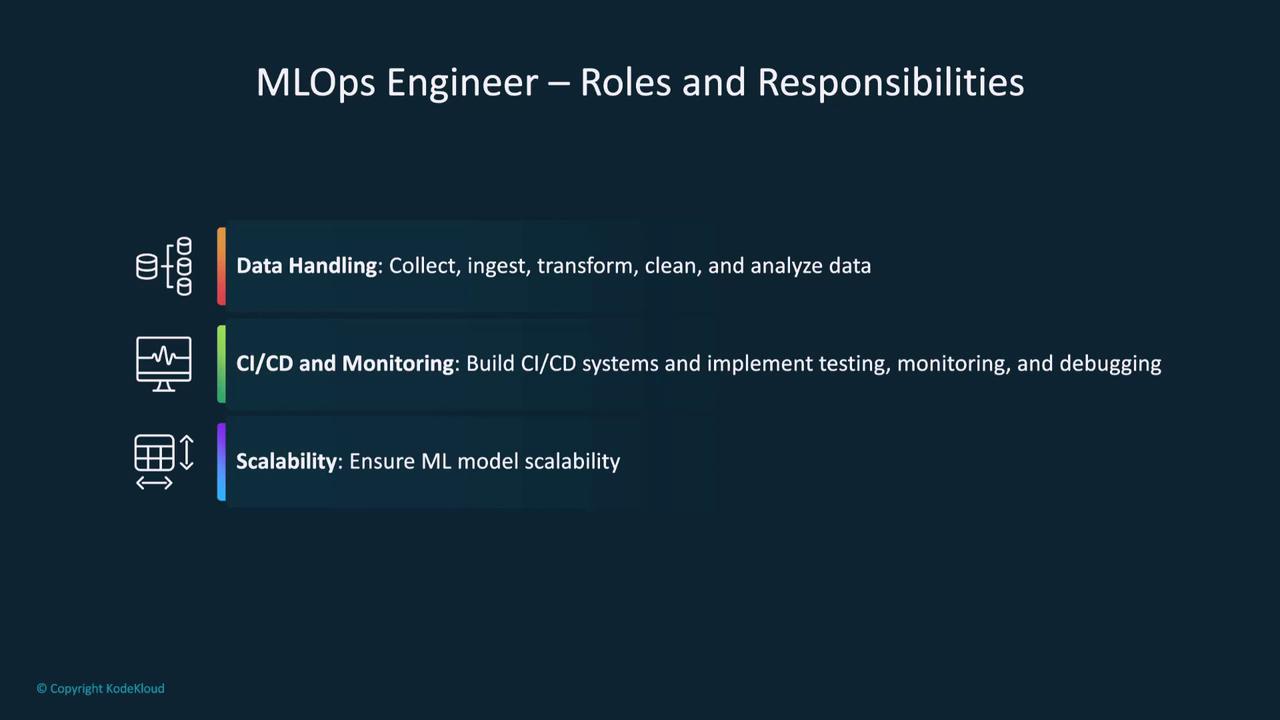
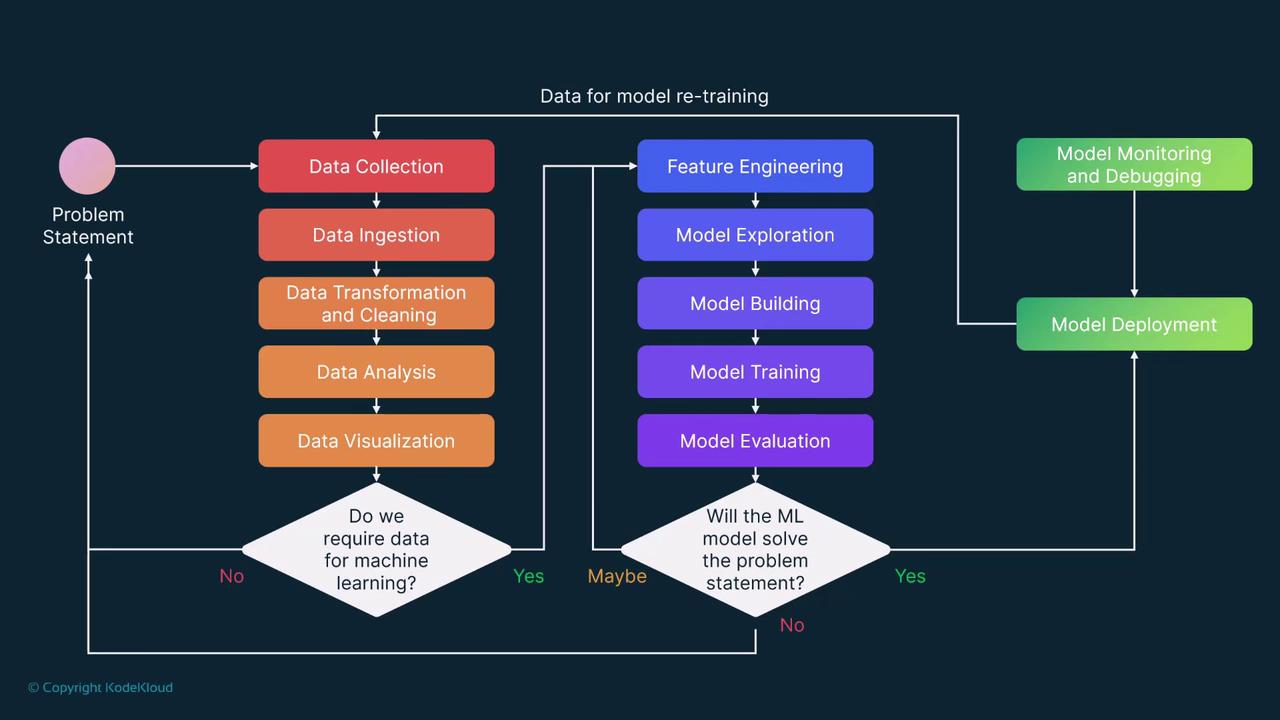
The MLOps journey begins by clearly defining the problem statement. Once identified, data collection is undertaken from varied sources including Google Sheets, databases, or public datasets. After data ingestion, the data is transformed and cleansed to handle different formats and quality issues. The refined dataset then undergoes thorough data analysis where numerical insights are correlated with the problem statement. At this stage, visualization techniques are critical for uncovering patterns and insights.Data cleaning and transformation is a crucial step, ensuring that the subsequent analysis is both accurate and meaningful.
2. Decision-Making and Feature Engineering
At this stage, a strategic decision is made regarding the need for machine learning. If machine learning is not deemed necessary, the problem statement may be reevaluated or the project could be halted. However, if ML is applicable, the focus shifts to feature engineering:- Feature Extraction: Relevant data features are identified.
- Feature Store: Extracted features are stored systematically for downstream processing.
3. Model Exploration, Building, and Training
This phase involves a set of iterative steps:- Model Exploration: Experiment with various ML models, test their performance, and document outputs rigorously.
- Model Building and Training: Once a promising model is identified, it is constructed and trained on an expanded dataset.
- Model Evaluation: Post-training, the model is evaluated against the problem statement to verify its effectiveness. If the model does not meet expectations, the cycle—from feature engineering through to model evaluation—may need to be repeated.
Even if preliminary analysis indicates that an ML approach is viable, the true validation comes from model evaluation. Always be prepared to refine earlier stages based on evaluation outcomes.
4. Deployment and Continuous Monitoring
After confirming that the model effectively meets the objectives, it is deployed to a production environment where it begins receiving live user interactions. However, deployment marks only the beginning:- Continuous Monitoring: Regular performance tracking and debugging ensure that the model remains effective under real-world conditions.
- Retraining: As additional data accumulates over time, the model may require periodic retraining, leading to a new cycle that starts from data collection.
5. The Role of the MLOps Engineer
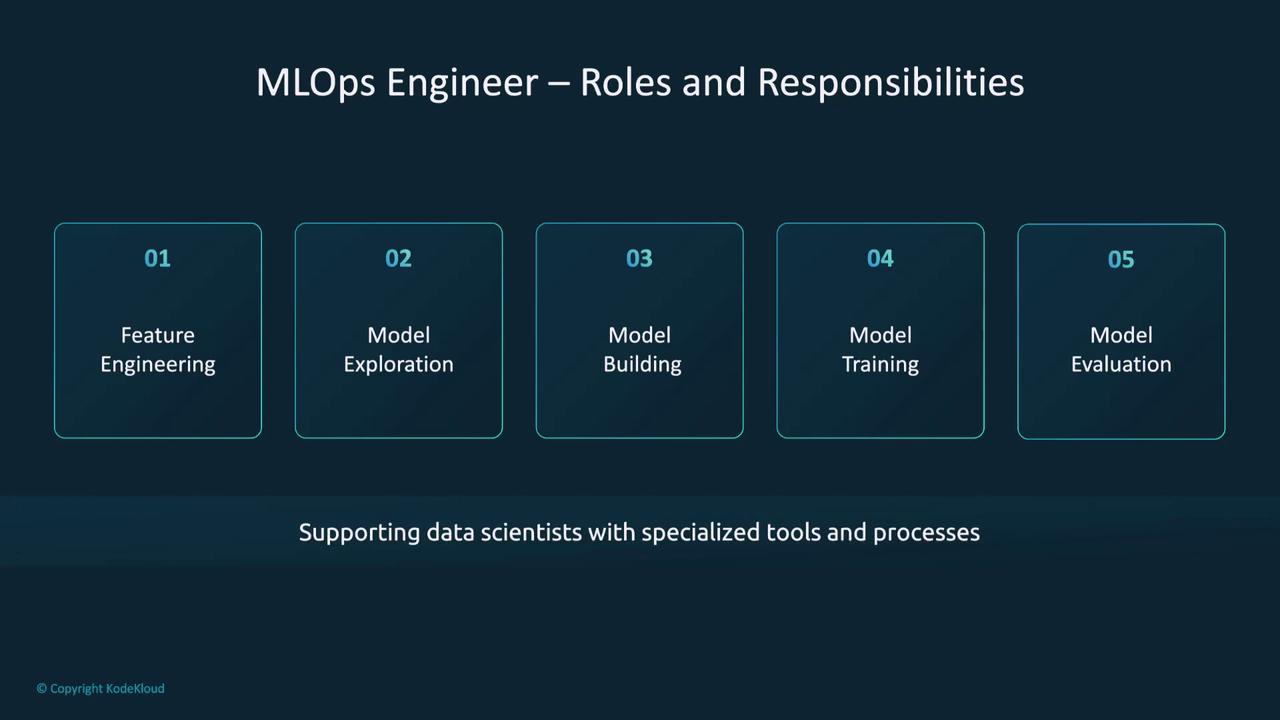
MLOps engineers play a pivotal role by managing and streamlining key processes:- Feature Engineering
- Model Exploration, Building, Training, and Evaluation