

Understanding Legal Requirements
A fundamental aspect of any data retention strategy is understanding the legal framework. Organizations must evaluate relevant laws—such as the GDPR in Europe or HIPAA in the healthcare domain—that govern data storage and deletion. For example, GDPR requires the deletion of personal data once it is no longer essential. Working closely with legal teams or external consultants can help organizations stay aligned with regulatory obligations. Categorizing data accurately is equally important. For instance, a hospital might separate data into personal patient records, operational logs, and financial transactions, with each category following its own retention guidelines.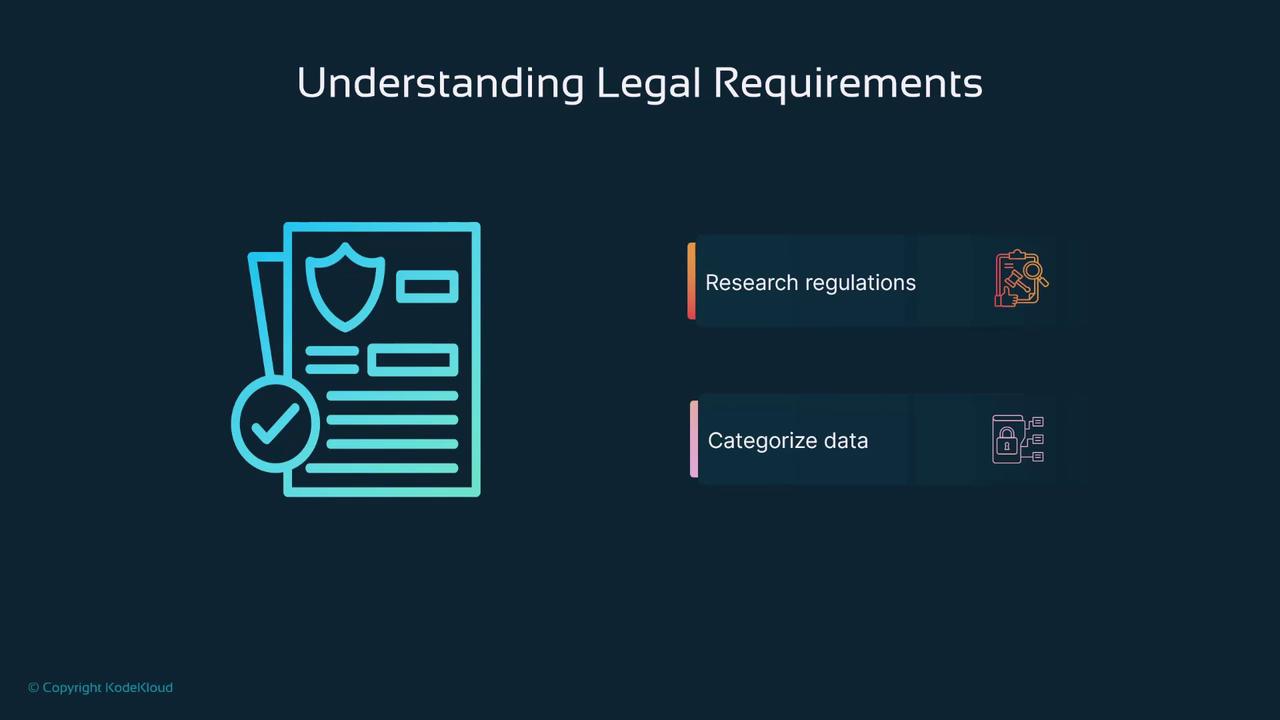
Reviewing legal requirements regularly helps ensure that your data retention policies remain current as regulatory landscapes evolve.
Defining Retention Periods
Once the relevant legal requirements are clear, the next step is to establish appropriate retention periods for various data types. These periods dictate how long data is stored before secure deletion. Establishing well-defined timelines is crucial to meeting both operational needs and compliance requirements. For example, while financial records might need to be retained for 7 years for audit purposes, marketing analytics data might only be relevant for 2 years. Regular policy reviews are essential, especially when changes in technology, legislation, or business priorities occur.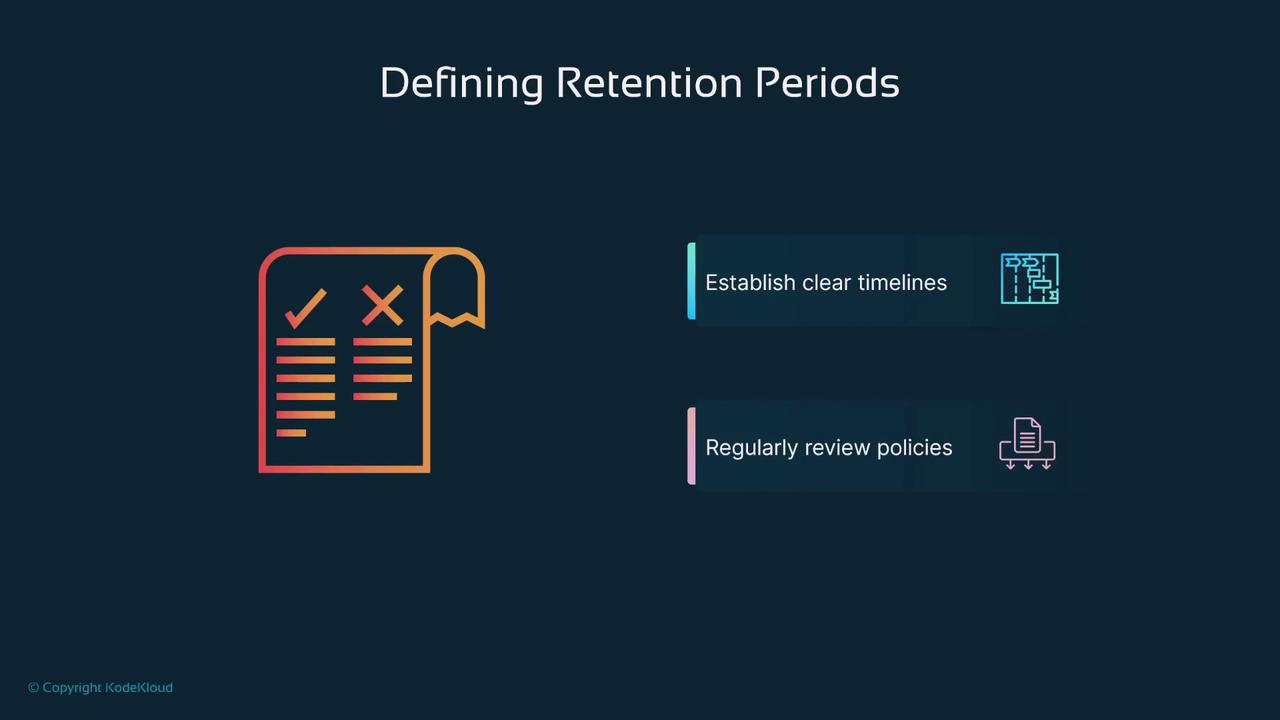
Implementing Secure Storage
The security of retained data is paramount, particularly in an era of frequent cyber threats. Utilizing secure archiving solutions—such as encryption protocols and multi-factor authentication—ensures that sensitive information remains protected from unauthorized access. For example, companies like Dropbox employ strong encryption measures to secure archived data. In the retail industry, safeguarding customer databases with advanced security protocols minimizes the risk of data breaches and associated liabilities.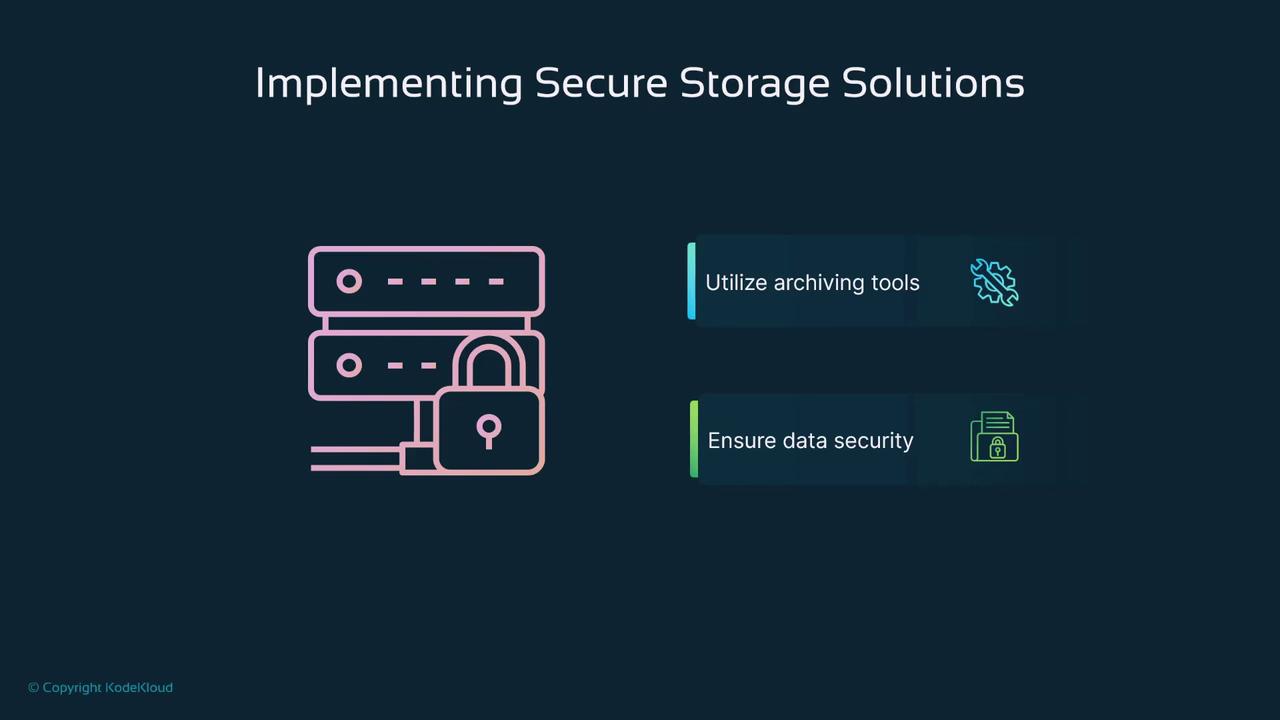
Establishing Procedures for Data Disposal
Effective data retention strategies include clearly defined procedures for secure data disposal. Improper disposal methods can lead to data leaks and breaches. For example, banks often use shredding for physical documents along with certified digital deletion tools for electronic records. Tools such as Dban for hard drives or AWS S3 Lifecycles ensure that data is permanently erased. Documenting the destruction process and using secure deletion methods is crucial to guarantee that data cannot be recovered.
Fostering Internal Collaboration
A successful data retention program requires a strong culture of internal collaboration. This involves not just one department but cross-functional teams—including legal, IT, and operations—to build sustainable and effective retention policies. For instance, companies like Amazon work in close coordination between their data teams and legal advisors to ensure policies are both compliant and efficient. Regular training sessions, similar to those implemented by Google, further reinforce best data handling practices and compliance company-wide.Monitoring Compliance
Implementing a data retention policy is just the beginning; proactive monitoring is necessary to ensure ongoing compliance. Regular audits and automated monitoring tools play an essential role in maintaining adherence to policies. Financial institutions, such as JP Morgan, conduct frequent audits to verify compliance. Tools like Splunk and Datadog are used to flag data that exceeds the designated retention period, helping to mitigate risks and prevent legal complications.
Neglecting regular compliance reviews can lead to significant legal and security risks. Always ensure that your systems are continuously monitored and audited.