This article explains managing traffic in Istio service mesh using core components and advanced techniques without altering application code.
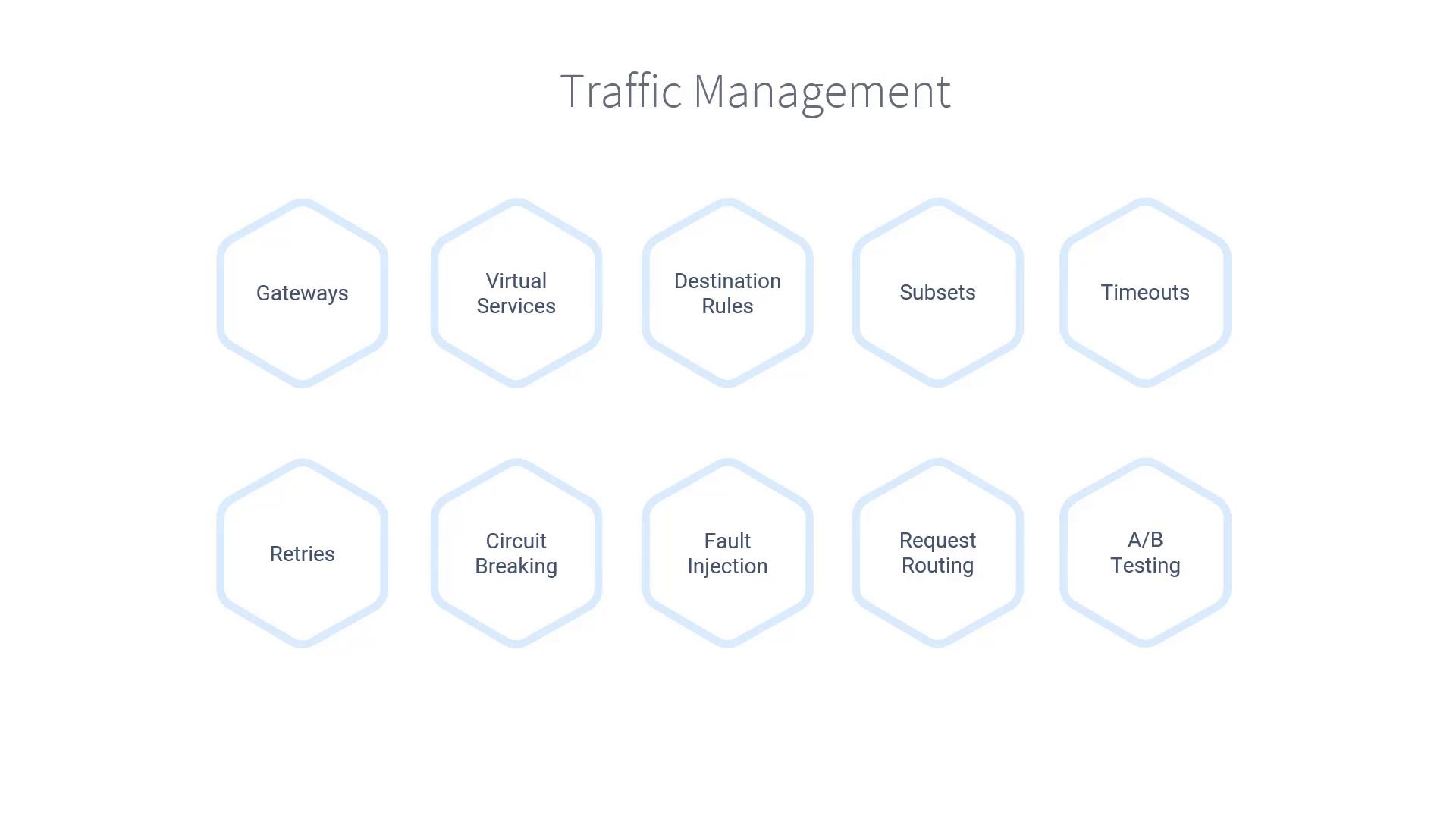
In this article, you will discover how to manage traffic within your Istio service mesh without modifying your application code. We begin by exploring the core components of the Istio architecture—Gateways, Virtual Services, and Destination Rules—which are essential for controlling and directing traffic in modern microservices environments.
Istio provides robust traffic management features that enable you to control service behavior, improve resiliency, and maintain high performance in distributed systems.
Once you have a solid understanding of the foundation, the article delves into advanced traffic management techniques, including:
Traffic Subsets for segmenting and directing specific user groups
Configurable Timeouts to ensure faster failovers
Adaptive Retries to handle transient errors in communications
Circuit Breaking to prevent system overloads during peak traffic
Fault Injection for testing error-handling and resiliency
Request Routing to dynamically steer traffic based on policies
A/B Testing to gradually roll out new features and updates
By mastering these Istio capabilities, you can optimize your service mesh to deliver efficient, resilient, and scalable applications while seamlessly managing traffic flow.