

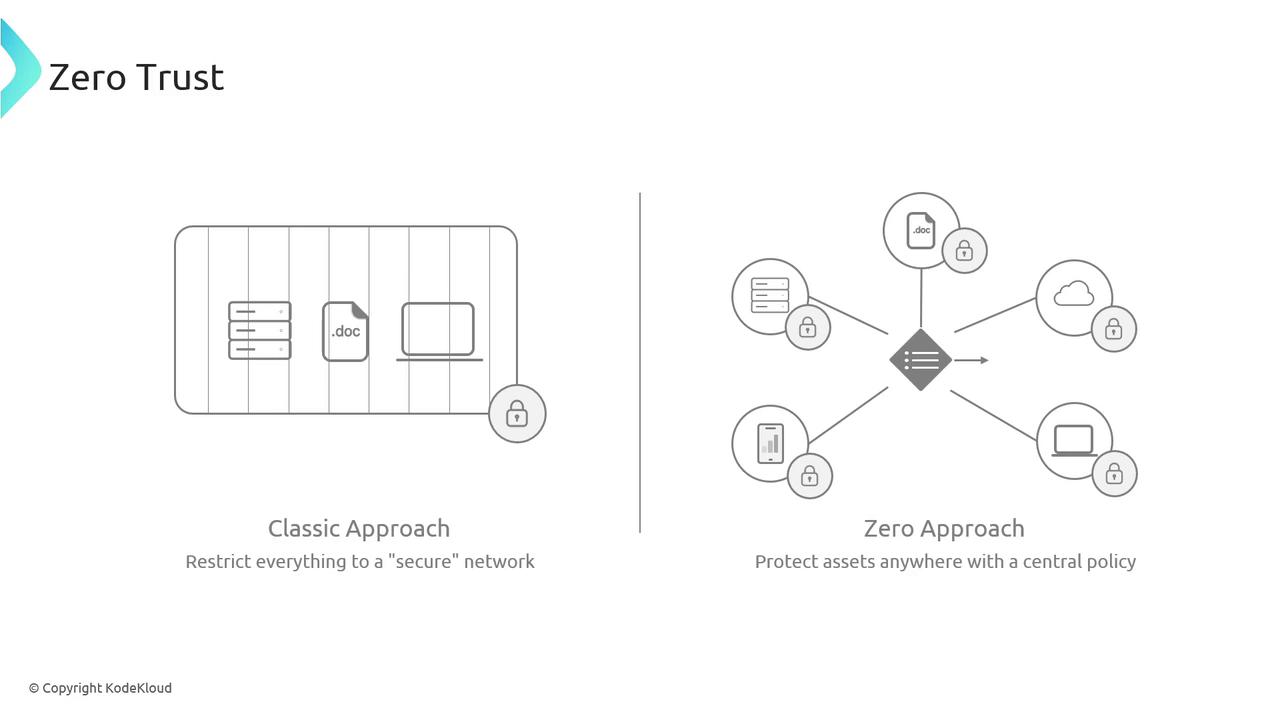
- Verify Explicitly
- Use Least Privilege Access
- Assume Breach
The three principles work together to create a layered defense. Verifying explicitly ensures comprehensive validation of all access requests, least privilege limits access only to essential functions, and assuming breach means preparing to detect and mitigate threats in real time.
Verify Explicitly
Every access request must be verified, similar to checking each guest’s credentials at a secure event. Decisions regarding authentication and authorization rely on multiple data points, including user identity, location, device health, and the nature of the workload. This multi-factor verification process guarantees that only legitimate requests gain access.Use Least Privilege Access
Consider a secure event where staff members are only allowed in areas required for their duties. Zero Trust follows the same logic by confining user access to the minimum necessary level. Advanced strategies like just-in-time (JIT) and just-enough-access (JEA) policies dynamically adjust permissions according to the context of each request.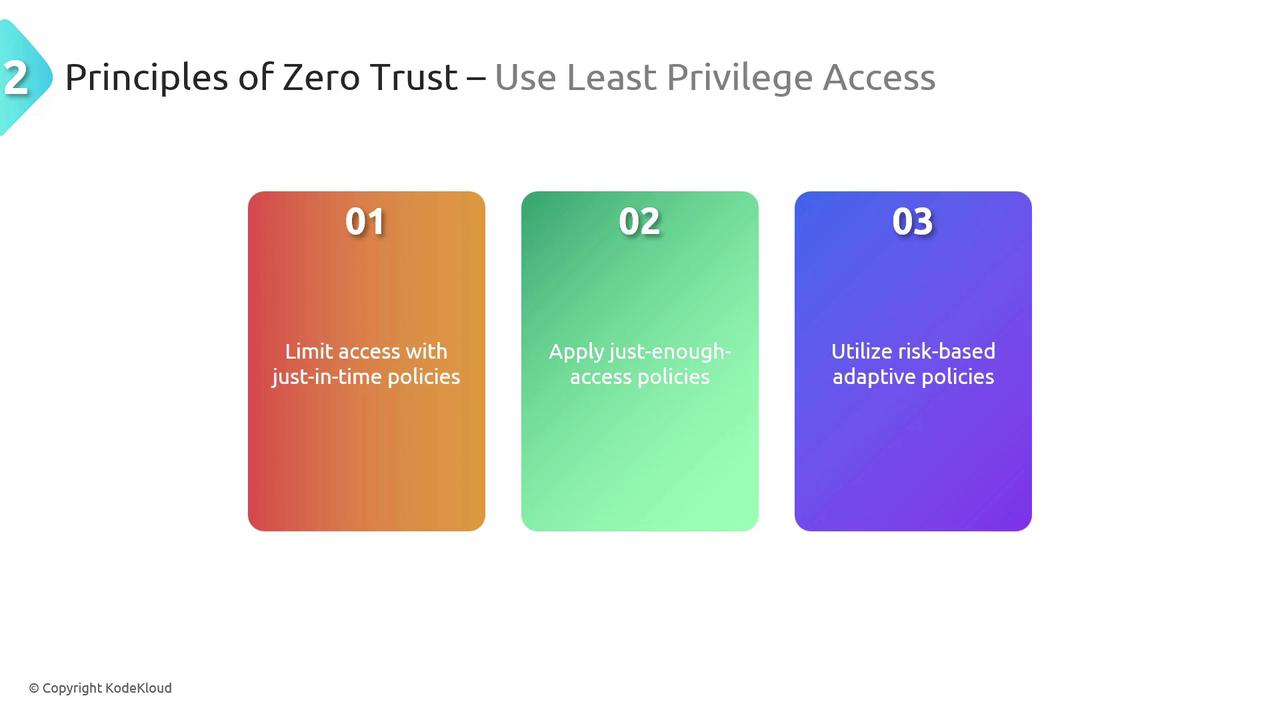
By enforcing adaptive policies, organizations ensure users receive only the necessary permissions—and just for as long as needed—minimizing the potential impact of any security compromise.
Assume Breach
Rather than solely focusing on prevention, the “assume breach” mindset emphasizes rapid detection and response. This approach is similar to having undercover security at an event: continuously monitoring, swiftly identifying threats, and reacting immediately to any suspicious activity. To further reduce risks, access is tightly segmented across networks, users, devices, and applications. Should a breach occur, these granular boundaries help contain the fallout. Additionally, continuous session encryption and advanced analytics significantly enhance an organization’s capability to identify and respond to threats in real time.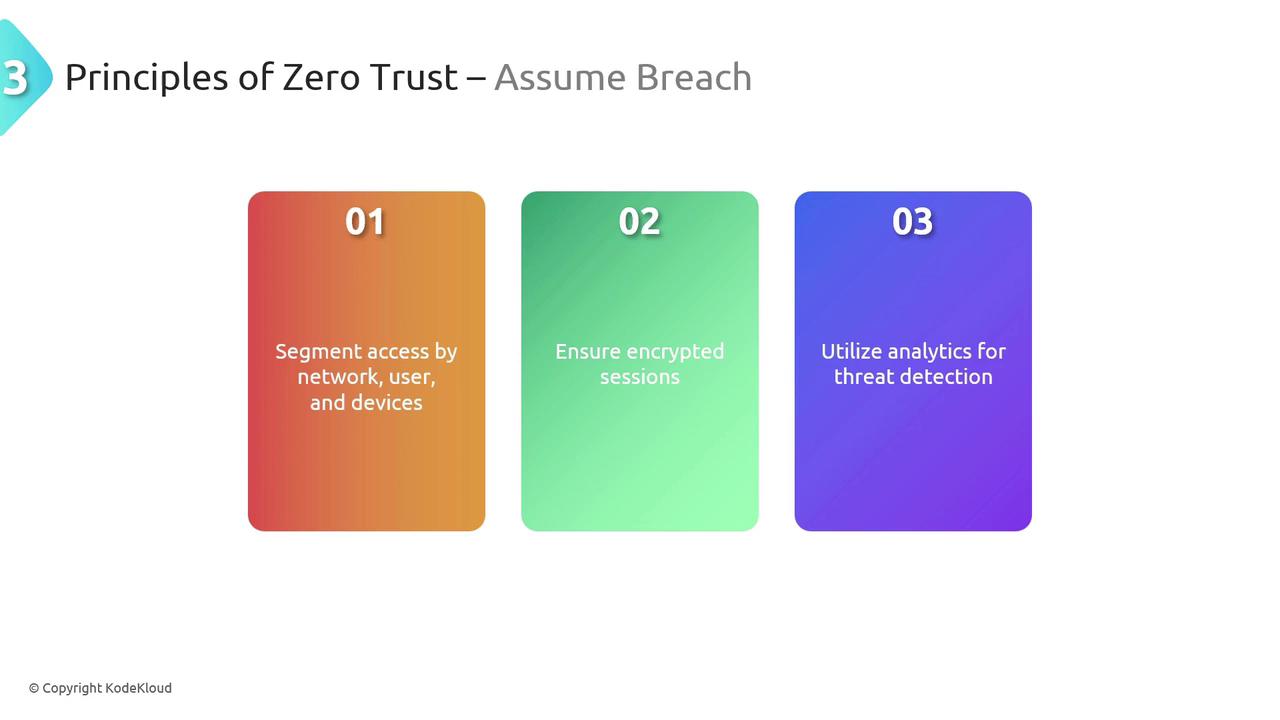
Adopting a Zero Trust strategy means that organizations must be prepared to not only prevent attacks but also detect and respond to them as they happen. This proactive stance is crucial in today’s dynamic security environment.