Understanding Azure Regions
Azure Global Infrastructure is organized into regions—clusters of data centers interconnected via a dedicated, low-latency network. This design delivers high scalability, exceptional flexibility, and robust disaster recovery options. With over 60 regions across more than 140 countries (and growing annually), Microsoft ensures compliance with local data residency laws by enabling users to choose regions close to their customers. For instance, regulatory restrictions may require a military organization in Australia to store confidential data locally. Instead of using regions in China or Singapore, they can select from Australian data centers like Australia East, Australia Central, or Southeast, thereby ensuring sensitive data remains within national boundaries.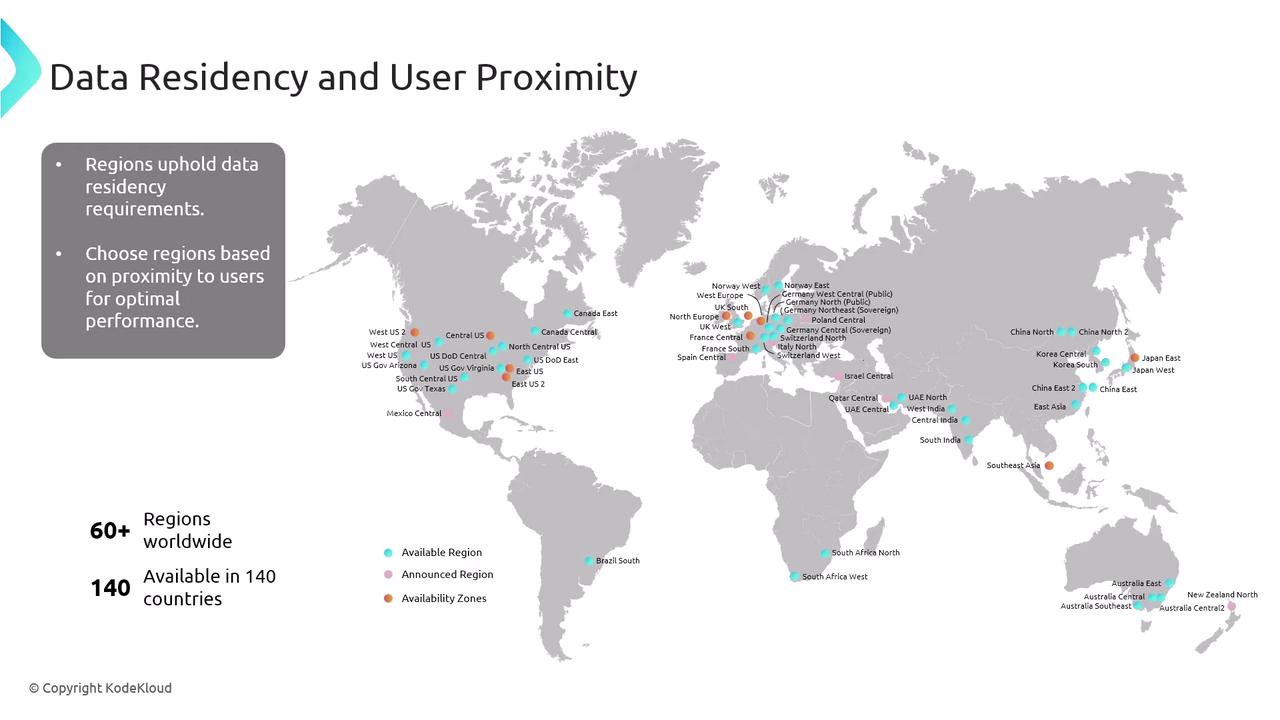
Availability Zones
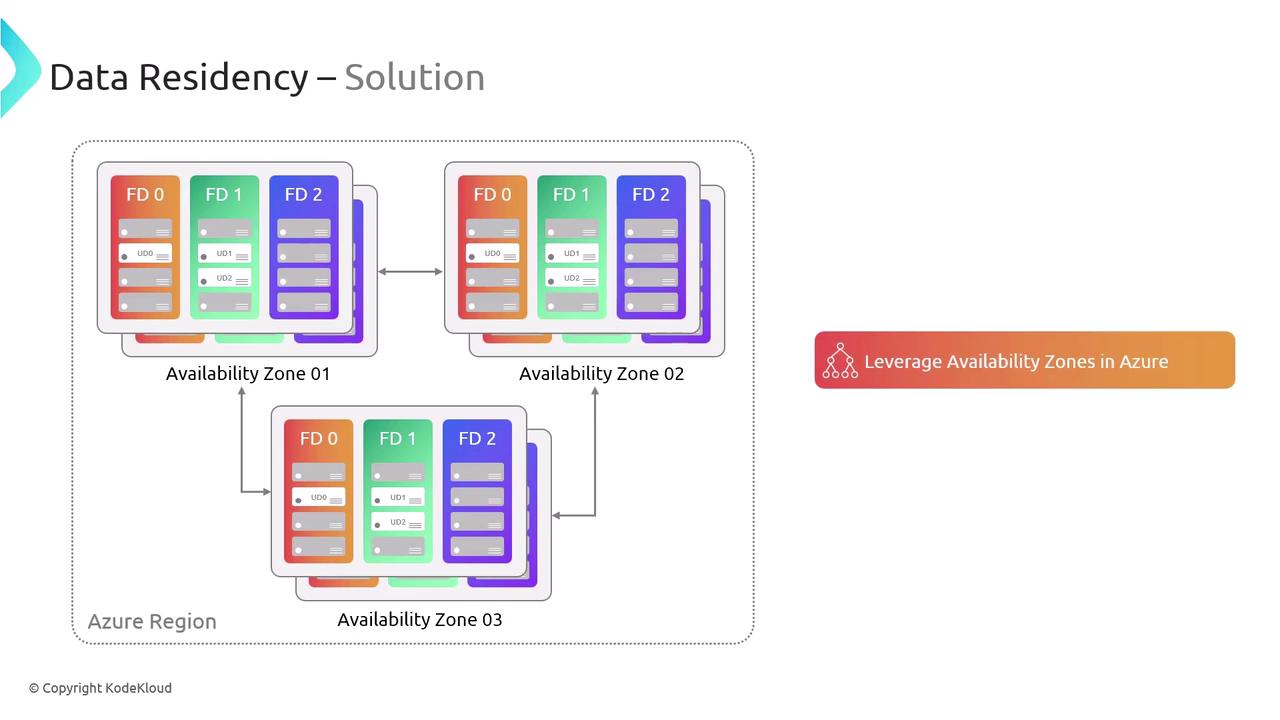
Moving beyond regions, Availability Zones are a key aspect of Azure’s architecture, offering enhanced resilience and high availability within each region. Their benefits include:- Mitigating Downtime Risks: Zones act as independent pillars ensuring applications remain operational during disruptions.
- Physical Separation: Each zone is an independent data center equipped with separate power, cooling, and networking systems. This design ensures that if one zone is affected by a power outage or equipment failure, the others continue functioning seamlessly.
- Robust Connectivity: A private fiber-optic network ensures low latency and high-speed communication between zones, further enhancing system reliability.
Disaster Recovery and Azure Regional Pairs
While Availability Zones address intra-region outages, Azure Regional Pairs offer a broader disaster recovery solution for scenarios where an entire region may be affected by disasters.Azure Regional Pairs guarantee that in the event of a complete regional outage, the paired region can immediately assume operations. This approach complies with data residency mandates while ensuring business continuity.
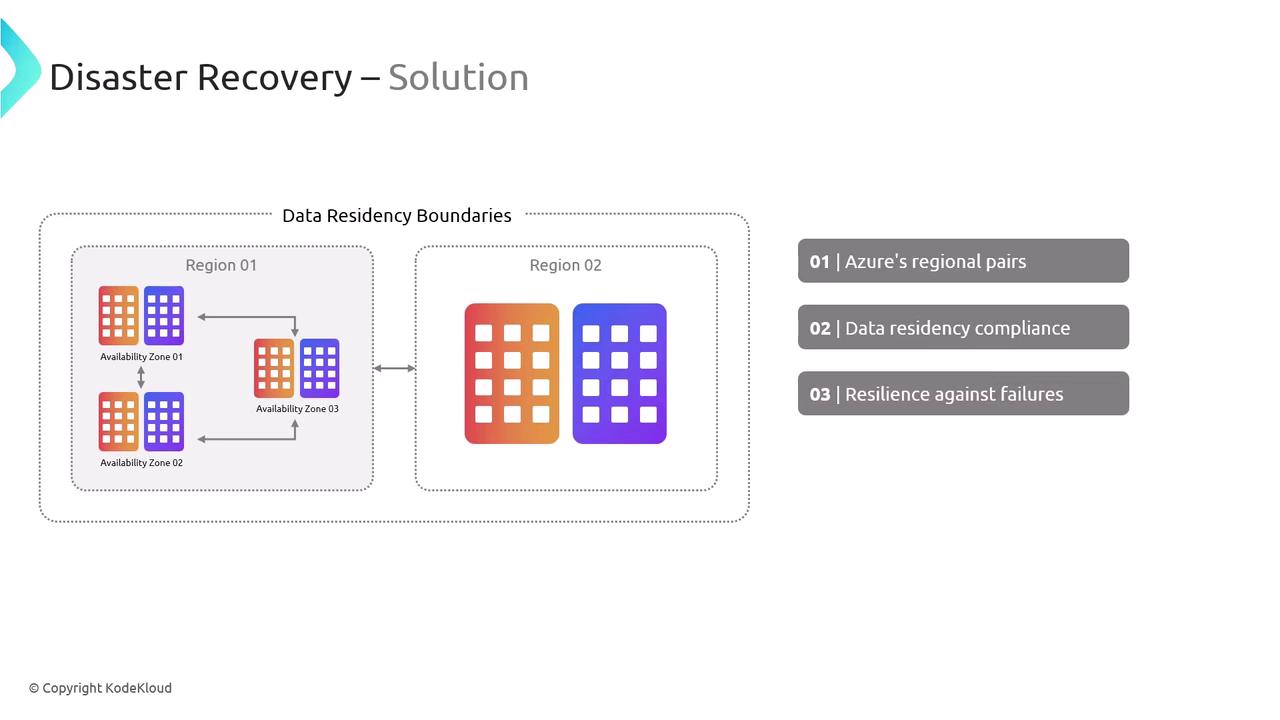
- Data Residency Compliance: Paired regions help maintain adherence to local data laws.
- Geographical Separation: Each pair is located at least 300 miles apart, reducing simultaneous disruption risks.
- Automated Replication: Services like geo-redundant storage replicate data automatically across paired regions.
- Prioritized Recovery: Recovery efforts are focused to minimize downtime in the event of a widespread outage.
- Sequential Updates: Azure services receive updates in sequence across paired regions, preventing concurrent disruptions.
Sovereign Regulations and Azure Sovereign Regions
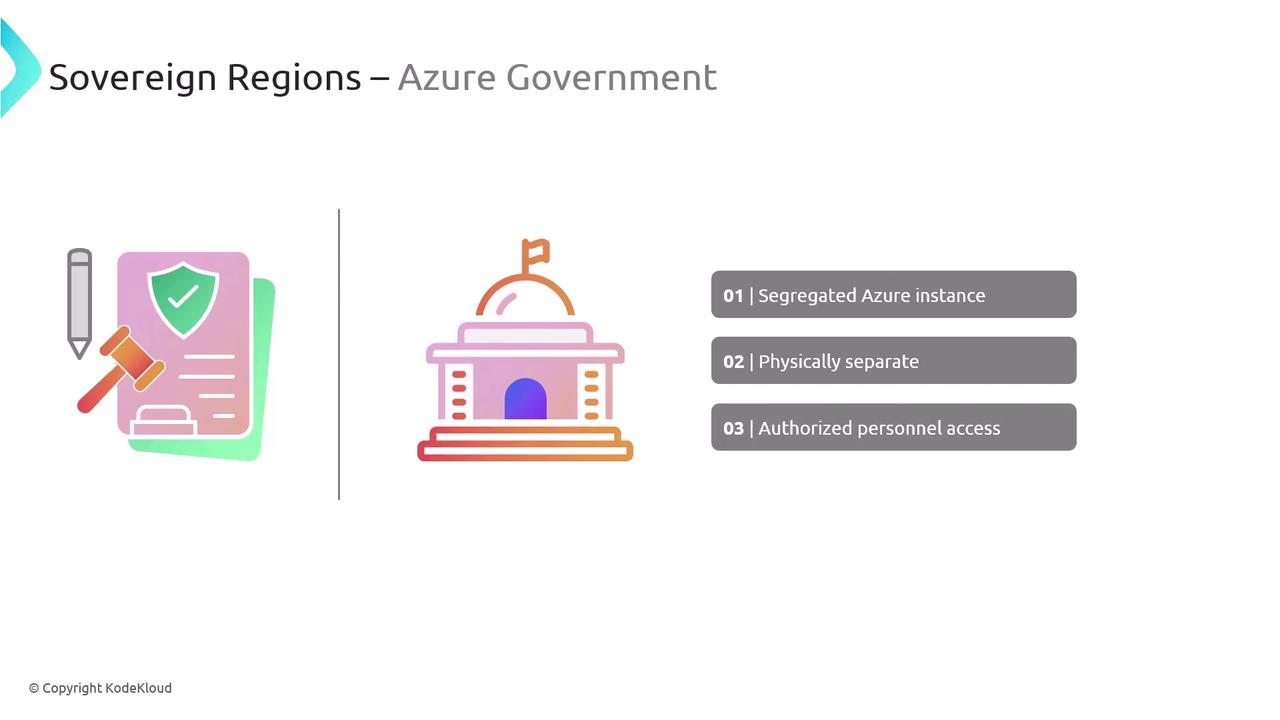
As Bella Innovation expands into regions with stringent regulatory constraints, such as China, Azure sovereign cloud solutions become indispensable. These sovereign regions are designed to meet strict security, compliance, and privacy standards.Azure Government
- Purpose: Tailored for US federal government entities, ensuring enhanced security.
- Features: Provides physical and logical isolation from non-governmental deployments for increased protection.
Azure China
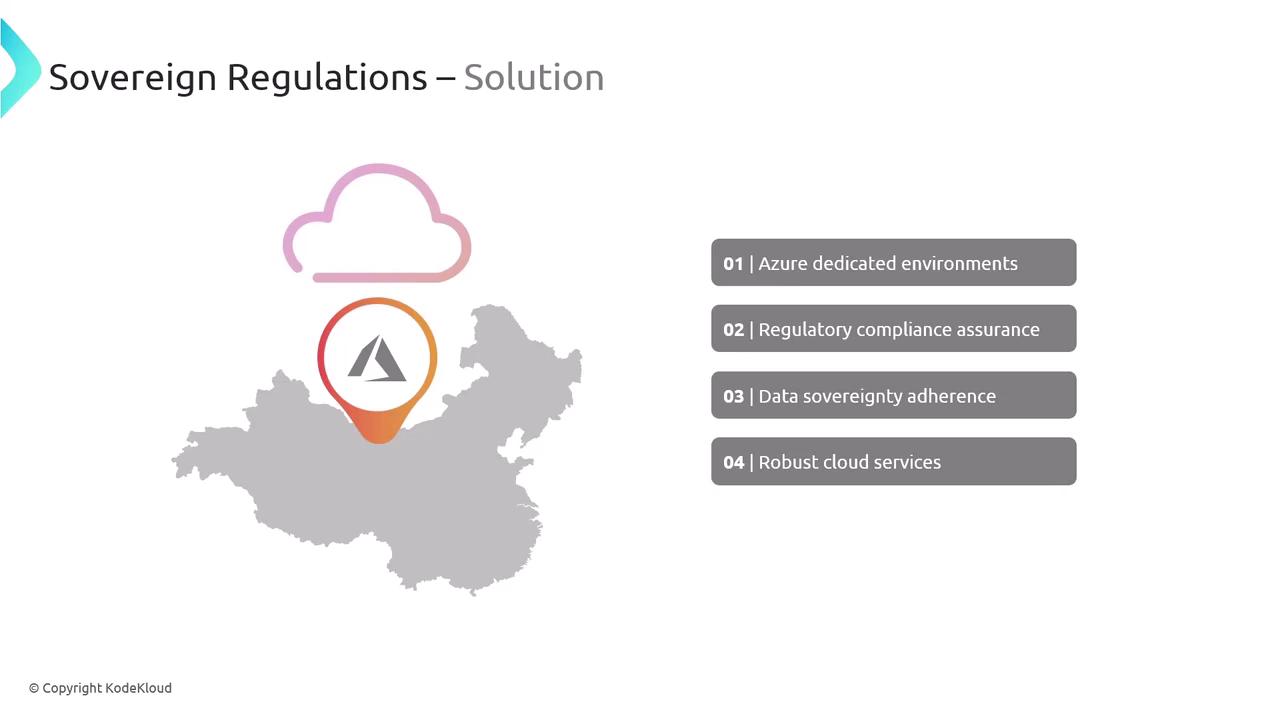
- Purpose: Offers a fully independent instance of Azure through a partnership with 21VNET.
- Data Residency: Guarantees that all data remains within China’s borders to comply with local regulations.
Exploring the Global Infrastructure
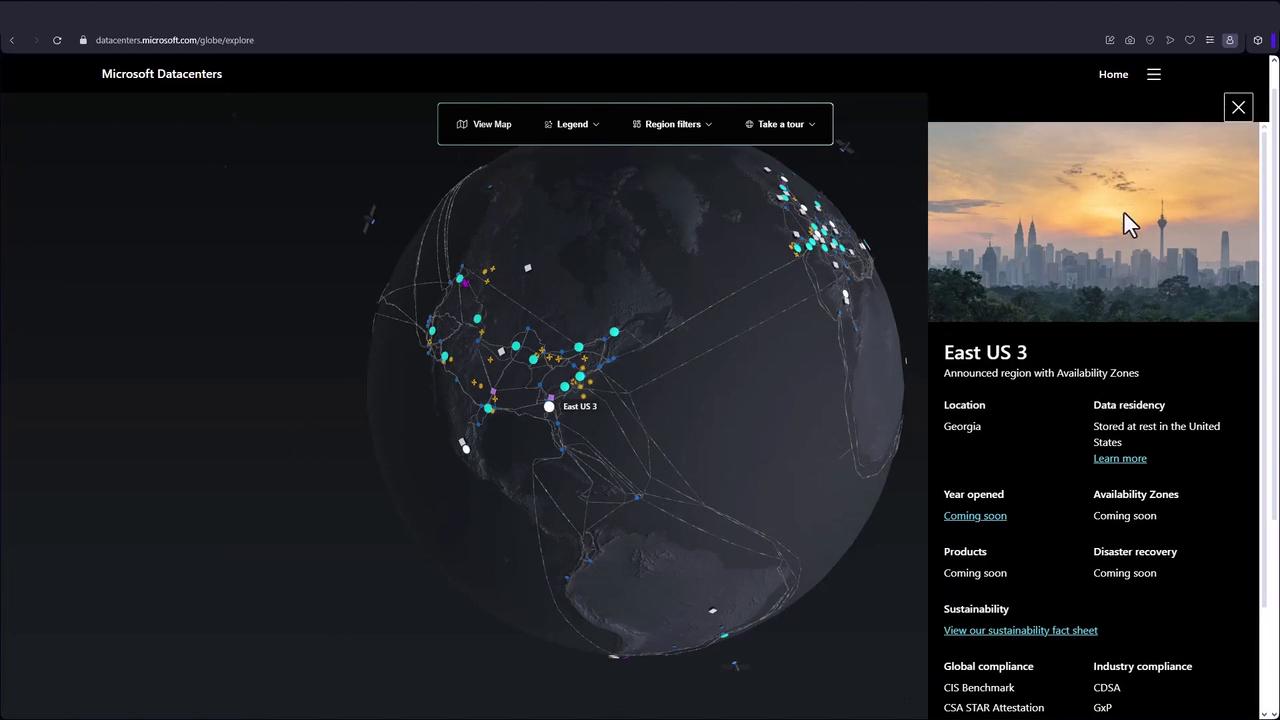
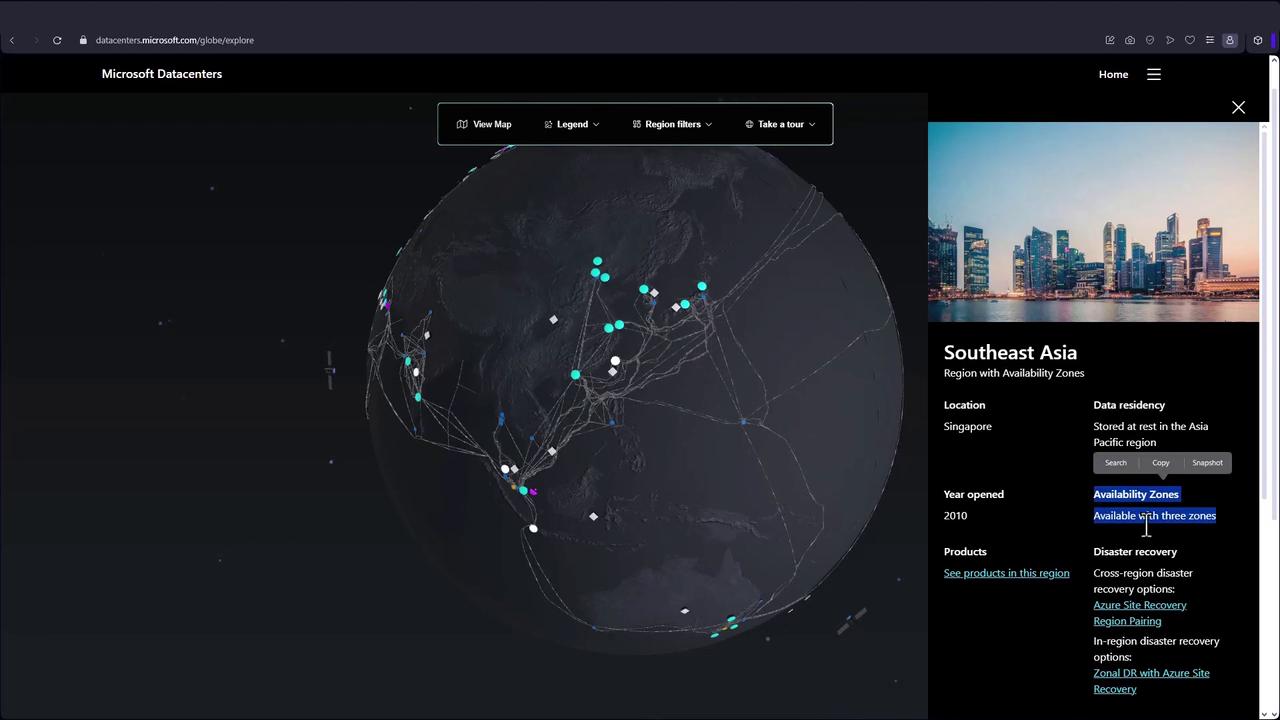
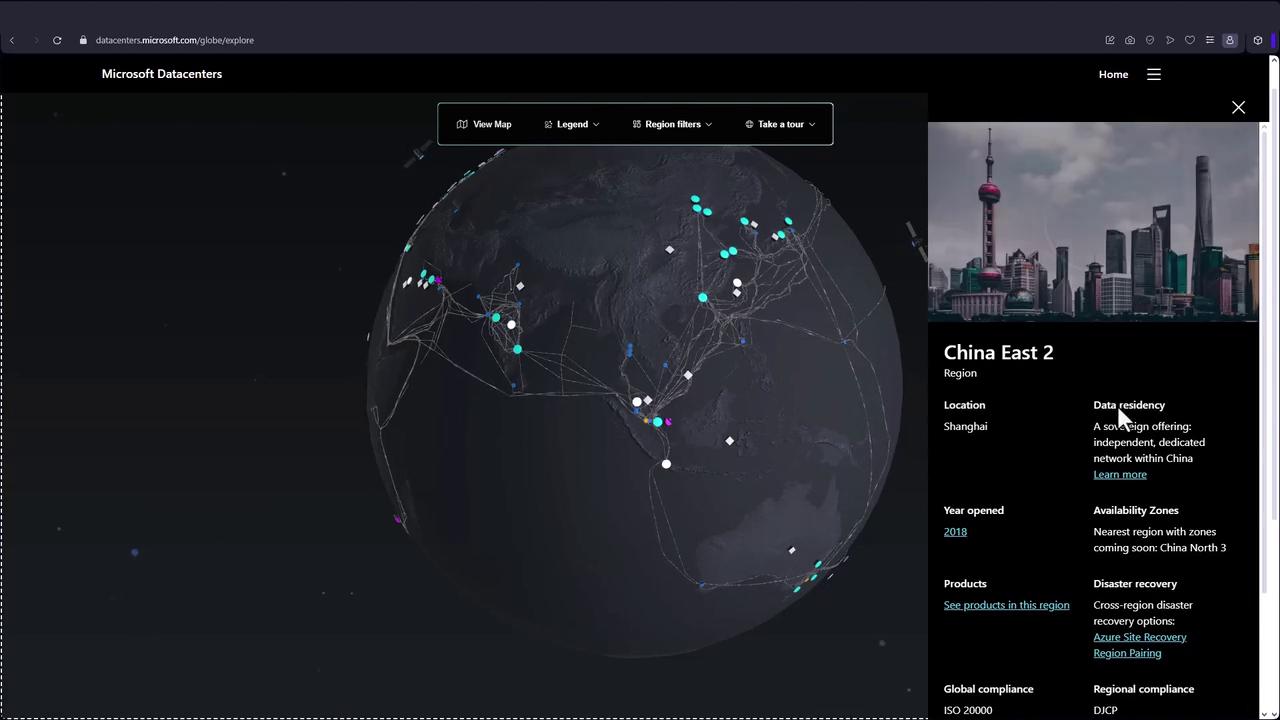
To gain deeper insights into Azure’s expansive network, explore the Global Infrastructure Experience. This interactive digital globe showcases Azure data center locations, connectivity details, and regional configurations such as availability zones, compliance standards, disaster recovery setups, and regional pairings. For example, selecting the “East US 3” region reveals details about its location, the configuration of availability zones, and compliance information: