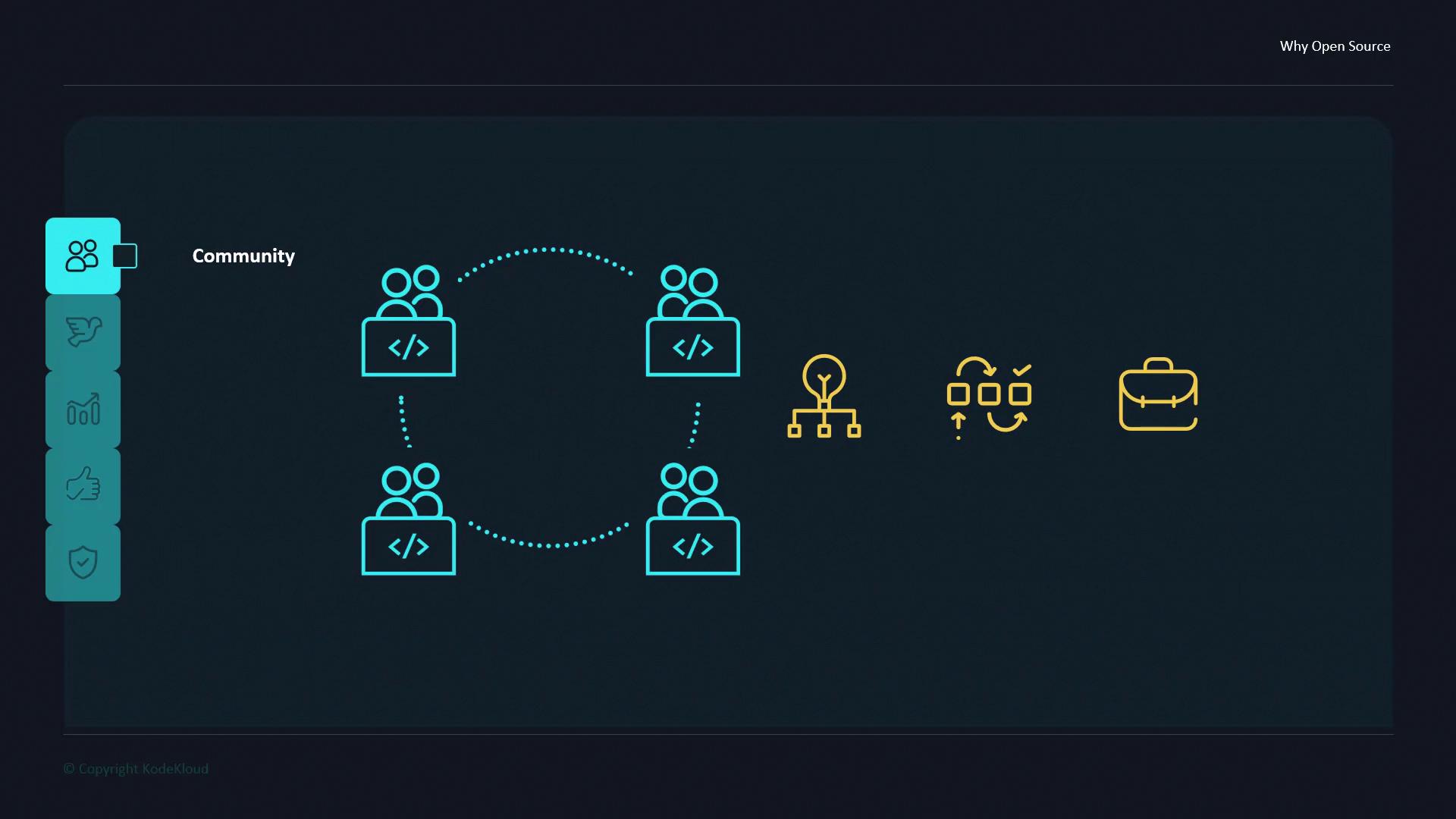
Flexibility and Freedom
At its heart, open source provides unparalleled flexibility. You can freely access, modify, and redistribute code—eliminating vendor lock-in and giving you control over costs, terms, and custom features. This freedom empowers organizations to tailor solutions to their exact needs.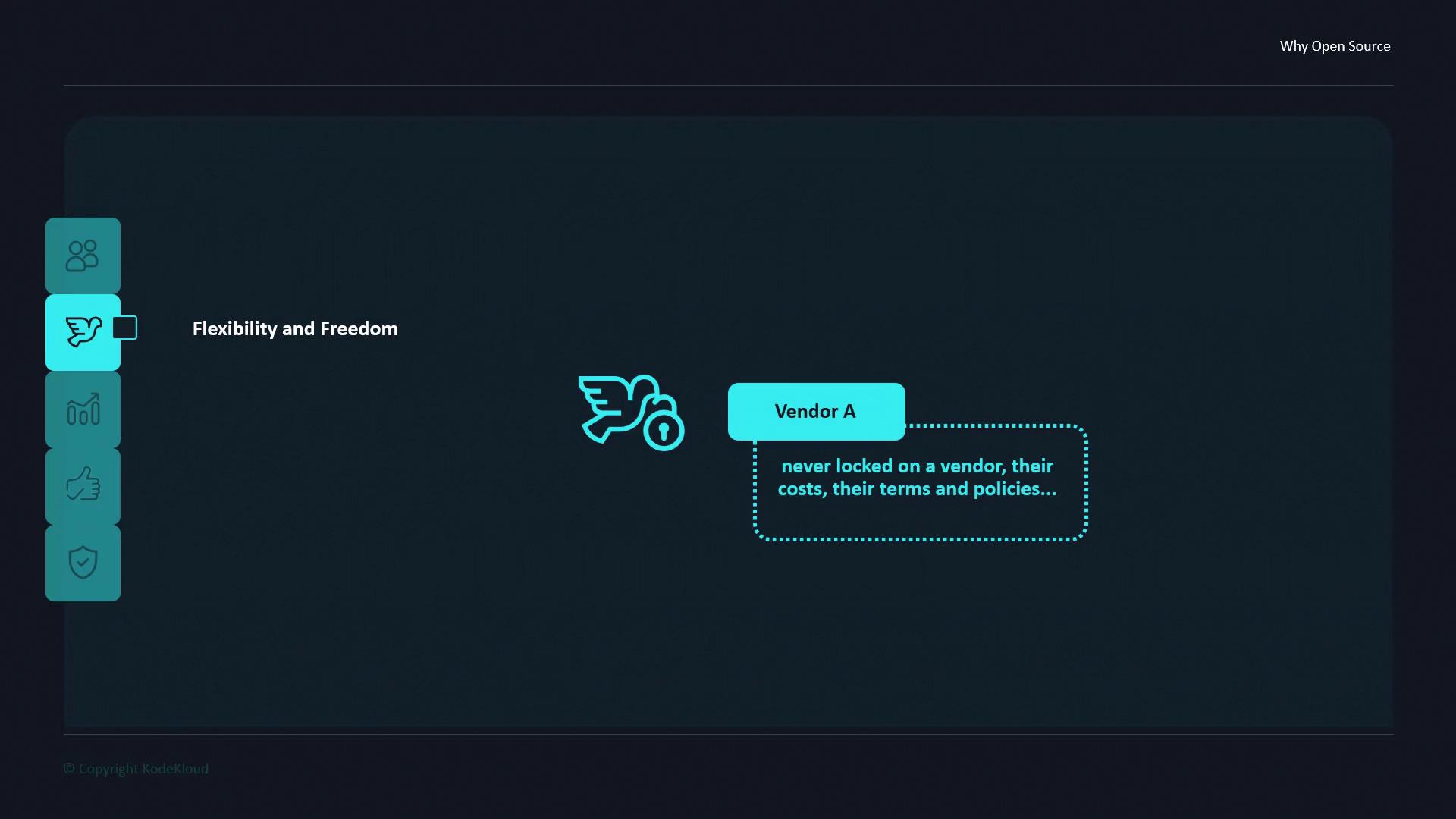
Continuous Evolution
When development takes place in public repositories, users and contributors can offer feedback, report bugs, and propose improvements. This iterative loop fuels faster feature releases and higher-quality software.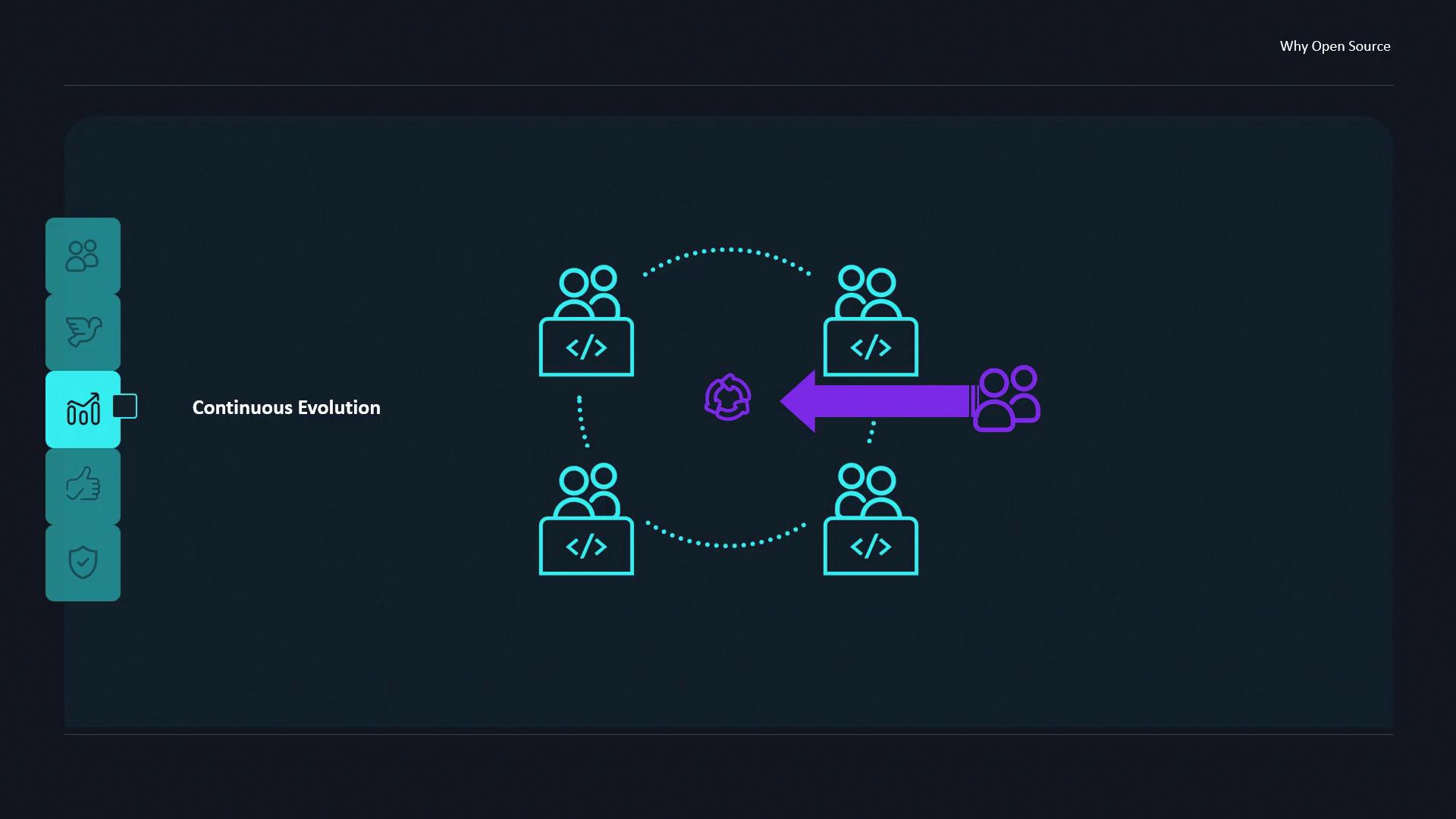
Reliability
Reliability means consistent performance under expected conditions. Open source projects often patch vulnerabilities and release updates more quickly than proprietary software, resulting in stable and dependable systems.
Although open source exposes code for community review—which accelerates vulnerability discovery—security still relies on best practices and proactive maintenance.
Summary of Open Source Benefits
| Benefit | Description |
|---|---|
| Flexibility & Freedom | Full code access, modification, and redistribution to avoid vendor lock-in. |
| Continuous Evolution | Public feedback loops drive rapid iteration and feature enhancements. |
| Reliability | Quick patches and frequent updates ensure software performs reliably over time. |
| Security | Transparent code review uncovers and fixes vulnerabilities early in the development lifecycle. |
Meet Peter, a backend web developer specializing in web APIs. He wants to build a service that fetches news articles from across the internet based on a search term.

Daily-Bugle. After committing his API code, he adds an open source license to make the project publicly accessible.