


Use Cases
One of the most common applications of Jinja2 is the generation of dynamic HTML pages and configuration files. Below are examples that illustrate how you can leverage Jinja2 in different scenarios.Generating HTML Pages
title set to “Our Site” and msg set to “Welcome!”, the output becomes:
Automating Configuration Files
Jinja2 is also valuable in automation tools to customize playbooks or auto-generate configuration files. Consider a snippet for configuring a MySQL database using Ansible:Jinja2 Overview
Jinja2 offers an extensive set of features making it a top choice for templating in Python-based projects. Its elegant syntax and comprehensive documentation make it accessible for both beginners and advanced users. For more detailed information and advanced examples, refer to the official Jinja2 documentation.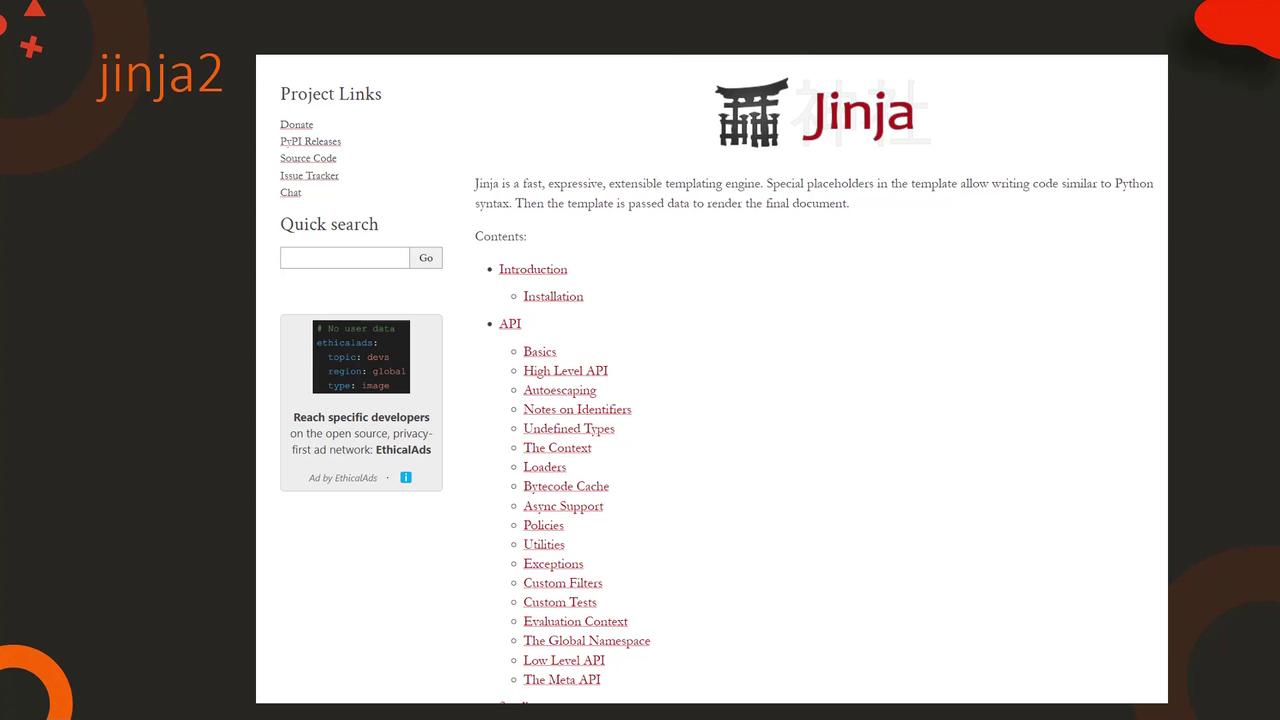
Basic Substitution and Filters
Dynamic value substitution is a core functionality of Jinja2. For example, if you set the variablemy_name to “Bond”, then the following template:
default filter to prevent errors:
Working with Lists and Sets
Jinja2 is not limited to strings; it provides a suite of filters to manipulate lists and sets. Consider the following examples that demonstrate common operations:random and join can also be used to generate random outputs or concatenate an array of words into a single string.