

What Is Mutable Infrastructure?
Mutable infrastructure refers to servers (physical or virtual) that are continuously updated and modified after initial provisioning. A typical workflow looks like this:- Develop your application code.
- Provision a server instance.
- Install the operating system (e.g., CentOS, Fedora, Ubuntu).
- Install packages and dependencies.
- Harden and secure the server (firewall rules, user permissions).
- Deploy and start your application.
- Maintain with ongoing patches, upgrades, and configuration tweaks.
Challenges of Mutating Live Servers
Applying updates or security hotfixes directly on running servers may work at small scale but leads to:- Human error: Manual updates on many servers increase the risk of typos and missed steps.
- Configuration drift: Minor differences accumulate, causing environments to diverge and making debugging harder.
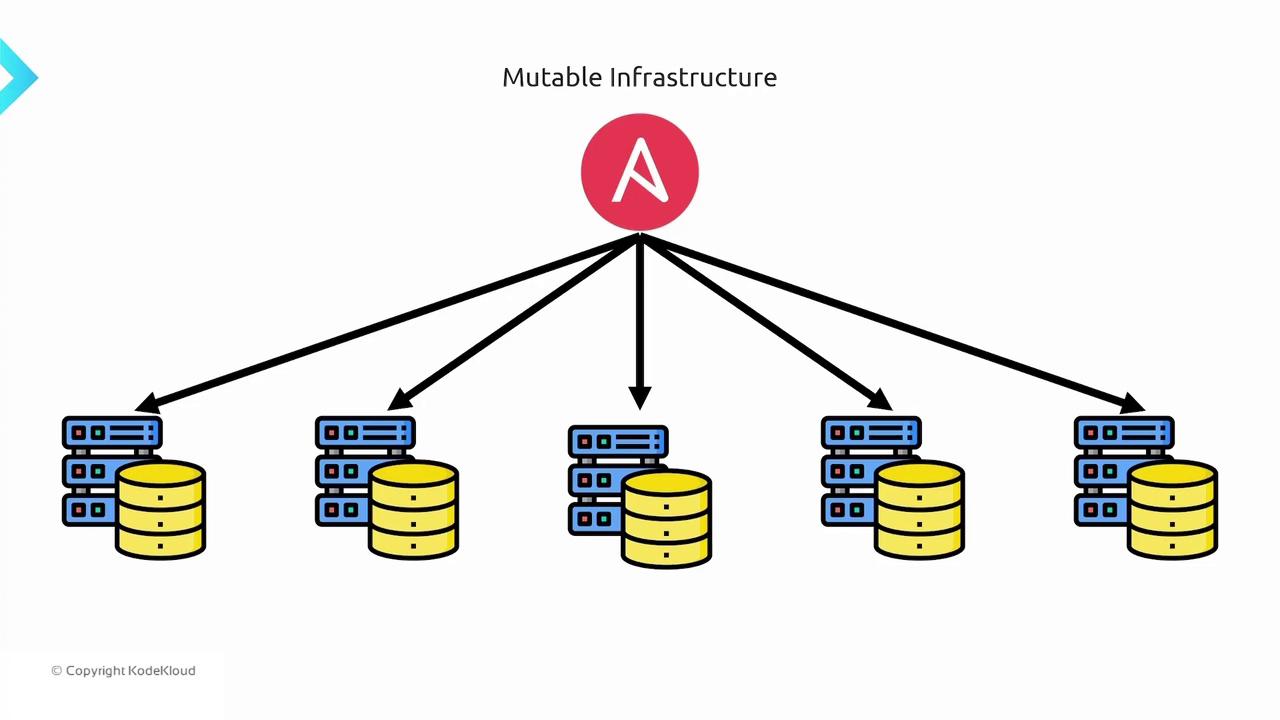
Relying solely on mutable operations can lead to untracked changes and compliance issues due to hidden configuration drift.
Comparing Mutable vs Immutable Infrastructure
| Aspect | Mutable Infrastructure | Immutable Infrastructure |
|---|---|---|
| Update process | In-place patches and upgrades | Replace entire hosts or containers |
| Reproducibility | Prone to configuration drift | Consistent, versioned images |
| Recovery | Rollbacks can be error-prone | Quick rollback by redeploying a known-good image |
| Tooling examples | Ansible, Chef, Puppet | HashiCorp Packer, Docker, Kubernetes, Terraform |
Immutable infrastructure patterns use tools like Packer to bake golden images, eliminating in-place mutations and ensuring consistency across environments.