This article provides an overview of Kubernetes Ingress controllers, their functions, deployment models, and considerations for routing external traffic into a cluster.
In this lesson, we dive deep into Kubernetes Ingress controllers and learn how they route external traffic into your cluster. Remember: an Ingress Resource defines the routing rules, but without an Ingress Controller, those rules are never enforced.
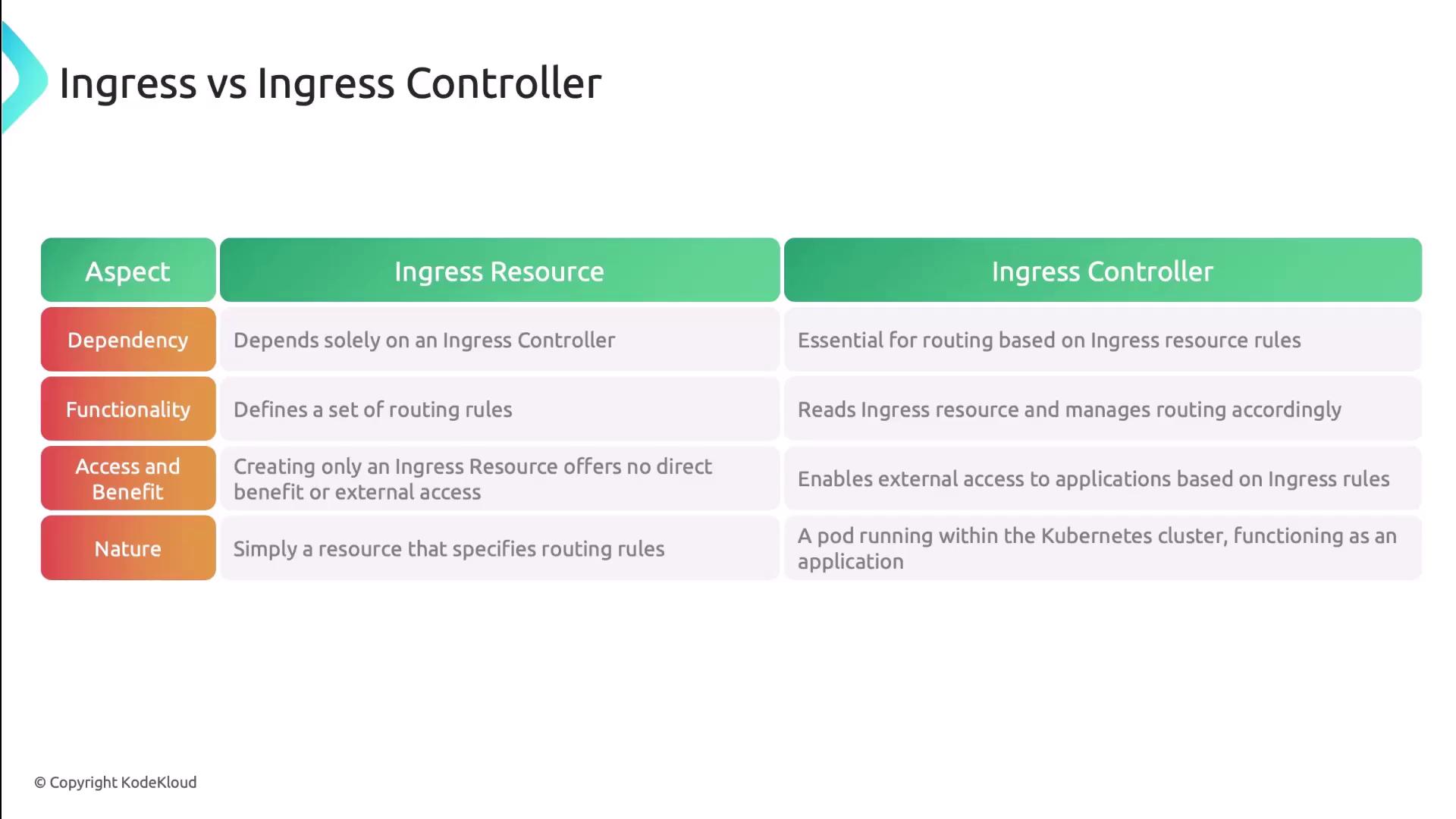
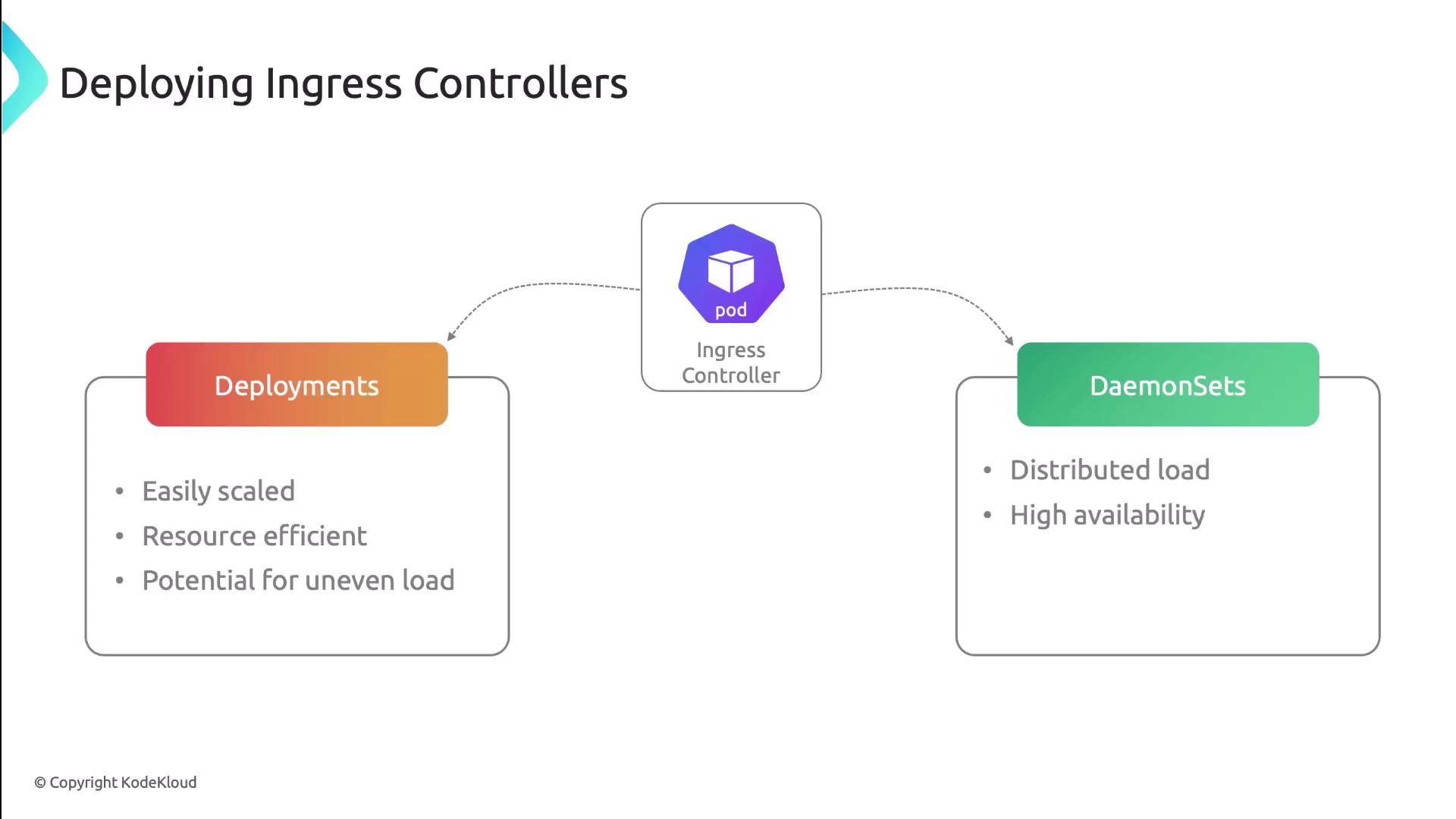
An Ingress Resource is a Kubernetes object that declares hostname- and path-based routing rules. By itself, it performs no traffic routing.An Ingress Controller is a Pod (or set of Pods) running inside the cluster. It monitors Ingress resources and programs the underlying proxy or load balancer to enforce those rules.
Aspect
Ingress Resource
Ingress Controller
Definition
Kubernetes object for routing rules
Component (Pod) that reads Ingress objects
Functionality
Declares host/path rules
Implements rules, load-balances traffic
Runtime
No running process
Runs inside cluster
Benefit
No effect without a controller
Routes external traffic to Services
Defining an Ingress without an active controller means no external traffic will reach your Services.
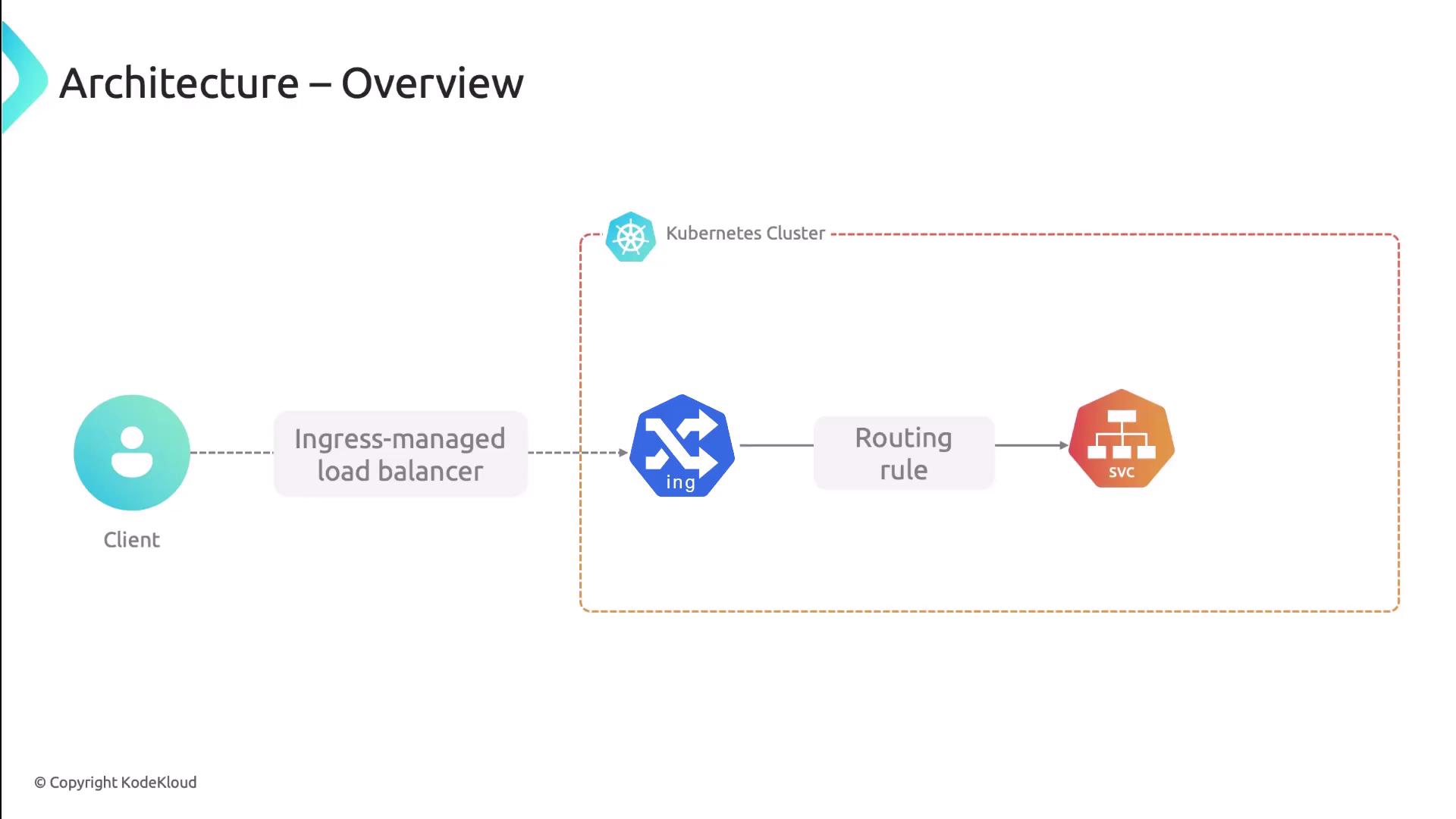
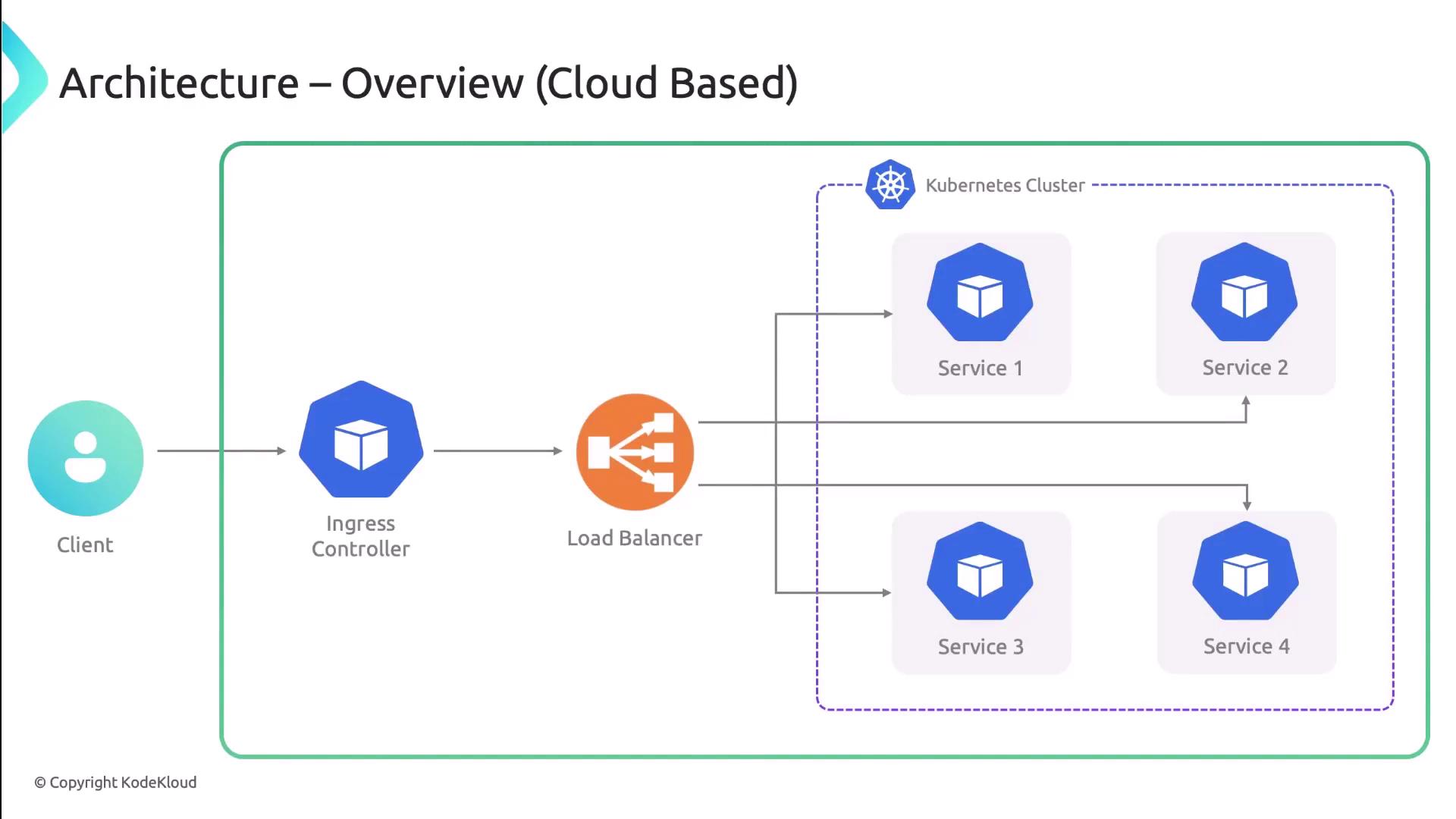
Clients send HTTP(S) requests to the cluster’s external endpoint. The Ingress controller intercepts these requests, matches them against Ingress rules, and forwards them to the appropriate Service, which then load-balances to the backend Pods.
Cloud providers offer managed Ingress controllers that integrate with native infrastructure services—load balancers, firewalls, IAM, and more—simplifying setup and scaling.
Controller
Cloud Provider
Key Features
AWS Load Balancer Controller
AWS
ALB & NLB provisioning, Auto scaling
Google Cloud Load Balancer
GCP
GKE integration, Global load balancing
Azure Application Gateway
Azure
SSL termination, WAF, path-based routing
Key benefits:
Automatic provisioning of cloud LoadBalancer resources
Self-managed controllers run anywhere you choose—on-premises, private clouds, or public clouds where you handle cluster exposure. You’ll need to configure a Service of type LoadBalancer or NodePort to expose the Ingress controller externally.