kubectl scale commands yourself, you might soon say, “Scale application A in cluster B to 50 replicas,” and let an AI agent handle the details.
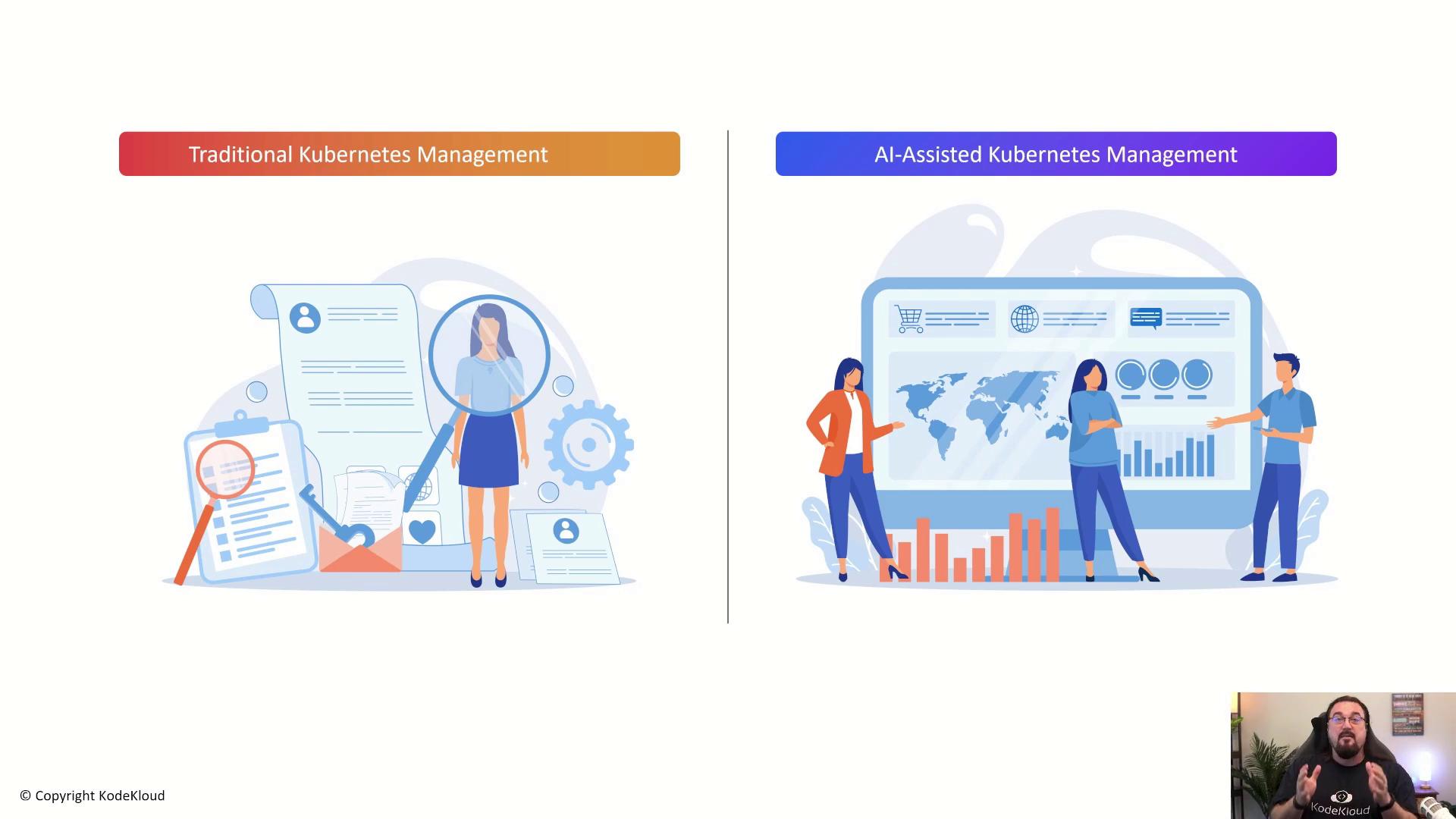
Traditional Kubernetes Management
Kubernetes operators have long relied on:- CLI Tools & YAML Manifests
Manually writing and applying.yamlfiles or usingkubectlcommands. - Dashboards & Web Consoles
Monitoring resource usage and making configuration changes through UI panels. - Scripts & Alerts
Automating basic tasks via Bash or Python scripts, plus alerting via Prometheus, Grafana, etc.
AI-Assisted Kubernetes Management
AI-driven management agents learn your high-level goals—uptime, performance SLAs, security standards, and budget caps—and translate them into actions. For each cluster tier (stateless, stateful, ML workloads), an AI agent:- Observes real-time logs, metrics, and events
- Applies policy-based scaling, updates, and backups
- Executes self-healing routines on failures
- Frees teams to focus on architecture and strategy
Agent Responsibilities
- Continuous telemetry analysis (logs, metrics, traces)
- Automated scaling, upgrades, and cleanup jobs
- Proactive debugging and remediation
- Policy enforcement for security and compliance
Key Benefits of AI-Driven Kubernetes
| Benefit | Description |
|---|---|
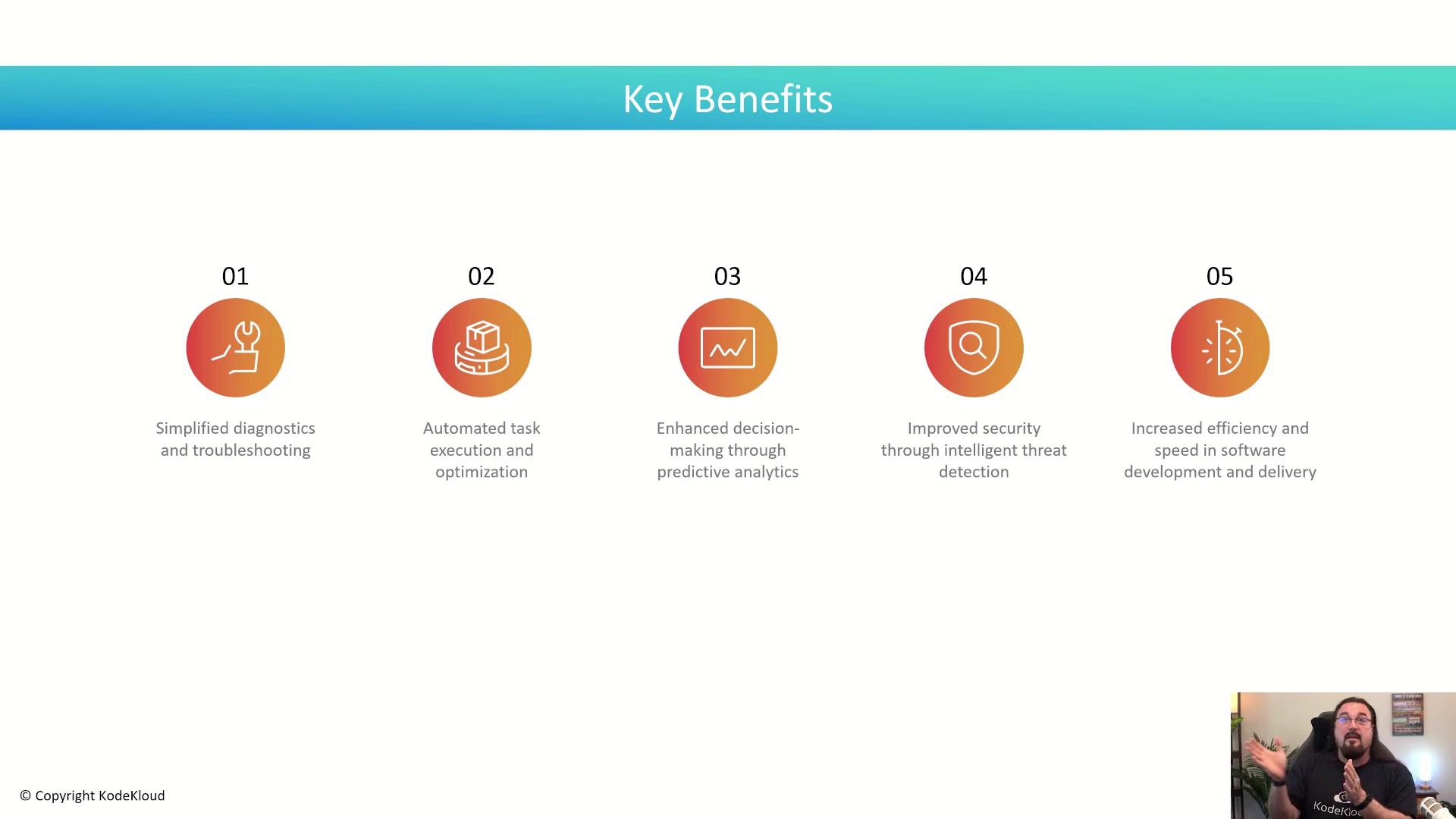
| Simplified Diagnostics | AI parses large volumes of telemetry faster than manual investigation. |
| Autonomous Task Execution | Agents run routine operations—scaling, rolling updates, and housekeeping—without human input. |
| Predictive Decision-Making | Machine-learning models detect anomalies and forecast capacity or failure risks. |
| Enhanced Security Posture | Continuous vulnerability scanning and threat detection to prevent attacks. |
| Faster Delivery Pipelines | AI-powered CI/CD integrates canary, blue/green, and A/B rollouts for safer, quicker releases. |
AI agents should be regularly audited to ensure they align with evolving security policies and compliance requirements.
The AI-Driven Ecosystem in 2024
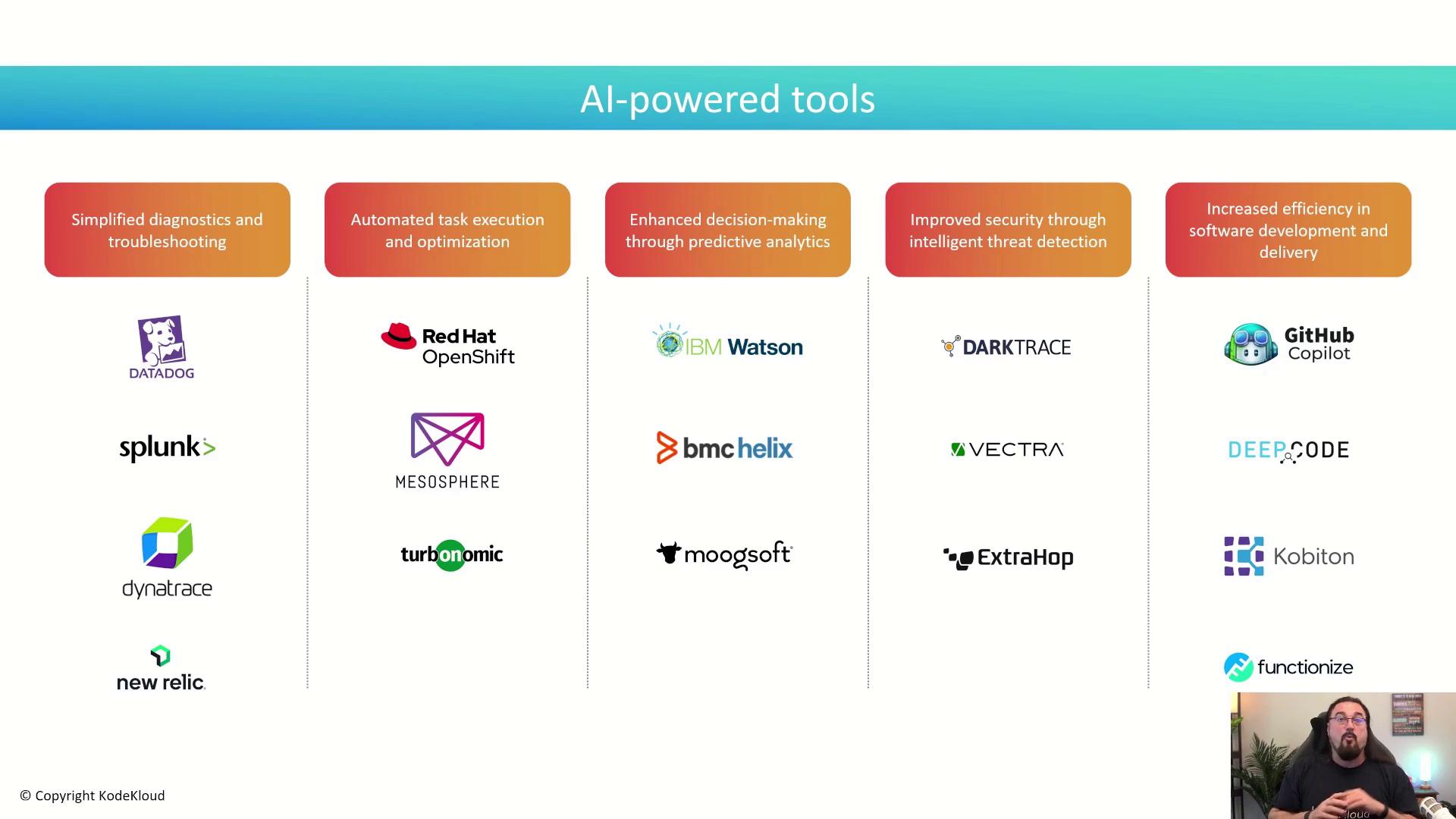
By mid-2024, AI capabilities have permeated every layer of cloud and infrastructure tooling:- Automated orchestration for VMs, containers, and serverless
- Predictive performance and capacity analytics
- Intelligent threat hunting and adaptive security hardening
- AI-augmented code generation, testing, and deployment workflows