

The Breaking Point
Ozzy managed everything single-handedly until one day, he fell seriously ill and was unable to work. While his supportive colleagues stepped in, they soon realized that critical knowledge about pipeline support, patching, and automation was exclusive to Ozzy. As his absences grew and customer concerns mounted, the team’s dependence on his expertise became a major bottleneck.
A Moment of Reflection and Change
During his recovery, Ozzy turned to learning—watching YouTube videos and questioning the conventional mindset. He began to wonder: What if success wasn’t solely about individual capability? With fresh insights from DevOps principles, Ozzy realized the value of team collaboration and shared responsibilities.
Empowering your team through shared responsibilities and continuous learning is essential to prevent burnout and dependency on a single individual.
Building a Collaborative Culture
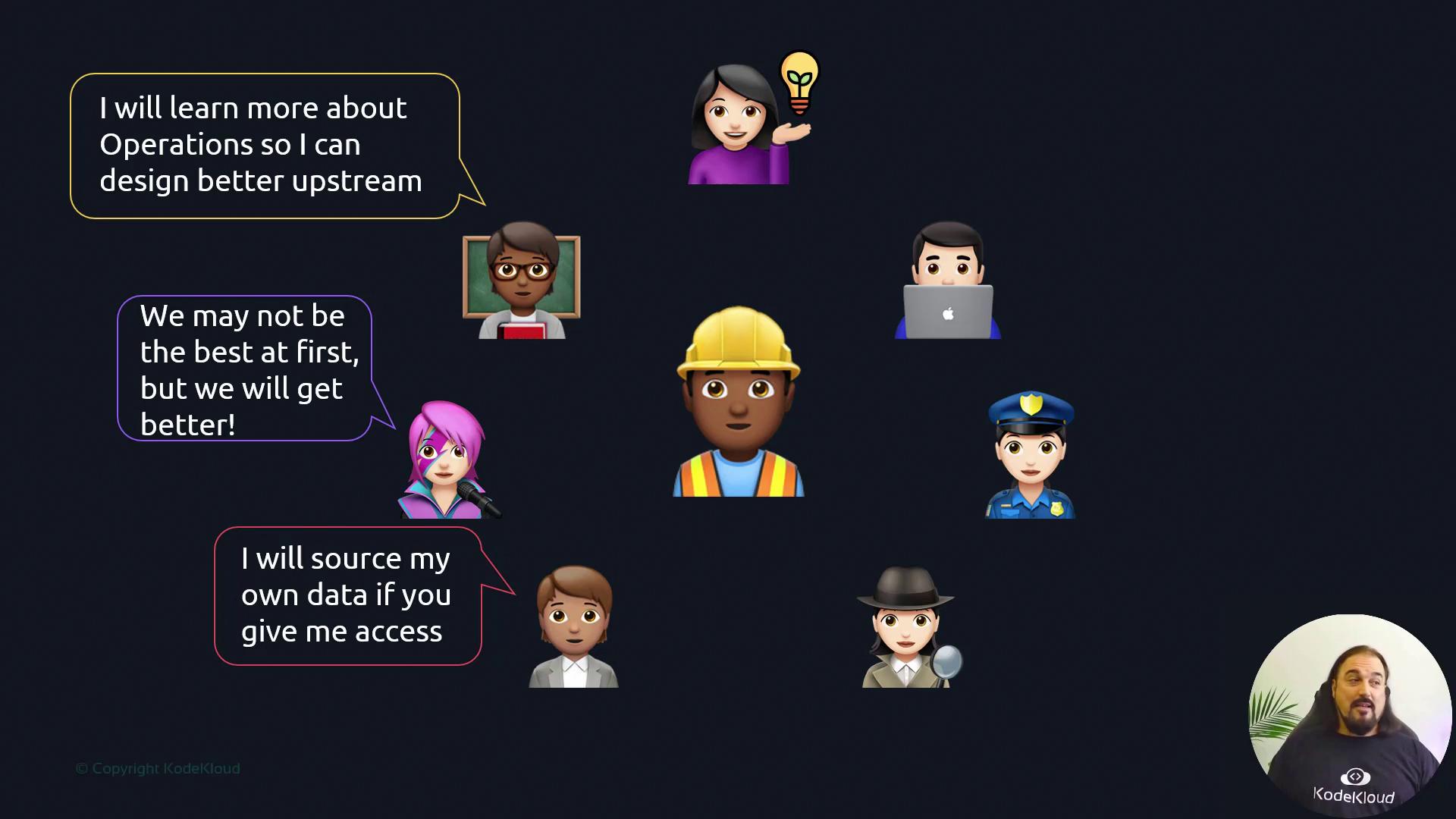
The response to Ozzy’s initiative was overwhelmingly positive:- Developers eagerly pitched in to resolve production bugs.
- Security Team members volunteered to assist with automation tasks.
- QA Team showed readiness to help with establishing production tests.
Key Takeaways
| Key Aspect | Description |
|---|---|
| Over-reliance on Individuals | Depending solely on one person for critical operations is unsustainable. |
| Importance of Knowledge Sharing | Distributing expertise across the team reduces risks and improves operational efficiency. |
| Empowerment Through Training | Offering training on essential tasks, like CI/CD pipelines and platform engineering, fosters team capability. |
| Collaborative Team Dynamics | A culture of shared responsibilities not only prevents burnout but also drives continuous improvement. |
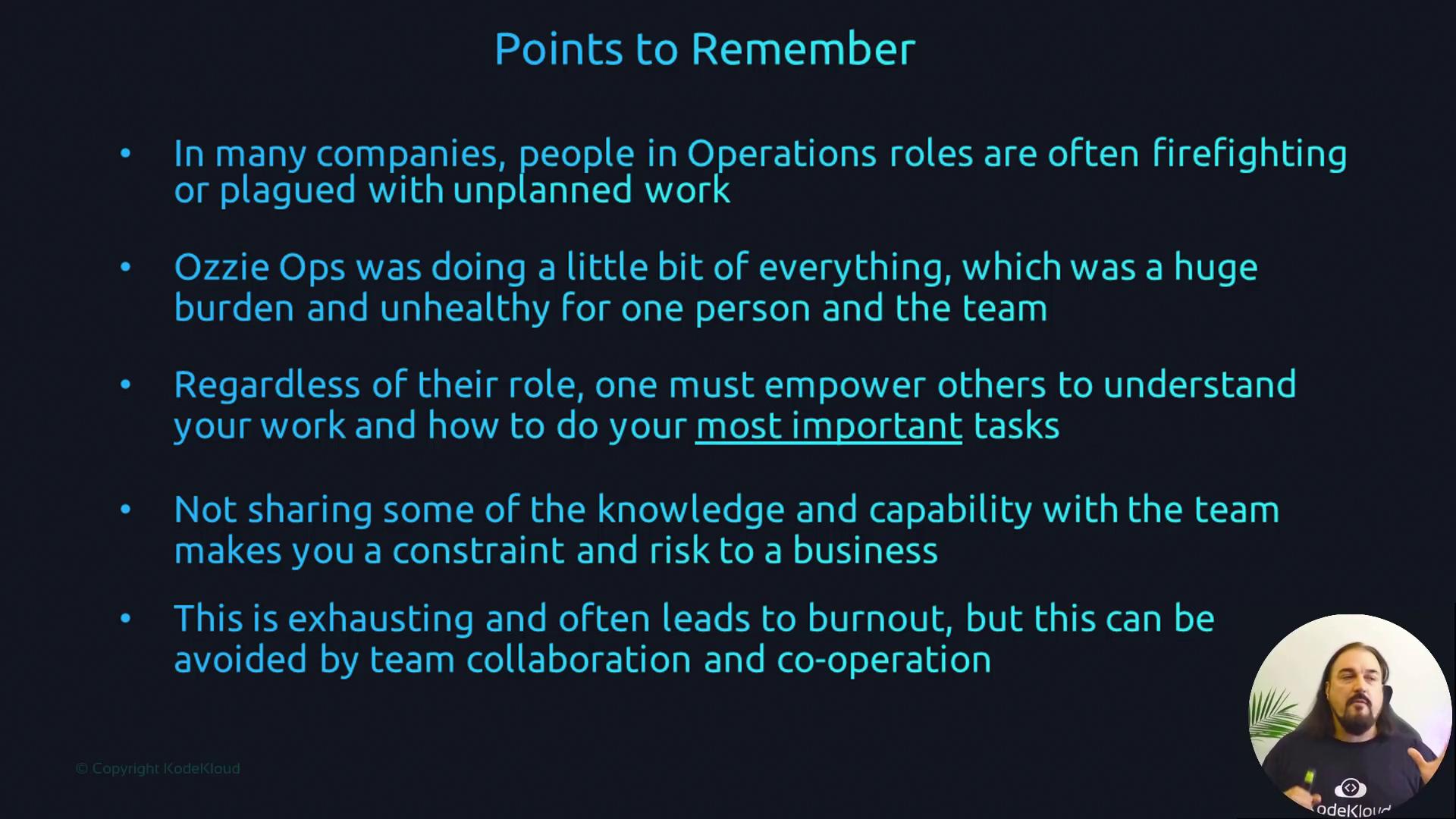
Avoid putting all your eggs in one basket. Empower your team with the skills and knowledge they need to succeed together.